Asphalt Softening Point Tester Factory Reliable China Suppliers for Bitumen Testing
Looking for high-precision asphalt softening point testers? As leading China suppliers and a professional factory, we provide ISO-certified instruments to determine the temperature at which bitumen transitions from semi-solid to liquid, ensuring road durability and heat resistance.


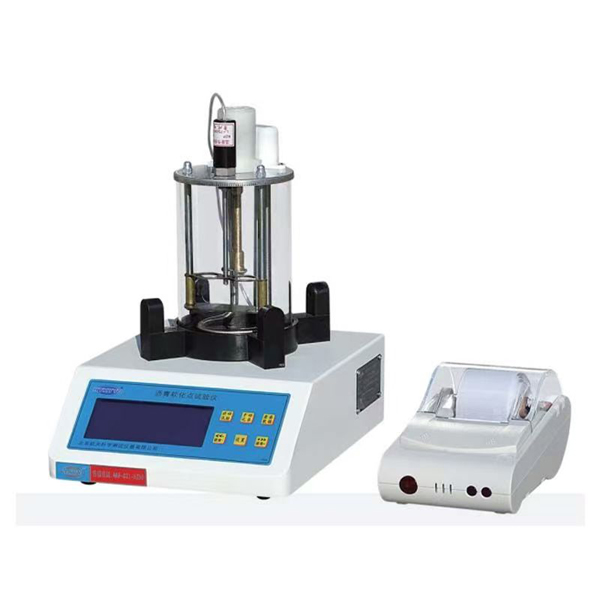
The Asphalt Softening Point Tester is a precision-engineered laboratory instrument essential for determining the temperature at which bitumen and asphalt materials transition from a solid to a semi-fluid state. This critical measurement allows quality control engineers and researchers to evaluate the thermal stability and deformation resistance of asphalt, ensuring that road infrastructure can withstand high temperatures and heavy traffic loads without rutting or structural failure.
Manufactured by Cangzhou Blue Beauty Instrument Co., Ltd., this advanced tester integrates decades of expertise in material testing. By employing standardized ring-and-ball testing methods and high-precision automation, it provides repeatable and accurate data that complies with international standards. Whether used in universities, petroleum industries, or construction laboratories, this equipment is the gold standard for enhancing the durability and safety of modern pavement engineering.
Detailed Parameters
| Testing Method | Ring-and-Ball Standard | Quality System | ISO9001:2008 / GB/T190001-2008 |
|---|---|---|---|
| Control System | Digital Precision Control | Heating Type | Uniform Thermal Distribution |
| Application | Bitumen & Asphalt Analysis | Accuracy Level | High-Precision Sensors |
| Automation | Automated Parameter Setting | Pass Rate | Up to 99% Quality Assurance |
| Construction | Industrial Grade Durable Materials | Export Reach | Available in 60+ Countries |
Key Advantages
Thermal Stability
Precisely analyzes the temperature thresholds to prevent pavement deformation in hot climates.
High Efficiency
Advanced automation reduces manual intervention, minimizing human error and accelerating test cycles.
Certified Precision
Strict adherence to ISO and GB standards ensures results are reliable for global infrastructure projects.
Intuitive Interface
User-friendly digital displays allow technicians of all experience levels to operate the device with ease.
Repeatable Results
High-precision sensors maintain uniform heating for consistent data across multiple sample batches.
Robust Build
Constructed with premium materials to withstand demanding laboratory environments and long-term use.
Product Gallery


Management Platforms
Quality Control
Integrated monitoring to ensure every bitumen batch meets rigid project specifications.
Process Automation
Streamlined testing workflows that reduce labor costs and increase laboratory throughput.
Real-time Alerts
Instant temperature feedback to capture the exact moment of softening with absolute precision.
Regulatory Compliance
Automated alignment with international asphalt testing standards for easy auditing.
Material Optimization
Data-driven insights to refine asphalt mixtures for specific environmental conditions.
Asset Longevity
Low-maintenance design ensuring a long operational lifespan for high-volume labs.
Investment Return Comparison
| Evaluation Metric | Manual Testers | Blue Beauty Automated Tester |
|---|---|---|
| Testing Accuracy | Subjective/Variable | High/Digital Precision |
| Labor Intensity | High Manual Effort | Low (Automated) |
| Error Rate | Moderate (Human Error) | Minimal (<1%) |
| Testing Speed | Slow/Serial | Fast/Parallel Efficiency |
| Infrastructure Life | Risk of Rutting | Optimized Durability |
Frequently Asked Questions
It is used to determine the temperature at which asphalt softens, which is a key indicator of its resistance to deformation and its suitability for specific climates and traffic loads.
A sample is placed in a metal ring and heated. A steel ball is placed on top; the softening point is the temperature at which the asphalt allows the ball to sink to a specified depth.
Even slight variations in temperature can lead to inaccurate softening point readings, which may result in the selection of incorrect asphalt grades, causing road failure.
Yes, our testers are manufactured under ISO9001:2008 and GB/T190001-2008 quality systems to ensure global reliability and accuracy.
Yes, it is designed for various asphalt and bitumen materials used in road construction, research, and petroleum quality control.
Automated testers reduce human error, provide more consistent and repeatable results, and significantly increase the efficiency of the laboratory workflow.