Los Angeles Abrasion Tester Manufacturer China Suppliers Factory
Looking for reliable Los Angeles Abrasion Testers? Our China factory provides high-precision instruments for evaluating aggregate wear resistance. As leading suppliers, we ensure your construction materials meet global safety standards for highways and infrastructure.

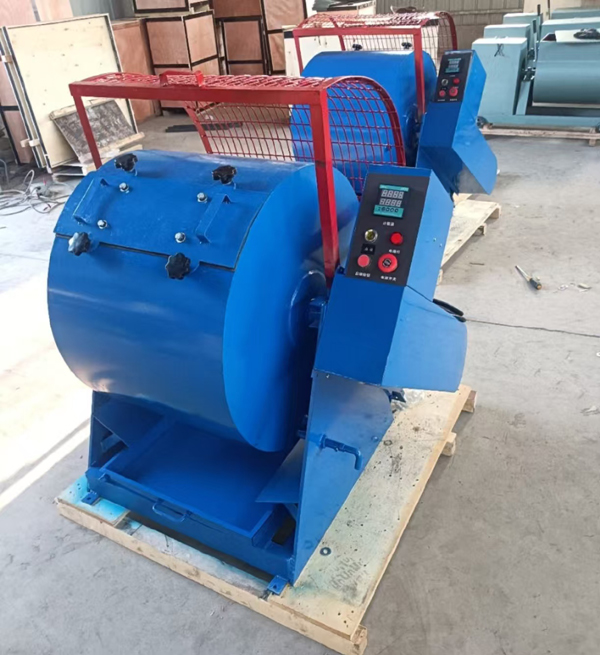
The New Standard Los Angeles Abrasion Tester is a high-precision instrument engineered to simulate real-world friction, impact, and wear conditions on aggregates. By providing critical data on material performance, it enables engineers and quality control professionals to select the most durable materials for infrastructure projects, ensuring long-term structural stability while significantly reducing future maintenance costs.
Developed by Cangzhou Blue Beauty Instrument Co., Ltd., this advanced tester integrates decades of technical expertise with modern automation. Meeting rigorous international standards including ISO9001:2008, it is widely adopted by universities, construction laboratories, and government research institutes across more than 60 countries to guarantee the mechanical integrity of construction aggregates.
Detailed Parameters
| Standard Compliance | ISO9001:2008 / GB/T190001-2008 | Control System | Intelligent Automated Control |
|---|---|---|---|
| Drum Material | High-Strength Wear-Resistant Steel | Rotation Speed | Precision Controlled/Stable |
| Testing Method | Impact & Abrasion Simulation | Application | Aggregate Durability Analysis |
| Operation Mode | Automatic Cycle Setting | Pass Rate | Up to 99% Quality Assurance |
| Manufacturer | Cangzhou Blue Beauty Instrument | Export Reach | 60+ Countries Worldwide |
Key Advantages
Enhanced Durability
The rotating drum is crafted from high-strength, wear-resistant materials to ensure long-term stable performance under heavy loads.
High Automation
Intelligent control systems allow for precise setting of rotation speeds and cycles, minimizing manual intervention and human error.
Superior Precision
Optimized testing parameters and stable rotation ensure highly repeatable and accurate abrasion values for strict compliance.
Intuitive Interface
Designed with a user-friendly interface that simplifies operation and reduces the training time required for laboratory technicians.
Reliable Data Output
Provides consistent measurements of mechanical degradation, critical for highway and heavy-load pavement specifications.
Global Certification
Engineered to meet international testing standards, making it suitable for global infrastructure and research projects.
Product Gallery
Management Platforms
Quality Assurance
Strict adherence to ISO9001 and GB/T standards ensures every unit meets professional requirements.
R&D Innovation
Continuous technical upgrades since 1978, resulting in multiple invention patents for precision.
Global Logistics
Efficient export network delivering high-quality testing solutions to over 60 countries.
Technical Support
Professional after-sales service providing guidance on installation and operation parameters.
Production Scale
Large-scale manufacturing capabilities in the Botou Industrial Development Zone for timely delivery.
Compliance Monitoring
Regular system updates to align with evolving international material testing standards.
Investment Return Comparison
| Feature Comparison | Traditional Testers | New Standard Tester |
|---|---|---|
| Operational Error | High (Manual Control) | Low (Automated System) |
| Testing Consistency | Variable/Manual | High Repeatability |
| Maintenance Cost | Frequent Component Wear | Low (Wear-Resistant Steel) |
| Data Accuracy | Basic Estimation | High Precision Analytics |
| Labor Requirement | High Supervision | Minimal Intervention |
Frequently Asked Questions
It is used to measure the resistance of aggregates to degradation by abrasion, impact, and friction, which is essential for determining if a material is suitable for high-stress applications like highways.
The New Standard model introduces advanced automation, more stable rotation speed controls, and enhanced wear-resistant drum materials to increase precision and reduce human error.
Our equipment is manufactured following strict ISO9001:2008 and GB/T190001-2008 standards to ensure global reliability and acceptance.
Yes, it is designed for a wide range of aggregates used in construction, from road base materials to concrete aggregates, providing versatility for various lab needs.
Automation allows technicians to set the exact number of revolutions and speed, letting the machine run independently, which increases throughput and ensures test consistency.
Aggregates with low abrasion values are highly durable and are typically required for critical infrastructure such as highways and heavy-load industrial pavements.