Automatic Asphalt Softening Point Tester China Factory and Suppliers
High-precision Automatic Asphalt Softening Point Tester from a leading China factory. Reliable suppliers providing ISO certified equipment to evaluate bitumen thermal stability for road construction and waterproofing.

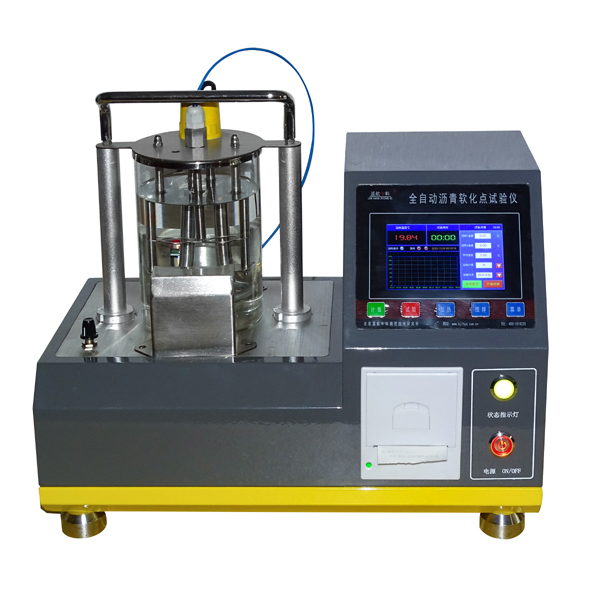
The Automatic Asphalt Softening Point Tester is a high-precision instrument engineered to evaluate the temperature susceptibility and heat resistance of bitumen materials. By utilizing the standardized ring-and-ball method, this equipment provides critical data that allows engineers to ensure pavement durability and structural integrity under extreme high-temperature environments, making it essential for modern infrastructure development.
Developed by Cangzhou Blue Beauty Instrument Co., Ltd., this advanced tester integrates automation with rigorous quality standards (ISO9001:2008) to eliminate human error and enhance repeatability. Widely adopted by universities, petroleum laboratories, and construction firms globally, it streamlines quality control processes and optimizes material selection for diverse climatic conditions.
Detailed Parameters
| Testing Method | Ring-and-Ball Standard Method | Control System | Digital Automated Control |
|---|---|---|---|
| Temperature Distribution | Uniform Heating System | Detection Mode | Automatic Sensor Detection |
| Quality Standard | ISO9001:2008 / GB/T190001-2008 | Application | Bitumen & Asphalt Materials |
| Operation Interface | Intuitive Digital Display | Accuracy Level | High Precision Repeatability |
| Material Build | Industrial Grade Corrosion-Resistant | Manufacturer | Cangzhou Blue Beauty Instrument |
Key Advantages
High Precision
Advanced sensors ensure stable heating and uniform temperature distribution for highly accurate results.
Fully Automated
Automated heating and data recording significantly reduce manual intervention and labor costs.
Error Reduction
Digital controls minimize human error, ensuring identical conditions for every test cycle.
User-Friendly UI
An intuitive interface allows operators to set parameters and read results with minimal training.
Industrial Durability
Constructed with premium materials to maintain stable performance under continuous laboratory use.
Global Compliance
Manufactured under strict ISO standards, ensuring reliability in over 60 countries.
Product Gallery
Management Platforms
Material Selection
Optimize asphalt grades based on precise softening point data for specific climates.
Process Control
Maintain consistent material quality during large-scale bitumen production.
Quality Assurance
Ensure all batches meet strict regulatory and project specifications.
Durability Analysis
Evaluate long-term pavement resistance against thermal deformation.
Lab Efficiency
Increase sample throughput through streamlined automated testing cycles.
R&D Optimization
Support innovative material research with repeatable and reliable data.
Investment Return Comparison
| Performance Metric | Manual Testing | Automatic Testing |
|---|---|---|
| Testing Efficiency | Low (Time Consuming) | High (Rapid Cycle) |
| Human Error Risk | Significant | Negligible |
| Data Repeatability | Variable | Highly Consistent |
| Labor Requirement | Constant Monitoring | Minimal Supervision |
| Long-term Cost | Higher (due to waste) | Lower (Optimized ROI) |
Frequently Asked Questions
It determines the temperature at which asphalt softens, which is critical for evaluating its resistance to deformation in hot climates and ensuring pavement longevity.
The asphalt sample is heated at a controlled rate until it softens enough for a steel ball to drop through the ring; the temperature at this moment is the softening point.
It is widely used in petroleum laboratories, road construction companies, universities, and materials research institutes.
Automation removes subjective human observation and ensures precise, constant heating rates, leading to highly repeatable results.
Yes, the products are manufactured in accordance with ISO9001:2008 and GB/T190001-2008 quality management systems.
It enables engineers to select the correct bitumen grade for specific regional temperatures, reducing the risk of rutting and road failure.