
Comprehensive Guide to Specific Surface Area Tester and Its Applications
Specific Surface Area Tester: A Comprehensive Guide
Understanding the surface area of materials is crucial in a multitude of scientific and industrial applications, ranging from catalyst development to battery technology and pharmaceuticals. A Specific Surface Area Tester, like those offered by CZ Lab Instrument, provides precise measurements of this critical parameter. This article will delve into the principles of surface area measurement, the different types of testers available, key applications, and why choosing a reliable instrument is paramount. We’ll explore how these testers contribute to advancements in various fields and help optimize material performance.
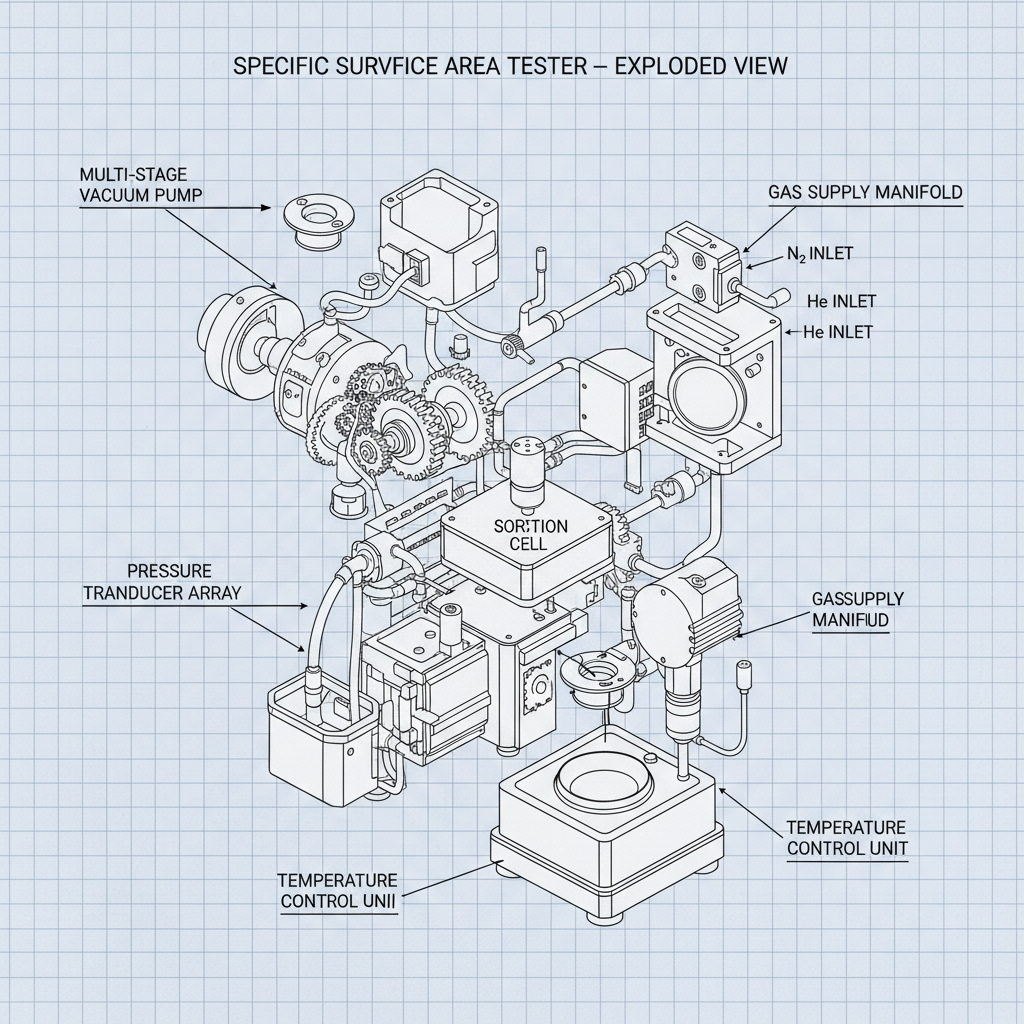
What is Specific Surface Area and Why Measure It?
Specific Surface Area (SSA) refers to the total surface area of a material per unit mass, typically expressed in square meters per gram (m²/g). Unlike geometric surface area which only considers the external dimensions of a material, SSA accounts for the internal surface area within pores and crevices. This is particularly important for materials with high porosity, such as catalysts, adsorbents, and powders. Measuring SSA is critical for understanding a material’s reactivity, adsorption capacity, dissolution rate, and overall performance. Accurate SSA measurement enables researchers and engineers to optimize material properties for specific applications. For example, in catalysis, a higher SSA generally leads to increased catalytic activity.
The BET Method: The Gold Standard in SSA Measurement
The most widely used technique for determining SSA is the Brunauer-Emmett-Teller (BET) method. This technique involves the physical adsorption of an inert gas, typically nitrogen, onto the surface of a material at cryogenic temperatures. By carefully controlling the gas pressure and measuring the amount of gas adsorbed, the BET equation can be used to calculate the SSA. The BET surface area analyzers from CZ Lab Instrument utilize this principle to provide highly accurate and reliable results. The accuracy of the BET method relies on precise temperature and pressure control, as well as a thorough understanding of the gas adsorption process.
Key Highlights: The BET method is a widely accepted and reliable technique for SSA measurement. It provides detailed insights into a material's surface characteristics, enabling optimization for diverse applications.
Types of Specific Surface Area Testers
Several types of specific surface area testers are available, each with its own advantages and disadvantages. The most common include: volumetric gas adsorption analyzers, dynamic flow gas adsorption analyzers, and automated chemisorption analyzers. Volumetric analyzers measure the total volume of gas adsorbed at different pressures, while dynamic flow analyzers measure the rate of gas adsorption. Automated chemisorption analyzers are specifically designed for studying the adsorption of chemically active gases. The best choice depends on the specific application, sample type, and required level of accuracy. CZ Lab Instrument offers a comprehensive range of these testers to suit various research and industrial needs.
SSA Tester Comparison:
• Volumetric: High accuracy, suitable for a wide range of materials.
• Dynamic Flow: Faster analysis time, good for routine measurements.
• Chemisorption: Specialized for studying chemical interactions on surfaces.
Applications of Specific Surface Area Testers
The applications of specific surface area testers are incredibly diverse. In the pharmaceutical industry, SSA measurement is crucial for controlling drug dissolution rates and bioavailability. In the catalyst industry, it's essential for optimizing catalyst activity and selectivity. Other applications include: development of advanced battery materials, characterization of adsorbents for gas separation and purification, analysis of pigments and coatings, and quality control of powders and nanoparticles. CZ Lab’s instruments cater to these varied applications with high precision.
Choosing the Right Specific Surface Area Tester
Selecting the appropriate Specific Surface Area Tester requires careful consideration of your specific needs. Factors to consider include the type of materials being analyzed, the required accuracy, sample throughput, and budget. Look for instruments that offer automated data analysis, user-friendly software, and robust data security. CZ Lab Instrument provides comprehensive support, including installation, training, and maintenance services, ensuring a seamless experience for our customers. Investing in a high-quality instrument from a reputable manufacturer guarantees reliable results and long-term performance.

Conclusion: Investing in Accurate SSA Measurement
Accurate determination of specific surface area is fundamental to advancements across a wide range of scientific and industrial disciplines. By investing in a high-quality Specific Surface Area Tester from CZ Lab Instrument, researchers and engineers can unlock valuable insights into material properties and optimize performance for their specific applications.
Frequently Asked Questions (FAQs)
What sample preparation is required for BET analysis?
Proper sample preparation is crucial for accurate BET measurements. Samples should be dry and free of contaminants. Powders typically need to be degassed under vacuum at elevated temperatures to remove any adsorbed moisture or gases. The degassing temperature and duration depend on the sample material. It’s essential to follow the recommended preparation procedures for your specific material to ensure reliable results. CZ Lab Instrument provides detailed guidelines for sample preparation with our instruments.
How long does a typical BET analysis take?
The duration of a BET analysis can vary depending on the sample material, instrument settings, and desired level of accuracy. Generally, a complete analysis, including degassing and measurement, can take anywhere from 30 minutes to several hours. Dynamic flow analyzers typically provide faster results compared to volumetric analyzers. The software accompanying the SSA testers from CZ Lab Instrument optimizes the process for efficient and accurate measurements.
What is the significance of pore size distribution in addition to SSA?
While SSA provides a total surface area value, pore size distribution reveals the distribution of pore sizes within the material. This information is crucial for understanding the material’s transport properties and accessibility of active sites. For example, in catalysis, the pore size distribution affects the diffusion of reactants and products. Both SSA and pore size distribution are often determined simultaneously using gas adsorption techniques.
How does CZ Lab Instrument support its customers?
CZ Lab Instrument provides comprehensive support, including installation assistance, operator training, preventative maintenance services, and ongoing technical support. We are committed to ensuring our customers get the most out of their investment. Our team of experienced engineers and scientists are available to answer questions and provide guidance. We also offer calibration services to maintain the accuracy of your instrument.


