
Comprehensive Guide to Safety Clean Workbenches for Contamination Control
Safety Clean Workbench: Your Guide to a Contamination-Free Workspace
Maintaining a pristine and controlled environment is crucial in many industries, including electronics, pharmaceuticals, and laboratories. A safety clean workbench is the cornerstone of achieving this goal, providing a dedicated space for sensitive work, free from particulate contamination. This article explores the benefits, features, and applications of safety clean workbenches, helping you determine the right solution for your needs. Protecting your products and processes from contaminants directly impacts quality and reliability, making a clean workbench a valuable investment.
Understanding the Core Benefits of a Safety Clean Workbench
The primary benefit of a safety clean workbench is the reduction of particulate contamination. These workbenches utilize various filtration systems, typically including HEPA filters, to remove dust, debris, and other airborne particles. This is essential for tasks requiring a sterile or highly controlled environment. Beyond contamination control, clean workbenches also improve operator comfort and efficiency by providing a dedicated, organized workspace. Proper lighting and ergonomic designs further contribute to a more productive and less error-prone work process. The workbenches offered by CZLabInstrument are designed to meet the exacting demands of modern industries.
Key Highlights: Clean workbenches minimize particulate contamination, enhance operator comfort, and boost productivity by providing a dedicated, organized workspace.
Types of Safety Clean Workbenches and Their Applications
There are several types of safety clean workbenches, each suited to different applications. Laminar flow workbenches provide a unidirectional airflow, protecting the work area from contamination. Biosafety cabinets (BSCs) are designed to protect both the worker and the environment from hazardous materials. General clean workbenches offer a basic level of particulate control and are ideal for less critical applications. Selecting the right type depends on the specific requirements of your process. For example, pharmaceutical manufacturing might require a BSC, while assembling electronic components may only need a laminar flow workbench.
Clean Workbench Types:
• Laminar Flow Workbenches: Unidirectional airflow for product protection.
• Biosafety Cabinets (BSCs): Protect worker and environment from hazardous materials.
• General Clean Workbenches: Basic particulate control for less critical applications.
Safety Clean Workbench Features: A Comparative Overview
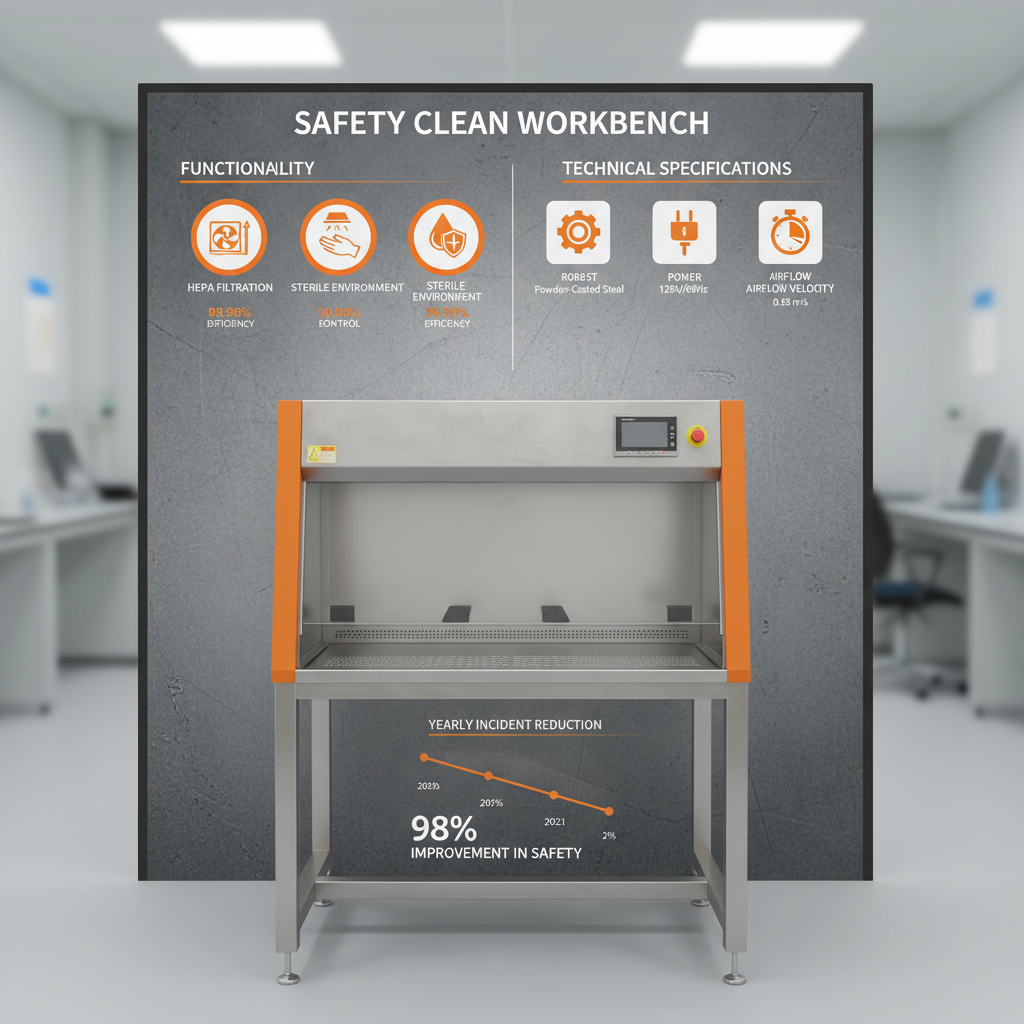
Key features differentiate various clean workbench models. Filtration efficiency (measured in MERV ratings or HEPA certification) is paramount, determining the level of particulate removal. Airflow patterns (vertical or horizontal laminar flow) impact how contaminants are removed from the work area. Workbench materials (stainless steel, epoxy resin, etc.) influence durability and cleanability. Ergonomic features, such as adjustable height and lighting, contribute to operator comfort and productivity. Considering these factors ensures you select a workbench that meets your specific needs and budget.
Industries Benefiting from Safety Clean Workbenches
The applications of safety clean workbenches are vast and span numerous industries. Electronics manufacturing relies on them for assembling sensitive components. Pharmaceutical companies utilize them for compounding sterile medications. Laboratories employ them for a wide range of research and analytical procedures. Even industries like food processing and cosmetics benefit from the controlled environment provided by these workbenches. Ensuring product quality and preventing contamination are paramount in these sectors, making clean workbenches indispensable tools.
Choosing the Right Safety Clean Workbench: Key Considerations
Selecting the ideal safety clean workbench requires careful consideration of several factors. Determine the level of contamination control needed for your application. Consider the size and layout of your workspace. Evaluate the types of materials you will be handling. Establish a budget. Furthermore, choose a reputable supplier like CZLabInstrument who can provide expert guidance and support. Investing in a high-quality workbench ensures long-term reliability and optimal performance.
Conclusion: Invest in a Contamination-Free Future
A safety clean workbench is a critical investment for any organization prioritizing product quality, operator safety, and process control. By carefully considering your specific needs and selecting the right workbench from a trusted supplier like CZLabInstrument, you can create a contamination-free environment and achieve optimal results. Don't compromise on cleanliness – choose a solution that protects your products, your people, and your reputation.
Frequently Asked Questions (FAQs)
How often should I replace the filters in my clean workbench?
Filter replacement frequency depends on usage and the environment. Generally, pre-filters should be replaced every 3-6 months, while HEPA filters typically last 6-12 months. However, it's crucial to monitor filter pressure drop and replace them when they become clogged, even if the recommended timeframe hasn’t passed. Regular filter replacement ensures optimal performance and prevents the release of trapped contaminants back into the work area. CZLabInstrument offers filter replacement services to simplify maintenance.
What cleaning agents are safe to use on a safety clean workbench?
It’s important to use cleaning agents specifically designed for cleanroom environments. Avoid abrasive cleaners, solvents, and harsh chemicals that can damage the workbench materials or release contaminants. Isopropyl alcohol (IPA) is generally recommended for disinfecting surfaces. Always follow the manufacturer's recommendations for cleaning procedures and compatible agents. CZLabInstrument provides a range of approved cleaning solutions.
How do I validate that my clean workbench is functioning properly?
Regular validation is essential to ensure your clean workbench maintains its performance. This typically involves particle counting to measure the number of airborne particles within the work area. Airflow measurements can also verify that the laminar flow is functioning correctly. CZLabInstrument offers comprehensive validation services to ensure your workbench meets the required standards. Documentation of validation results is crucial for regulatory compliance.
What is the difference between unidirectional and bidirectional airflow?
Unidirectional airflow, found in laminar flow workbenches, moves air in a single direction, providing a clean workspace for product protection. Bidirectional airflow, although less common in clean workbenches, means air flows in multiple directions, not necessarily maintaining a sterile zone. A laminar flow environment is crucial in applications where preventing contamination is paramount.


