
Comprehensive Guide to Industrial Instrument Testing Oven Technology and Applications
Industrial Instrument Testing Oven: A Comprehensive Guide
Ensuring the precision and reliability of industrial instruments is paramount for maintaining quality control and adhering to industry standards. An Industrial Instrument Testing Oven plays a crucial role in this process, providing a controlled thermal environment to evaluate instrument performance across a range of temperatures. This article provides a detailed overview of these ovens, their applications, key features, and factors to consider when selecting the right model. Investing in a high-quality testing oven is a vital step in safeguarding the accuracy and longevity of your valuable instruments.
What is an Industrial Instrument Testing Oven?
An Industrial Instrument Testing Oven is a specialized piece of equipment designed to subject industrial instruments to controlled temperature environments. These ovens are used to assess the impact of temperature variations on instrument accuracy, stability, and overall performance. They are commonly utilized in industries such as manufacturing, pharmaceuticals, aerospace, and research & development, where precise instrument readings are critical. The ovens maintain consistent temperature distribution and offer programmable temperature profiles to simulate real-world operating conditions.
Key Applications of Industrial Instrument Testing Ovens
The versatility of these ovens extends to a wide range of applications. Calibration of temperature sensors, verification of thermal switches, and testing of data loggers are common uses. They’re also essential for evaluating the performance of pressure transducers, flow meters, and other instruments sensitive to temperature changes. Furthermore, these ovens play a critical role in research and development, enabling engineers and scientists to assess the robustness of new instrument designs under varying thermal stresses. They also play a crucial part in quality assurance procedures for manufactured instruments, ensuring they meet stringent performance criteria.
Key Applications: Calibration of sensors, Verification of thermal switches, Testing of data loggers, Evaluating pressure transducers, Quality Assurance.
Choosing the Right Industrial Instrument Testing Oven
Selecting the optimal oven requires careful consideration of your specific needs. Temperature range is a primary factor; ensure the oven can reach the temperatures required for your instrument testing. Chamber size is another crucial aspect; it should accommodate the dimensions of the instruments you’ll be testing. Temperature uniformity within the chamber is also vital to ensure accurate and reliable results. Programmability, data logging capabilities, and safety features are other key considerations. Consider the level of control and automation required for your testing processes. A reliable oven from a reputable manufacturer like CZ Lab Instrument is an investment in accurate results and long-term performance.
Industrial Instrument Testing Oven: Features and Specifications
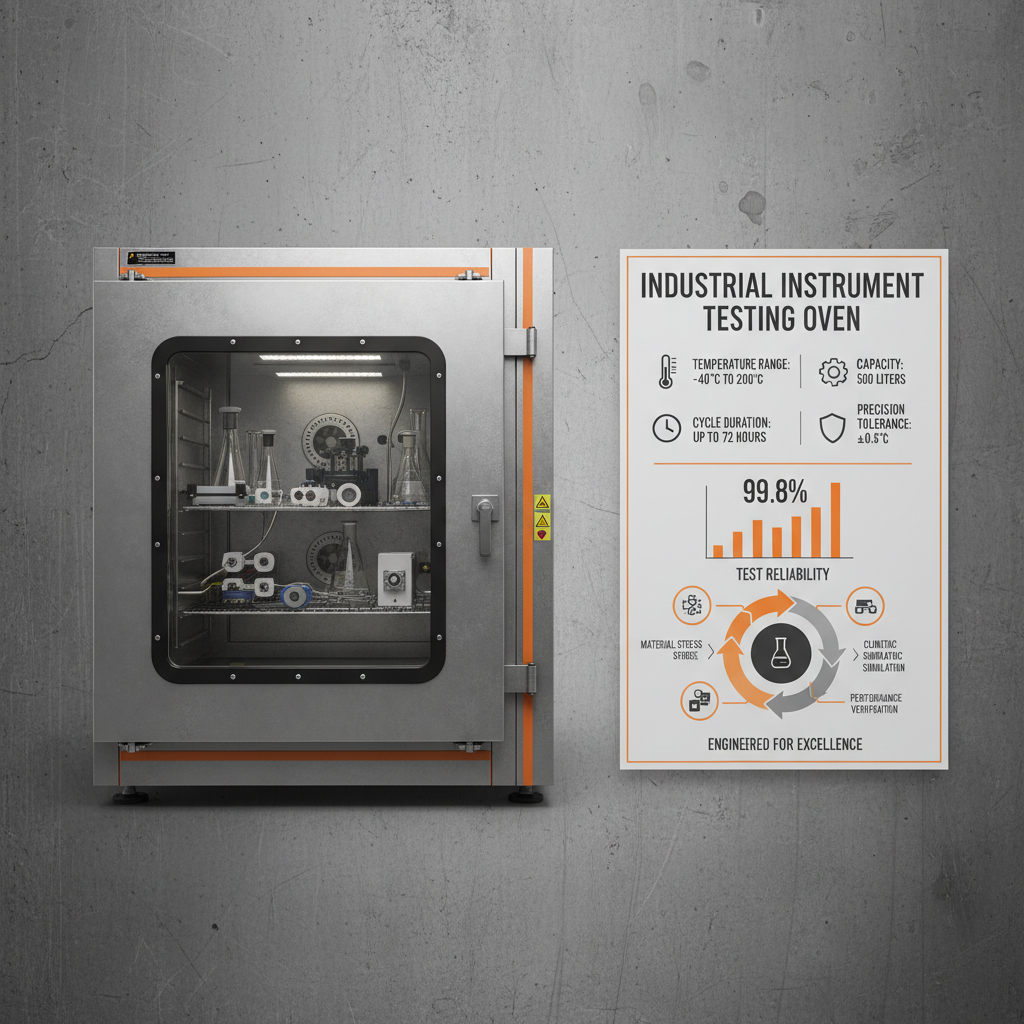
Modern industrial instrument testing ovens boast a range of advanced features. Precise temperature control systems, often utilizing PID controllers, ensure stable and accurate temperatures. Programmable temperature profiles allow for automated testing sequences, simulating real-world operational scenarios. Data logging capabilities enable the recording of temperature data for analysis and reporting. Safety features, such as over-temperature protection and door interlocks, are essential for preventing accidents and ensuring operator safety. Here's a comparative look at some common specifications:
Safety Considerations When Using Testing Ovens
Safety is paramount when operating any industrial equipment. Always wear appropriate personal protective equipment (PPE), such as heat-resistant gloves and eye protection. Ensure the oven is properly ventilated to prevent the buildup of fumes or gases. Never exceed the oven's maximum temperature rating. Be aware of hot surfaces and avoid contact. Regularly inspect the oven for any signs of damage or malfunction. Adhering to these safety guidelines will help minimize the risk of accidents and ensure a safe working environment.
Conclusion: Investing in Precision and Reliability
An Industrial Instrument Testing Oven is an indispensable tool for ensuring the accuracy and reliability of industrial instruments. By carefully considering your specific needs and selecting a high-quality oven, you can maintain stringent quality control, adhere to industry standards, and optimize the performance of your valuable equipment.
Frequently Asked Questions (FAQs)
What temperature accuracy can I expect from an industrial testing oven?
The temperature accuracy of industrial testing ovens varies depending on the model and price point. Generally, standard models offer an accuracy of ±2°C, while high-precision models can achieve ±0.5°C or even better. It's important to consider the required accuracy for your specific application when selecting an oven. Factors such as temperature uniformity, sensor calibration, and control system stability also contribute to overall accuracy. Choosing a reputable manufacturer like CZ Lab Instrument ensures consistent and reliable temperature control.
What are the benefits of programmable temperature profiles?
Programmable temperature profiles allow you to automate complex testing sequences, simulating real-world operating conditions. This eliminates the need for manual temperature adjustments, reducing the risk of errors and improving efficiency. You can define multiple ramps, soaks, and steps within a profile, precisely controlling the temperature's rate of change and duration at each setpoint. This is particularly useful for evaluating instrument performance under dynamic thermal conditions. Furthermore, programmable profiles enable repeatable testing, ensuring consistent results.
How important is temperature uniformity within the chamber?
Temperature uniformity is critical for accurate and reliable instrument testing. If the temperature varies significantly within the chamber, it can lead to inconsistent readings and inaccurate results. A high-quality oven will feature a well-designed heating system and forced convection to ensure even temperature distribution. Temperature uniformity is typically specified as ±X°C, where X represents the maximum temperature difference across the chamber. Prioritize ovens with excellent temperature uniformity for applications requiring precise temperature control.
What safety features should I look for in an industrial testing oven?
Essential safety features include over-temperature protection, which automatically shuts off the oven if the temperature exceeds a preset limit. Door interlocks prevent operation when the door is open, minimizing exposure to hot surfaces. Audible alarms provide a warning in case of malfunctions or deviations from the programmed settings. A robust construction and proper grounding are also important safety considerations. Always prioritize ovens that meet relevant safety standards and certifications.


