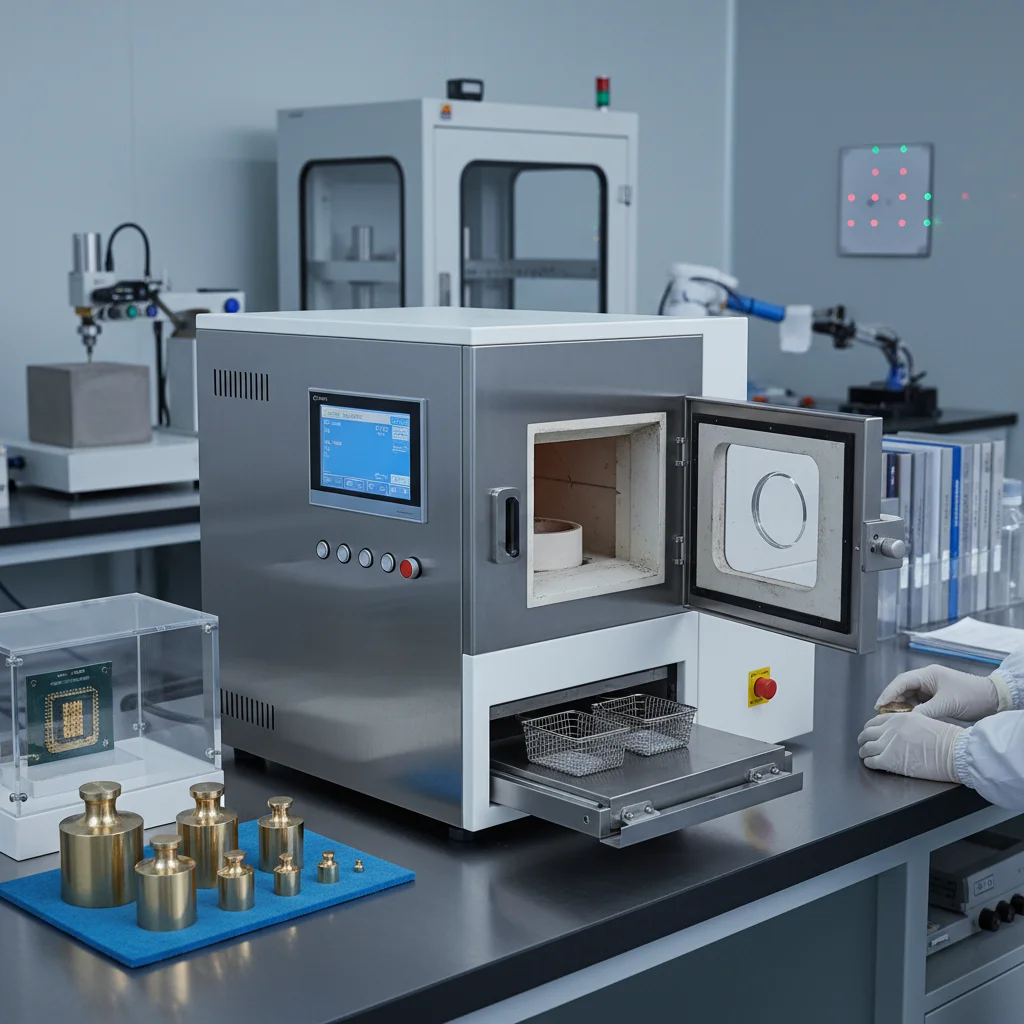
Ensuring the structural integrity of road networks depends heavily on the precision of material testing, where the Vacuum Asphalt Density Meter plays a pivotal role. By eliminating entrapped air within bitumen mixtures, this instrument allows engineers to determine the theoretical maximum specific gravity of asphalt, a critical metric for calculating air voids and overall pavement durability.
In the global construction landscape, the shift toward high-performance highways has increased the demand for rigorous quality control. The Vacuum Asphalt Density Meter provides the empirical data necessary to prevent premature road failure, such as rutting or cracking, by ensuring that the compaction levels meet international engineering standards.
Understanding the nuances of vacuum-based density measurement is not merely a technical requirement but a safety imperative. By utilizing a Vacuum Asphalt Density Meter, laboratories can standardize their testing processes, reducing human error and providing consistent results that align with global infrastructure benchmarks.

Global Industry Context of Vacuum Asphalt Density Meter
The global infrastructure sector is currently facing a crisis of sustainability, with road maintenance costs rising exponentially. According to ISO standards and various international transport guidelines, the stability of asphalt concrete is directly proportional to its density. The Vacuum Asphalt Density Meter has become the gold standard for assessing this density, ensuring that materials used in critical transport corridors can withstand extreme weather and heavy load cycles.
In emerging economies, the rapid expansion of highway networks often leads to shortcuts in quality control. The introduction of the Vacuum Asphalt Density Meter addresses this challenge by providing a verifiable method to measure the "Maximum Theoretical Relative Density." This prevents the common problem of excessive air voids, which otherwise allow water to penetrate the road base and cause rapid deterioration.
Defining the Vacuum Asphalt Density Meter Mechanism
At its core, a Vacuum Asphalt Density Meter is a precision instrument designed to remove air bubbles from asphalt samples. By creating a controlled vacuum environment, the device forces trapped air out of the bitumen-aggregate matrix, allowing the sample to reach its most compact state. This "theoretical maximum" is essential because it serves as the baseline for all other density calculations in pavement engineering.
From a humanitarian and economic perspective, this mechanism is vital for urban safety. Roads constructed without precise density verification are prone to potholes and structural collapses. The Vacuum Asphalt Density Meter transforms dry, complex physics into actionable data, allowing engineers to verify that a road is safe for public use before it is even opened.
Modern versions of these meters integrate digital sensors and automatic vacuum pumps, moving away from the manual, error-prone methods of the past. This evolution ensures that laboratories across different continents can produce comparable results, fostering a global standard for road construction quality.
Core Components for Maximum Precision
The efficiency of a Vacuum Asphalt Density Meter depends on its vacuum pump's ability to reach and maintain ultra-low pressures. A high-performance pump ensures that even the smallest micro-bubbles are extracted from the viscous asphalt, which is critical for achieving a high degree of accuracy in the final density reading.
Durability is another cornerstone of the Vacuum Asphalt Density Meter. Given that asphalt is tested at high temperatures, the vacuum chamber must be constructed from heat-resistant, reinforced materials that can withstand repeated thermal expansion and contraction without leaking, ensuring long-term operational stability.
Finally, the integration of precision weighing scales and digital controllers allows the Vacuum Asphalt Density Meter to deliver results with minimal human intervention. This scalability allows large-scale construction projects to test hundreds of samples daily without sacrificing the quality of the data.
Practical Applications in Global Infrastructure
In real-world contexts, the Vacuum Asphalt Density Meter is indispensable for airport runway construction. Due to the immense weight of aircraft, runways require a density level far beyond that of standard highways. Engineers use vacuum density meters to ensure that there are virtually no air pockets in the asphalt, preventing structural deformation under heavy loads.
Similarly, in remote industrial zones or post-disaster relief operations where new roads must be built quickly but safely, the portability of modern Vacuum Asphalt Density Meter units allows for on-site verification. This ensures that the urgent need for speed does not compromise the longevity of the critical supply lines being established.
Vacuum Asphalt Density Meter Performance Comparison
Long-Term Value and Material Reliability
The primary long-term value of implementing a Vacuum Asphalt Density Meter is the drastic reduction in life-cycle maintenance costs. By ensuring an optimal density from the outset, governments and private firms avoid the costly cycle of "patch-and-repair" that plagues poorly tested road surfaces, effectively saving millions in taxpayer funds over a decade.
Beyond the financial logic, there is a strong emotional and social angle: safety and trust. When a road is certified through the use of a Vacuum Asphalt Density Meter, it provides peace of mind to the commuters and logistics companies relying on those routes. Reliability in material testing translates directly into reliability in public infrastructure.
Future Innovations in Bitumen Testing
The future of the Vacuum Asphalt Density Meter is leaning heavily toward digital transformation. We are seeing the rise of IoT-enabled sensors that can transmit density data in real-time to cloud-based monitoring systems. This allows project managers to oversee quality control across multiple construction sites from a single central dashboard, ensuring uniformity across entire regional projects.
Furthermore, the industry is moving toward "green bitumen," which incorporates recycled plastics and rubber. These new materials behave differently under vacuum pressure than traditional bitumen. Consequently, the next generation of Vacuum Asphalt Density Meter units will likely feature adaptive vacuum profiles that adjust automatically based on the material's chemical composition.
Automation is also reducing the "human variable." Future systems will likely integrate robotic sample loading and automatic weighing, turning the Vacuum Asphalt Density Meter into a fully autonomous workstation that eliminates operator error and increases throughput.
Challenges and Technical Solutions
One of the common limitations in current practice is the time required for a full vacuum cycle, which can create bottlenecks in high-volume laboratories. To overcome this, experts are introducing multi-chamber Vacuum Asphalt Density Meter designs, allowing multiple samples to be processed simultaneously without compromising the vacuum integrity of individual cells.
Another challenge involves the viscosity of modified bitumen, which can trap air more stubbornly than standard binders. The solution lies in the integration of ultrasonic vibration within the Vacuum Asphalt Density Meter chamber. By combining vacuum suction with high-frequency vibration, air bubbles are dislodged more efficiently, leading to faster and more accurate results.
Finally, calibration drift remains a concern for long-term users. The industry is solving this through "self-calibrating" systems. Modern Vacuum Asphalt Density Meter units now include internal reference standards that automatically check the vacuum level and scale accuracy, alerting the technician when maintenance is required.
Technical Analysis of Vacuum Asphalt Density Meter Solutions
| Challenge Type |
Impact on Accuracy |
Proposed Solution |
Efficiency Gain |
| Entrapped Micro-bubbles |
High |
Ultrasonic Integration |
9/10 |
| Processing Time |
Medium |
Multi-chamber Design |
8/10 |
| Thermal Leakage |
High |
Reinforced Alloy Seals |
7/10 |
| Calibration Drift |
Medium |
Auto-Calibration Logic |
9/10 |
| Operator Error |
Medium |
Digital PLC Interface |
8/10 |
| Material Variation |
High |
Adaptive Pressure Profiles |
7/10 |
FAQS
Standard weighing only measures the bulk density of a sample as it is. However, asphalt often contains trapped air that varies by batch. A Vacuum Asphalt Density Meter removes this air to find the "Theoretical Maximum Relative Density," providing a baseline that allows engineers to calculate the actual percentage of air voids in a compacted road, which is the only way to truly predict road longevity.
For professional laboratories, we recommend a pump inspection every 6 months. Because the Vacuum Asphalt Density Meter relies on achieving a very specific low-pressure threshold, any degradation in the pump's seals or oil contamination can lead to incomplete air removal, which artificially lowers the density reading and can lead to incorrect road construction approvals.
Yes, but with caution. Recycled asphalt often contains different binder properties and potential contaminants that may trap air differently. Using a high-end Vacuum Asphalt Density Meter with adjustable vacuum cycles is recommended for recycled materials to ensure that all air is successfully extracted, providing an accurate theoretical maximum density for sustainable paving projects.
Most industrial-grade Vacuum Asphalt Density Meters are designed to meet ASTM and AASHTO standards, offering precision up to 0.001 g/cm³. This level of accuracy is critical because even a small deviation in the theoretical maximum density can lead to a significant error in the calculated air void percentage, potentially resulting in premature pavement failure.
Yes, modern Vacuum Asphalt Density Meters are increasingly integrated with PLC (Programmable Logic Controllers). These systems automate the timing of the vacuum pump, the temperature monitoring of the sample, and the final data logging. This automation removes the risk of operator inconsistency and significantly speeds up the testing workflow in busy quality control labs.
Consider your daily sample volume and the types of bitumen you use. If you process high volumes, a multi-chamber Vacuum Asphalt Density Meter is best. If you work with modified or polymer-rich binders, look for a model with ultrasonic assistance or adaptive vacuum settings to ensure total air removal and maximum precision.
Conclusion
The Vacuum Asphalt Density Meter stands as a cornerstone of modern civil engineering, bridging the gap between raw material properties and long-term structural performance. By providing a precise measurement of theoretical maximum density, it enables the construction of safer, more durable, and more sustainable road networks globally. From the precision of its vacuum pump to its critical role in airport and highway safety, the instrument ensures that infrastructure is built on a foundation of empirical data rather than estimation.
As we move toward a future of smart cities and eco-friendly construction materials, the role of the Vacuum Asphalt Density Meter will only grow in importance. We encourage laboratories and construction firms to invest in automated, high-precision testing equipment to stay ahead of evolving international standards. For industry-leading solutions in material testing, visit our website: www.czlabinstrument.com.