The quality and durability of modern road infrastructure depend heavily on the precise engineering of asphalt mixtures. To ensure that highways can withstand heavy traffic loads and extreme weather conditions, engineers rely on specialized testing equipment to determine the ideal balance of binder and aggregate. This process is critical for preventing premature pavement failure and ensuring long-term structural integrity.
One of the most pivotal tools in this process is the specialized apparatus used to measure the resistance to plastic flow of bituminous materials. By simulating the loading conditions that a road surface encounters, this equipment allows researchers to optimize the mix proportion design and perform rigorous quality inspections during construction.
The Marshall Stability Tester serves as the industry standard for evaluating these properties, providing essential data on stability and flow values that are indispensable for civil engineering projects worldwide.

Global Relevance of Asphalt Stability Testing
Across the globe, the expansion of transportation networks is a key driver of economic growth. From the high-speed corridors of Asia to the sprawling highway systems of North America, the demand for high-performance asphalt that resists rutting and cracking is universal. International standards, such as those aligned with ISO and regional highway specifications, emphasize the need for rigorous laboratory validation before any material is deployed on the road.
The challenge lies in the variability of raw materials; bitumen viscosity and aggregate quality fluctuate based on source and climate. Without a standardized way to measure the peak load-bearing capacity, road surfaces would be prone to rapid deterioration, leading to increased maintenance costs and safety hazards for millions of commuters.
Defining the Marshall Stability Tester
A Marshall Stability Tester is a specialized laboratory instrument used to determine the stability and flow of asphalt mixtures. In simple terms, stability refers to the maximum load a cylindrical specimen can withstand before failure, while flow is the amount of deformation that occurs at that peak load.
This equipment is fundamentally linked to the Marshall Method, an empirical approach that allows engineers to find the "optimum bitumen content." This is the precise amount of asphalt binder that provides maximum stability and durability, ensuring the pavement is neither too brittle (leading to cracks) nor too soft (leading to rutting).
In the modern industrial context, this tool is essential for quality control. Whether it is for a small-scale municipal project or a massive interstate highway, the tester provides the empirical evidence needed to certify that the asphalt mixture meets the safety and performance requirements of the specific geographic region.
Core Technical Features and Components
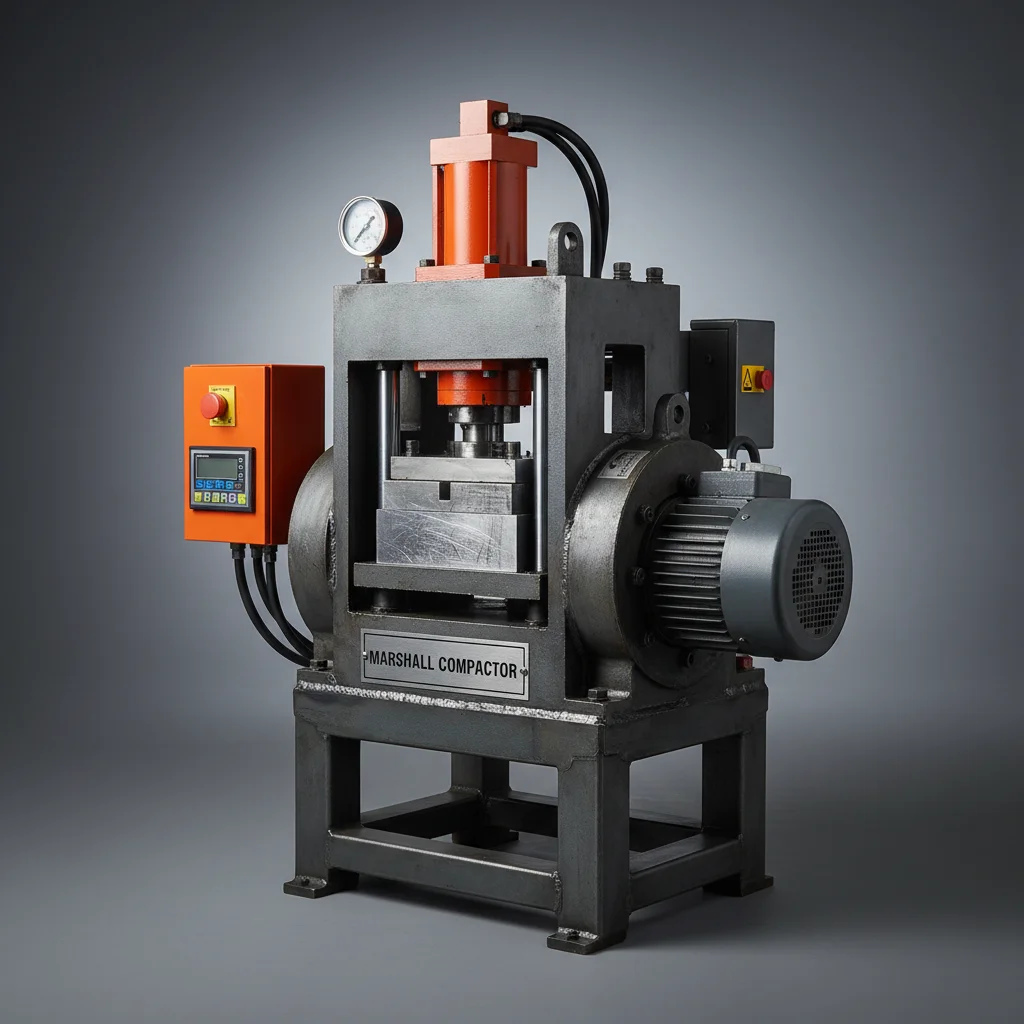
Modern iterations of the Marshall Stability Tester have evolved from manual levers to computerized systems. A key component is the automatic test control system, which manages parameter settings and measurement calibration, reducing human error and increasing the reproducibility of the results.
The integration of a large-screen graphic LCD is a significant advancement for the Marshall Stability Tester. This display provides real-time visual feedback, showing stability and flow value curves in an intuitive format, which allows technicians to identify the exact failure point of the specimen instantly.
Furthermore, the ability to store up to 100 sets of test data internally ensures that the Marshall Stability Tester serves as a digital record for quality assurance. With RS232 communication ports, data can be exported to computers for deeper statistical analysis and long-term project archiving.
Practical Applications in Pavement Engineering
In real-world civil engineering, the application of the stability tester is most evident during the mix design phase. Engineers prepare multiple specimens with varying asphalt contents and subject them to the loading process. This allows them to plot a stability curve and determine the optimal point for the specific aggregates being used in a project.
Beyond design, these instruments are used in quality inspection for asphalt pavement construction. In remote industrial zones or large-scale urban developments, site laboratories use the tester to verify that the asphalt arriving from the mixing plant matches the approved design specifications before it is laid on the road.
Performance Efficiency of Marshall Stability Tester Methods
Long-Term Value and Reliability
The long-term value of implementing a high-precision Marshall Stability Tester lies in the reduction of lifecycle costs for road infrastructure. By ensuring that the asphalt mix is optimized, the frequency of potholes and rutting is significantly reduced, which means fewer repairs and less disruption to public transport.
From a logical and emotional perspective, this reliability translates into safety and trust. When a road is built using materials validated by a precise tester, it provides a safer environment for drivers and pedestrians. Innovation in testing doesn't just save money; it saves lives by preventing catastrophic pavement failures in high-speed zones.
Future Trends in Bitumen Testing Automation
The future of asphalt testing is moving toward full digital transformation. We are seeing a shift where the Marshall Stability Tester is being integrated into Laboratory Information Management Systems (LIMS). This allows for the automated transmission of results from the laboratory to the project manager's dashboard in real-time, eliminating manual data entry errors.
Sustainability is also driving innovation. New testing protocols are being developed to evaluate "Green Asphalt"—mixtures that use recycled asphalt pavement (RAP) or bio-binders. The updated testers are being adapted to handle these new materials, ensuring that eco-friendly roads are just as stable as traditional ones.
Finally, the trend toward "Smart Testing" includes the use of sensors that can predict specimen failure before it occurs. This predictive maintenance for asphalt design will allow engineers to create more resilient materials that can adapt to the increasing temperature fluctuations caused by global climate change.
Technical Parameters and Performance Analysis
To understand the capabilities of a professional Marshall Stability Tester, one must look at the technical specifications. A high-end model typically offers a maximum load of 50kN, with a measuring range that covers the vast majority of asphalt mixture requirements. Precision is key, with measuring errors often kept within ±0.1kN to ensure accuracy.
The flow value, or vertical deformation, is measured with equal rigor, usually ranging from 0 to 20mm. This is critical because a high stability value is meaningless if the flow is too high, indicating a mixture that will deform under heat. The consistent press ascending speed of 50±5mm/min ensures that the test is conducted under standardized conditions.
The physical design also considers laboratory environment constraints, featuring a compact footprint of 600mm x 380mm x 840mm. This allows the instrument to fit into standard lab benches while maintaining the structural rigidity needed to apply 50kN of force without frame deflection.
Core Technical Specifications of the Marshall Stability Tester
| Performance Metric |
Standard Specification |
Error Margin |
Operational Impact |
| Maximum Load |
50kN |
±0.1kN |
High Capacity for Heavy Mixes |
| Flow Measuring Range |
0~20mm |
±0.05mm |
Precise Deformation Tracking |
| Loading Speed |
50±5mm/min |
Standardized |
Compliance with JTG E20-2011 |
| Overload Protection |
Automatic @ 49kN |
Instant |
Prevents Hardware Damage |
| Data Storage |
100 Sets |
N/A |
Efficient Lab Record Keeping |
| Power Output |
550W Motor |
Stable |
Consistent Pressure Application |
FAQS
The primary purpose is to determine the stability (the maximum load resistance) and flow (the deformation at that load) of an asphalt mixture. This data allows engineers to identify the optimum bitumen content, ensuring the road is strong enough to support traffic without being so stiff that it cracks or so soft that it ruts.
Yes, professional models are typically manufactured in accordance with rigorous standards. For example, our instrument is designed according to the Chinese industry standard JTG E20-2011, specifically the T0709-2011 "Marshall Stability Test for Asphalt Mixture," ensuring the results are legally and technically valid for highway engineering.
Automatic data collection eliminates the need for manual reading of dial gauges, which is often prone to human error. The system automatically captures the peak load and corresponding flow value, stores them in internal memory, and displays the result on an LCD screen, significantly speeding up the workflow and increasing precision.
The instrument is equipped with an automatic overload protection function. When the load value exceeds 49kN, the system triggers a protection mechanism to stop the process, preventing damage to the motor, the load cell, and the overall frame of the machine.
Yes, most professional testers are versatile. For instance, the standard configuration typically includes a Ф100mm loading fixture, but sets are often provided for both Ф100mm and Ф150mm specimens to accommodate different regional testing requirements and sample sizes.
The instrument features an RS232 serial communication port. This allows you to connect the tester to a computer, where you can export the stored data sets and test times directly into your analysis software or project reporting documents.
Conclusion
The Marshall Stability Tester remains an indispensable cornerstone of civil engineering, bridging the gap between theoretical mix design and real-world road performance. By providing precise measurements of stability and flow, it ensures that asphalt pavements are engineered for maximum durability, safety, and cost-efficiency. From its automated data collection to its rigorous adherence to industrial standards, this equipment minimizes the risks of structural failure in our global transportation networks.
As we look toward a future of sustainable infrastructure and smart cities, the role of precision testing will only grow. Investing in high-quality, computerized stability testing equipment is not just a technical requirement but a strategic decision to improve the lifespan of our roads and the safety of the public. For those seeking reliable laboratory solutions, we invite you to explore our professional range. Visit our website: www.czlabinstrument.com