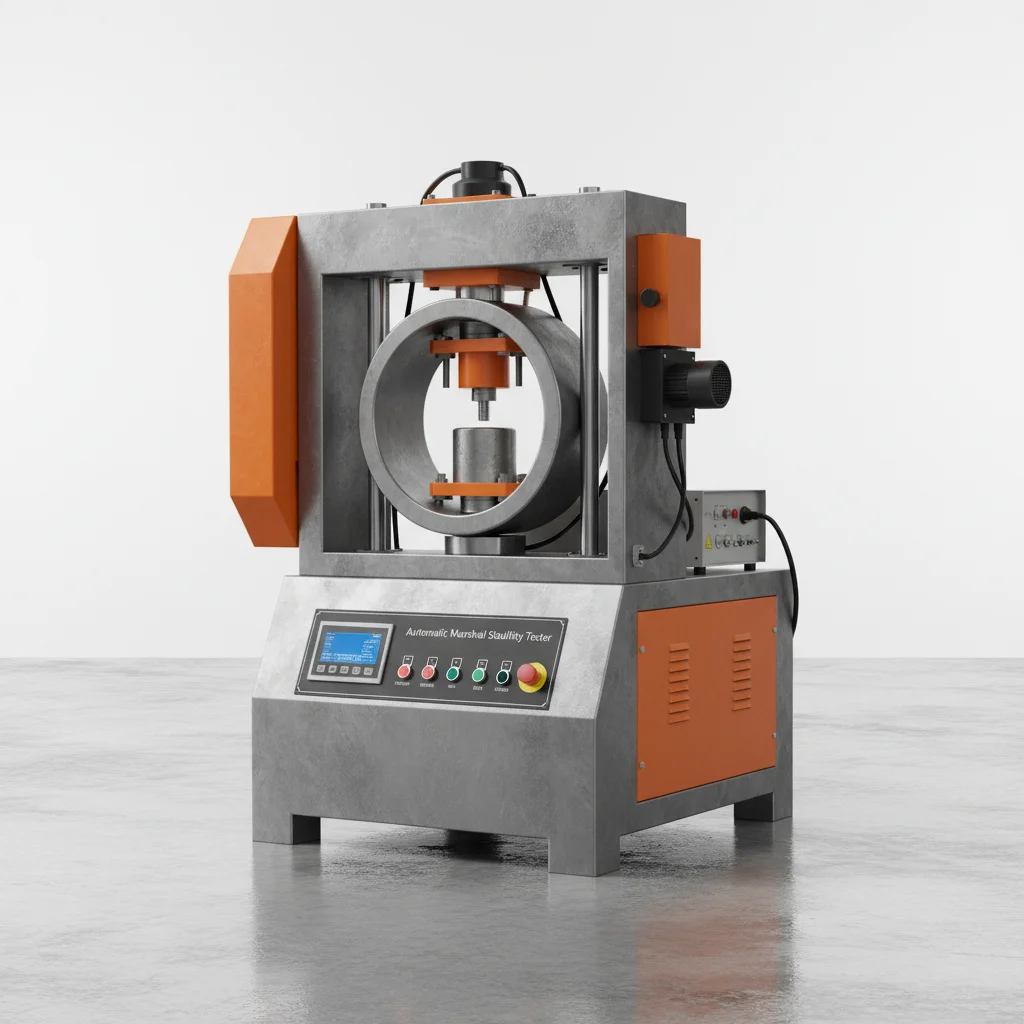
The advancement of infrastructure depends heavily on the precision of material testing, where the Asphalt Marshall Compactor plays a pivotal role in ensuring road durability and safety. By simulating the compaction process of asphalt mixtures, these instruments allow engineers to determine the optimal bitumen content and aggregate gradation, which are critical for preventing premature road failure.
Across the global construction landscape, the transition from manual to automated testing has revolutionized quality control. The implementation of high-precision equipment ensures that every batch of paving material meets stringent international standards, reducing the long-term costs of road maintenance and improving the lifespan of highways and urban arteries.
For professionals seeking the highest accuracy in laboratory environments, integrating an Asphalt Marshall Compactor into their workflow is essential for achieving consistent, repeatable results that align with global civil engineering benchmarks.

Global Industry Context of Asphalt Marshall Compactor
On a global scale, the demand for sustainable and resilient transport networks has pushed the asphalt industry toward more rigorous testing protocols. According to international standards such as ASTM and AASHTO, the precision of compaction testing is non-negotiable, as even minor deviations in density can lead to rutting or cracking under heavy traffic loads.
The Asphalt Marshall Compactor addresses the critical challenge of variability in material performance. By providing a controlled environment to apply specific impact energy to asphalt specimens, it enables laboratories to predict how a road will behave under real-world stresses, thereby ensuring public safety and economic efficiency in infrastructure spending.
Defining the Asphalt Marshall Compactor and its Utility
An Asphalt Marshall Compactor is a specialized laboratory instrument designed to consolidate asphalt mixtures into cylindrical specimens using a specific number of hammer blows. This process simulates the compaction achieved by rollers on a construction site, allowing technicians to analyze the stability and flow of the mix.
In the context of modern industry, this equipment is the cornerstone of the "Marshall Method," a widely accepted procedure for designing bituminous mixes. Its utility extends beyond simple compaction; it serves as a diagnostic tool to optimize the balance between air voids and binder content, which is essential for environmental sustainability.
By bridging the gap between theoretical design and physical implementation, the compactor ensures that humanitarian and commercial projects—ranging from rural access roads to metropolitan expressways—are built on a foundation of verified material strength.
Core Technical Components and Design Factors
The efficiency of an Asphalt Marshall Compactor depends on several engineering factors, primarily the precision of the falling weight and the stability of the base. Durability is key, as the repeated impact of the hammer requires high-grade steel components and vibration-dampening mounts to prevent structural fatigue.
Scalability and automation have become central to modern designs. Many advanced Asphalt Marshall Compactor models now incorporate digital counters and automatic lifting mechanisms, which eliminate human error during the blow-counting process and significantly increase laboratory throughput.
Cost efficiency is achieved through the use of standardized molds and interchangeable parts. By focusing on a modular design, facilities can maintain their equipment with minimal downtime, ensuring that the testing of asphalt mixtures remains a streamlined part of the construction timeline.
Practical Applications in Global Infrastructure
In real-world contexts, the Asphalt Marshall Compactor is utilized by government transport departments, private engineering firms, and university research labs worldwide. In regions like Southeast Asia and Africa, where extreme temperature fluctuations occur, these machines are used to develop "climate-resilient" asphalt that can withstand intense heat without softening.
For instance, in large-scale airport runway projects, the stability requirements are far higher than for standard roads. Engineers rely on the compactor to ensure that the mix can handle the immense point-loads of landing aircraft, preventing costly surface deformations that could compromise aviation safety.
Comparative Efficiency of Compaction Methods
Long-Term Value of Precision Compaction
The long-term value of utilizing a high-quality Asphalt Marshall Compactor lies in the dramatic reduction of road maintenance cycles. By optimizing the mix design in the lab, authorities can avoid the "fail-and-fix" cycle, leading to significant savings in taxpayer money and a reduction in traffic disruptions caused by constant roadworks.
Beyond the financial logic, there is a strong emotional and social angle: safety and trust. When a road is properly engineered through precise compaction testing, the risk of catastrophic potholes or surface sliding is minimized, providing citizens with a dignified and safe travel experience.
Future Innovations in Pavement Testing
The future of the Asphalt Marshall Compactor is being shaped by the digital transformation of the construction industry. We are seeing a move toward "Industry 4.0" integration, where compaction data is automatically uploaded to cloud-based BIM (Building Information Modeling) systems, allowing for real-time analysis of material performance across different project sites.
Sustainability is also driving innovation. New testing protocols are being developed to incorporate recycled plastics and rubber into asphalt mixes. The modern compactor is being adapted to handle these non-traditional materials, ensuring that "green roads" are just as stable and durable as those made with virgin bitumen.
Automation is reaching new heights with the introduction of AI-driven optimization. Future systems may be able to suggest the ideal number of hammer blows based on the specific chemical composition of the aggregate, further removing subjectivity from the testing process.
Overcoming Common Testing Challenges
One of the most common challenges in compaction testing is temperature loss. Since asphalt must be compacted at a specific heat to remain workable, any delay in the process can lead to inaccurate results. Innovative solutions now include heated mold holders that maintain a constant temperature throughout the compaction cycle.
Another limitation is the subjectivity of manual counting. To overcome this, the industry has shifted toward electronic impact sensors that record every blow with microsecond precision, ensuring that the energy applied to the specimen is identical every single time.
Finally, the challenge of specimen uniformity is addressed through the use of precision-machined molds and standardized hammer weights. By strictly adhering to calibration schedules, laboratories can ensure that their results are globally comparable and legally defensible.
Analysis of Compaction Testing Performance and Challenges
|
Challenge Factor
|
Impact on Accuracy
|
Innovative Solution
|
Efficiency Gain
|
| Thermal Loss |
High |
Pre-heated Mold Bases |
9/10 |
| Human Counting Error |
Medium |
Digital Impact Sensors |
10/10 |
| Mold Deformation |
Low |
Tungsten Carbide Coating |
7/10 |
| Material Variability |
High |
Automated Mix Design AI |
8/10 |
| Vibration Noise |
Medium |
Damping Hydraulic Mounts |
6/10 |
| Calibration Drift |
Medium |
Self-Diagnostic Software |
9/10 |
FAQS
The Asphalt Marshall Compactor uses an impact-based method, applying a specific number of hammer blows to the sample. In contrast, a Gyratory Compactor applies a combination of vertical pressure and kneading action. While the Marshall method is faster and widely used for general road design, the Gyratory method is often preferred for high-volume traffic designs due to its closer simulation of actual roller compaction.
Regular maintenance includes lubricating the guide rails to ensure the hammer falls vertically without friction, inspecting the hammer head for wear or deformation, and verifying the weight of the hammer. Additionally, digital sensors should be calibrated quarterly to ensure the blow count remains accurate and consistent with international standards.
While specifically designed for asphalt and bitumen mixtures, the core mechanical principle of impact compaction can be adapted for other semi-solid materials. However, the molds and hammer weights would need to be adjusted to match the specific density and stability requirements of those materials to ensure valid results.
To meet ASTM or AASHTO standards, you must ensure the sample temperature is strictly controlled, the hammer weight is accurate, and the mold is perfectly level. Using an automated Asphalt Marshall Compactor reduces human error in counting and timing, which are the two most common causes of standard deviation in lab results.
While the initial investment is higher, automated systems provide long-term cost savings through increased throughput and the elimination of costly re-tests. The reduction in labor hours and the guarantee of precision make automation a more cost-effective choice for professional laboratories handling multiple projects simultaneously.
Mold size is typically determined by the nominal maximum aggregate size (NMAS) of your asphalt mix. Standard Marshall molds are usually 4 inches in diameter. You should select a mold that allows the aggregate to distribute evenly without "wall effects" interfering with the density measurement.
Conclusion
The role of the Asphalt Marshall Compactor in modern civil engineering cannot be overstated. By providing a reliable, standardized method for determining the stability and flow of asphalt mixtures, it ensures that our roads are built to last, reducing environmental waste and enhancing public safety. From the fundamental mechanical design to the integration of digital automation, the evolution of this equipment reflects the broader industry trend toward precision and sustainability.
Looking forward, the adoption of smart testing technologies and eco-friendly material analysis will continue to redefine the standards of pavement engineering. We encourage laboratory managers and infrastructure developers to invest in high-precision compaction solutions to stay competitive and compliant with evolving global standards. For more information on professional testing equipment, visit our website: www.czlabinstrument.com.