
Comprehensive Guide to Cement Curing Cabinets For Humidity Control
Cement Curing Cabinet For Humidity: A Comprehensive Guide
Maintaining optimal humidity and temperature is crucial for the proper curing of cement and concrete, directly impacting their strength and durability. A Cement Curing Cabinet For Humidity provides a controlled environment to achieve this. This article will delve into the importance of controlled curing, the features of these cabinets, their applications, and considerations when choosing the right one. Understanding these factors is essential for anyone involved in construction, materials testing, or research. Ensuring adequate curing is a cornerstone of producing high-quality, long-lasting concrete structures.

The Importance of Controlled Humidity in Cement Curing
Cement hydration, the chemical process that gives concrete its strength, is heavily influenced by humidity. Insufficient humidity leads to premature water loss, causing surface cracking and reduced strength. Conversely, excessive humidity can hinder the process. A cement curing cabinet meticulously regulates humidity levels, typically between 95% and 100%, preventing both of these issues. This controlled environment ensures consistent hydration, leading to a stronger, more durable, and less permeable concrete. Proper curing is paramount for meeting structural requirements and extending the lifespan of concrete structures. Maintaining consistent humidity isn't just beneficial – it's often a requirement for achieving specified concrete performance standards.
Key Benefit: Consistent hydration for superior concrete strength, durability, and reduced permeability.
Features to Look for in a Cement Curing Cabinet For Humidity
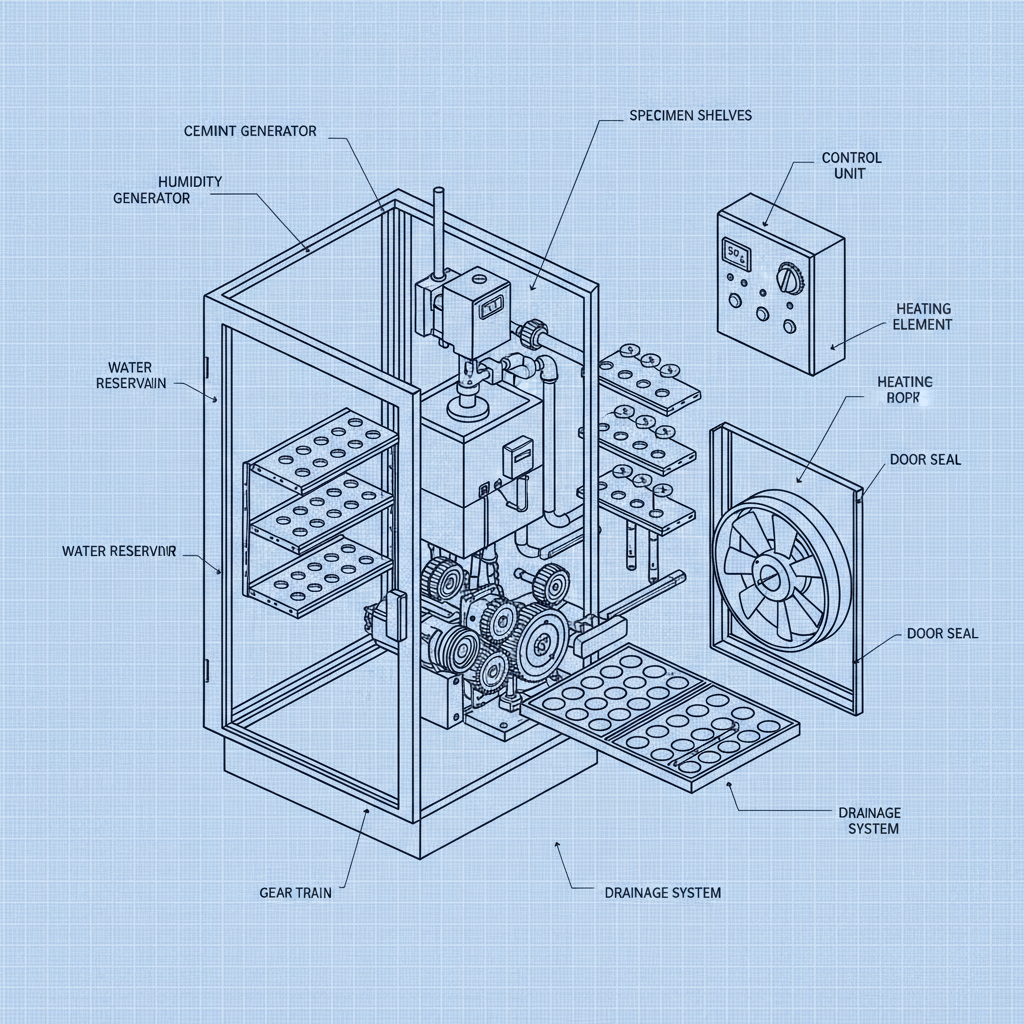
When selecting a cement curing cabinet, consider the following features: precise humidity control (with digital displays and adjustment capabilities), temperature control (often ranging from 20°C to 30°C), an efficient humidification system (utilizing water spray or steam), and a robust construction material (typically stainless steel for corrosion resistance). Internal shelving and adjustable racks are also important for accommodating various sample sizes. Look for models with reliable temperature and humidity sensors and alarm systems to alert you to any deviations from set parameters. Advanced features like data logging capabilities are beneficial for research and quality control purposes.
Essential Features:
• Precise Humidity & Temperature Control
• Efficient Humidification System
• Corrosion-Resistant Construction
• Adjustable Shelving & Racks
Cement Curing Cabinet: Specifications and Models
Different models offer varying capacities and features to suit diverse needs. Here’s a comparison of some common specifications:
Applications of Cement Curing Cabinets
These cabinets find application in various settings. Construction material testing laboratories use them for quality control of cement and concrete mixes. Research institutions employ them to study the effects of different curing conditions on concrete properties. Precast concrete manufacturers rely on them to ensure consistent product quality. The ability to precisely control humidity and temperature is vital for obtaining accurate and reliable test results, and for producing high-performance concrete products. CZ Lab Instrument provides solutions for each of these applications.
Choosing the Right Cement Curing Cabinet for Your Needs
Selecting the appropriate cabinet involves considering your sample size, testing requirements, and budget. Larger capacities are necessary for high-volume testing or larger specimens. Digital control systems and data logging capabilities offer increased precision and traceability. Consider the power requirements and available space in your laboratory. Investing in a high-quality cement curing cabinet is a long-term investment in the reliability and accuracy of your concrete testing and production processes.
Conclusion: Ensuring Optimal Concrete Curing
A Cement Curing Cabinet For Humidity is an indispensable tool for anyone involved in concrete technology. By providing precise control over the curing environment, these cabinets ensure the production of high-quality, durable concrete. Investing in a reliable cabinet from a reputable supplier like CZ Lab Instrument is a crucial step toward achieving optimal concrete performance and long-term structural integrity.
Frequently Asked Questions (FAQs)
What is the ideal humidity range for cement curing?
The ideal humidity range for cement curing is generally between 95% and 100%. Maintaining this level of humidity prevents premature water loss, which is critical for proper hydration. While some tolerance exists, deviating significantly from this range can compromise the strength and durability of the concrete. A cement curing cabinet excels at consistently maintaining this critical humidity level. Factors like ambient temperature and air circulation can influence the required humidity level, so precise control is essential.
How often should the water reservoir in a humidity cabinet be refilled?
The frequency of water reservoir refills depends on the cabinet's size, the ambient temperature, and the duration of operation. Typically, the reservoir needs refilling every 1-3 days. Many modern cabinets feature low-water level indicators or alarms to alert you when a refill is needed. Consistent water levels are vital for maintaining the desired humidity levels and preventing interruptions to the curing process. Regularly checking and refilling the reservoir is a simple yet crucial maintenance task.
What type of water should be used in a cement curing cabinet?
Distilled or deionized water is highly recommended for use in a cement curing cabinet. This minimizes the buildup of mineral deposits and scaling within the humidification system, ensuring efficient operation and preventing corrosion. Tap water can contain minerals that can leave residues and potentially affect the curing process. Using distilled or deionized water extends the lifespan of the cabinet and ensures accurate humidity control.


