
Precision Testing with 7L Concrete Air Content tester for Quality
Mastering Concrete Quality with the 7L Concrete Air Content Tester
In the world of civil engineering and construction, the durability of a structure depends heavily on the quality of the concrete used. One of the most critical factors in ensuring freeze-thaw resistance and long-term stability is the air content. The 7L Concrete Air Content tester provides a precise and reliable method for measuring the amount of entrained and entrapped air in fresh concrete. By maintaining the correct air-void system, engineers can prevent premature scaling and cracking in harsh environments. This guide explores how this professional instrument ensures compliance with international standards and optimizes construction outcomes.
The Importance of Precision in Air Content Testing
Air entrainment is a deliberate process where microscopic bubbles are introduced into concrete to improve workability and durability. However, too much air can significantly reduce the compressive strength of the concrete, while too little air leaves the structure vulnerable to freeze-thaw cycles. Using a 7L Concrete Air Content tester allows technicians to obtain a representative sample size, reducing the margin of error compared to smaller testers. This precision is vital for high-stakes projects such as bridge decks, airport runways, and dam walls where failure is not an option.
Pro Tip: Always ensure the bowl is properly sealed and the pump is calibrated before starting the test to avoid leakage, which can lead to inaccurate, lower air content readings.
How the 7L Concrete Air Content Tester Operates
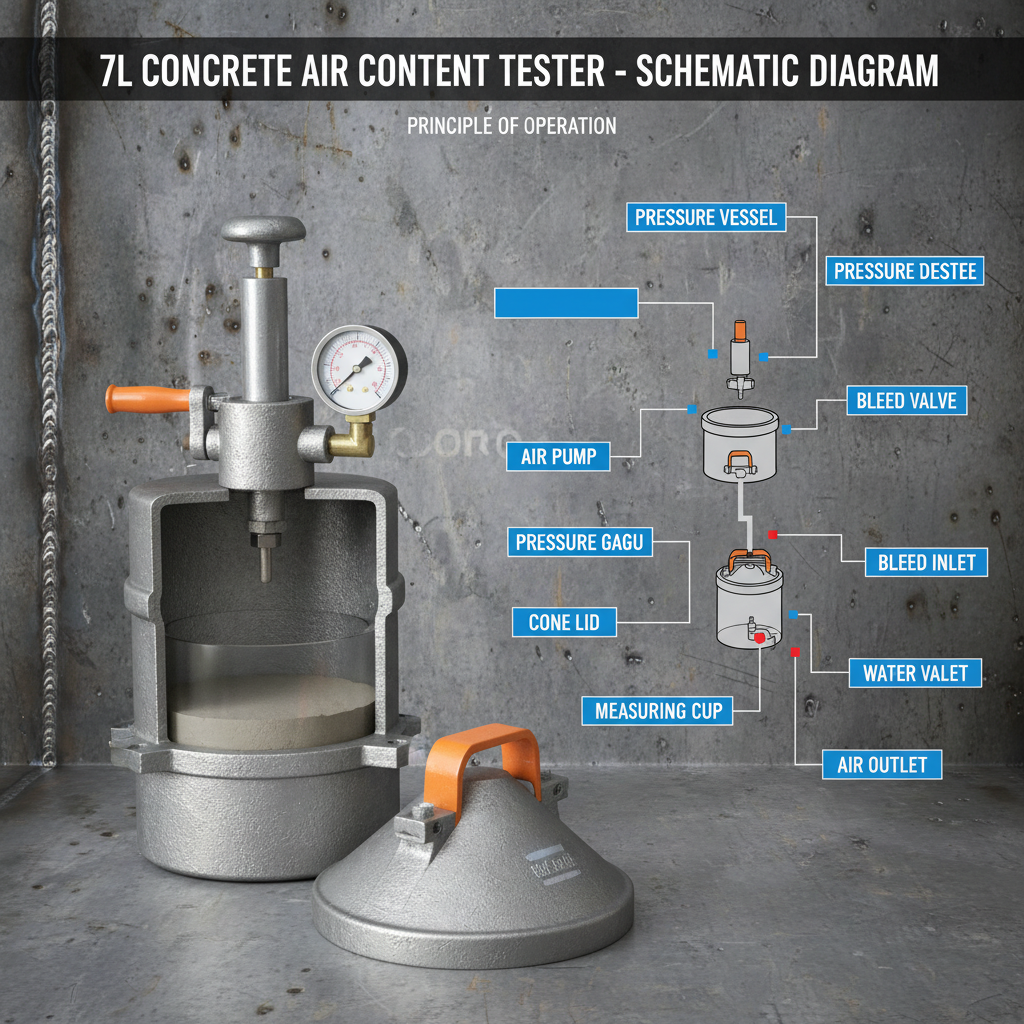
The operation of the pressure method tester is based on Boyle's Law. The concrete sample is placed in the 7-liter bowl, and the lid is sealed. Air is then pumped into the chamber until a specific pressure is reached. By measuring the pressure change when the concrete is compacted or by comparing the volume of air to the volume of the concrete, the percentage of air is calculated. The 7L Concrete Air Content tester is designed for ease of use, featuring a robust pump and a high-visibility gauge for rapid onsite results.
Technical Specifications of the 7L Concrete Air Content Tester
When selecting testing equipment, technical specs are the primary indicator of reliability. The 7L model is engineered to withstand the rigors of a construction site while maintaining laboratory-grade accuracy. Below are the detailed specifications for our professional-grade 7L Concrete Air Content tester, ensuring it meets the requirements of ASTM and EN standards.
Comparative Analysis: 7L vs. Small Volume Testers
Many firms debate whether to use a compact tester or a full-scale 7L unit. While compact versions are portable, the 7L Concrete Air Content tester is vastly superior for mixes containing large coarse aggregates. Smaller bowls often suffer from "wall effects," where the aggregate pushes against the sides, distorting the air reading. The 7L capacity provides a more statistically significant sample, ensuring that the air content measured reflects the entire batch of concrete.
Maintenance Tips for Longevity and Accuracy
To maintain the high precision of your 7L Concrete Air Content tester, regular maintenance is non-negotiable. Concrete is abrasive and alkaline, which can wear down seals and corrode surfaces over time. We recommend cleaning the bowl immediately after every use to prevent concrete from hardening on the walls, which could alter the volume. Additionally, checking the rubber O-rings for cracks and lubricating the pump valves ensures a leak-proof seal, which is the most common cause of measurement errors in the field.
Maintenance Checklist:
• Daily: Clean bowl and lid with water and a soft brush.
• Weekly: Inspect O-rings and gaskets for elasticity.
• Monthly: Verify gauge calibration against a certified standard.
• Quarterly: Lubricate pump mechanisms to ensure smooth operation.
Conclusion: Elevating Concrete Standards
Investing in a high-quality 7L Concrete Air Content tester is an investment in the structural integrity of your projects. By providing accurate, repeatable data on air void percentages, this instrument allows contractors and engineers to mitigate the risks of concrete degradation and ensure long-term durability. Whether you are working on residential developments or massive infrastructure projects, precision testing is the key to excellence. Choose professional equipment to guarantee your concrete stands the test of time.
Frequently Asked Questions (FAQs)
Why is the 7L capacity preferred over smaller testers?
The 7L capacity is preferred primarily because it allows for a larger and more representative sample of the concrete mix. In mixes that contain large aggregate sizes, small testers can lead to significant errors because the aggregate doesn't distribute evenly within a small volume. The 7L bowl minimizes the "wall effect" and ensures that the air content reading is an accurate reflection of the entire batch, which is essential for meeting strict ASTM or EN project specifications.
How often should the air content tester be calibrated?
Calibration should typically be performed annually or whenever the device is subjected to a significant impact or repair. However, for high-precision projects, we recommend a monthly verification check. This can be done using a "calibration check" with a known volume of air or a certified reference material. Regular calibration ensures that your readings remain accurate and that your project remains compliant with quality control standards, preventing costly rework due to faulty concrete.
Can this tester be used for all types of concrete mixes?
Yes, the 7L Concrete Air Content tester is versatile enough for most fresh concrete mixes, including those with air-entraining admixtures, fiber-reinforced concrete, and high-strength mixes. The only limitation is that it is designed for "fresh" concrete; once the concrete begins to set, the pressure method is no longer applicable. For various aggregate sizes, the 7L volume is specifically designed to handle coarse mixes better than any other portable pressure-type tester on the market.
What are the most common errors when using an air content tester?
The most common errors include improper sealing of the lid, which leads to air leaks and falsely low readings, and insufficient rodding of the concrete sample, which leaves entrapped air bubbles that don't represent the actual air-entrained content. Another common mistake is failing to clean the bowl properly, as dried concrete buildup changes the internal volume. Following the standard operating procedure (SOP) and ensuring the equipment is well-maintained are the best ways to avoid these inaccuracies.


