Asphalt Mixture Bending Tester Factory Leading China Suppliers of Pavement Testing Equipment
Looking for reliable asphalt mixture bending testers? As leading China suppliers and a professional factory, we provide high-precision systems to evaluate flexural strength and low-temperature performance for pavement research and quality testing.

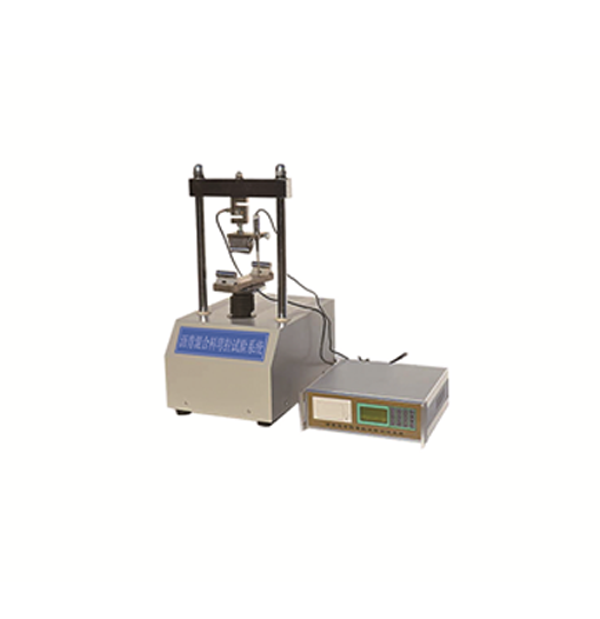
The Lab Asphalt Mixture Bending Tester is a high-precision diagnostic system engineered to evaluate the low-temperature cracking resistance of asphalt pavements. Developed in strict accordance with the "Test Regulations for Asphalt and Asphalt Mixture in Highway Engineering," this system utilizes a stepping motor reducer and specialized fixtures to simulate bending stress. By providing quantitative data on bending strength, flexural strain, and fracture behavior, it allows engineers to predict pavement durability and performance in regions with extreme temperature fluctuations.
Manufactured by Cangzhou Blue Beauty Instrument Co., Ltd., this equipment integrates decades of technical expertise in building materials testing. The system features a fully automated control process—from specimen clamping to data acquisition—reducing human error and enhancing repeatability. Widely adopted by universities, road research institutes, and quality inspection agencies globally, it stands as a critical tool for ensuring the structural integrity and long-term reliability of modern highway infrastructure.
Detailed Parameters
| Pressure Range | 0-5000N | Flow Value Range | 0-15.00mm (0.01mm) |
|---|---|---|---|
| Working Voltage | 220V±10%, 50HZ | Operating Temp | 5-35℃ |
| Loading Speed | 1mm/min – 50mm/min | Drive System | Stepping Motor Reducer |
| Control Mode | Automated Control | Data Output | Processing Unit & Printer |
| Standard Compliance | ISO9001:2008 / GB/T190001-2008 | Application | Asphalt Bending & Tensile Testing |
Key Advantages
High Precision
Advanced loading systems and sensitive displacement sensors ensure accurate measurement of bending strength even at low temperatures.
Full Automation
Integrated automated loading and real-time data acquisition minimize manual intervention and eliminate human operator error.
Proven Reliability
With a 99% product pass rate and ISO certification, our equipment delivers stable and repeatable results for critical research.
User-Friendly Interface
Logical control layouts and simple specimen installation make it accessible for both new technicians and experienced engineers.
Global Recognition
Trusted and exported to over 60 countries, including Japan, Russia, and France, meeting diverse international engineering standards.
Robust Durability
Constructed with high-quality industrial components to withstand long-term laboratory use and extended testing cycles.
Product Gallery
Management Platforms
Material Selection
Compare different mixture formulations to select materials with superior low-temperature performance.
Quality Assurance
Verify on-site materials against design specifications to prevent premature pavement cracking.
Academic Research
Support university studies on the mechanical behavior of asphalt under bending stress.
Compliance Tracking
Ensure all testing processes align with ISO and national highway engineering regulations.
Risk Mitigation
Identify potential performance risks early to reduce long-term road maintenance costs.
Data Integration
Seamlessly export testing data for material modeling and pavement performance analysis.
Investment Return Comparison
| Comparison Factor | Empirical Methods | Our Bending Tester |
|---|---|---|
| Data Accuracy | Subjective/Approximate | Quantitative & Precise |
| Testing Speed | Manual & Slow | Automated & Efficient |
| Repeatability | Low Consistency | High Stability (99% Pass) |
| Predictive Power | Low Correlation | High Reliability for Cracking |
| Long-term Cost | High Maintenance Spend | Reduced Lifecycle Cost |
Frequently Asked Questions
It is primarily used to evaluate the low-temperature cracking resistance of asphalt mixtures by measuring bending strength, flexural strain, and fracture behavior under controlled conditions.
Yes, our testers are manufactured in accordance with ISO9001:2008 and GB/T190001-2008 quality management systems and follow highway engineering test regulations.
Automation integrates loading control and real-time data acquisition, which reduces manual errors and ensures that results are consistent across multiple specimens.
Absolutely. It is widely used in universities and research institutes for studying mechanical behavior and developing new pavement material models.
The system supports a flexible loading speed range from 1mm/min to 50mm/min to accommodate various testing requirements.
The primary beneficiaries include road construction companies, highway engineering laboratories, civil engineering departments, and quality inspection agencies.