
Unveiling the Lab’s Fiery Heart: Muffle Furnace Essentials
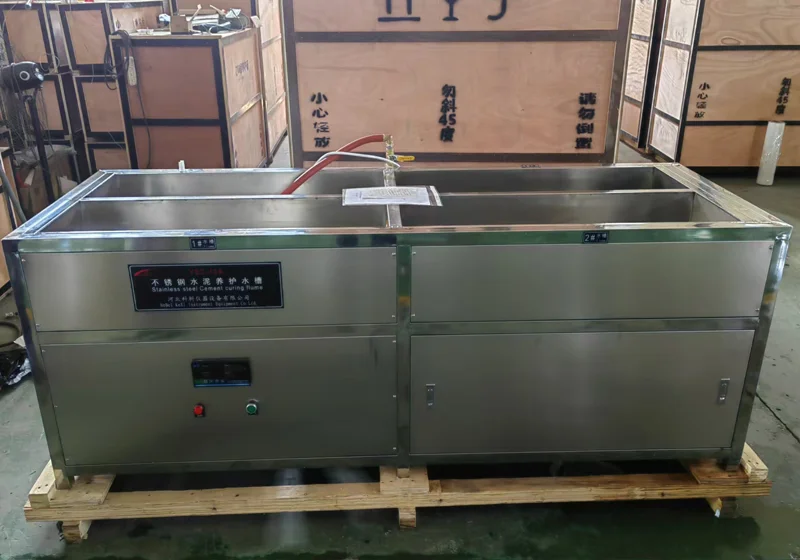
You know, when you step into almost any serious laboratory, whether it’s for materials science, chemical analysis, or even dentistry, there’s one piece of equipment that often stands quietly in the corner, radiating an aura of intense, controlled power: the Muffle Furnace For Laboratory. It’s not always the flashiest device, but it’s undeniably crucial. I mean, honestly, try doing proper ashing or sintering without one. It’s just not going to happen! And let’s be frank, while the provided link might hint at other essential lab instruments, like a robust cement curing tank (which, by the way, plays its own vital role in construction material testing), today we're really focusing on the high-temperature workhorse that is the Muffle Furnace For Laboratory.
In fact, the world of laboratory equipment is always evolving. There’s a constant drive for greater precision, better energy efficiency, and enhanced safety. For the Muffle Furnace For Laboratory, we’re seeing a clear trend towards more sophisticated digital controllers, allowing for intricate heating profiles and better data logging. Gone are the days of just "set it and forget it" with a basic dial; now we expect multi-segment programming for complex material processes.
Understanding the Core: Technical Specifications
When you're spec'ing out a new Muffle Furnace For Laboratory, what really matters? Well, beyond the obvious high-temperature capability, it boils down to chamber volume, temperature uniformity, and the controller's flexibility. Here’s a quick glance at what you'd typically look for:
Typical Muffle Furnace Specifications (Example Model) | |
Parameter | Value Range / Description |
Max. Operating Temperature | ≈ 1100°C - 1700°C (model dependent) |
Chamber Volume | Typically 3L to 50L (custom sizes available) |
Temperature Accuracy | ±1°C to ±3°C (at stable temperature) |
Heating Elements | Kanthal A1, SiC, MoSi2 (material dependent) |
Controller | PID microprocessor, multi-segment programmable |
Power Supply | 220V/380V AC, 50/60Hz, 2-15 kW |
Safety Features | Over-temperature protection, door interlock |
What truly makes a good Muffle Furnace For Laboratory stand out is its ability to maintain precise temperature uniformity across the working zone. This is absolutely critical for reproducible results, especially in applications like ash content determination (ASTM D3174) or loss on ignition (ASTM D7348).
Real-World Applications & Advantages
From academic research to industrial quality control, the versatility of a Muffle Furnace For Laboratory is quite remarkable. Think about it:
· Material Testing: For characterizing new alloys or ceramics through sintering and heat treatment.
· Ashing: Determining the inorganic content of organic and inorganic samples in industries like food, plastics, and pharmaceuticals.
· Gravimetric Analysis: Precisely measuring residual weights after high-temperature decomposition.
· Ceramic Firing: Small-scale production or prototyping of ceramic components.
· Heat Treatment: Annealing, hardening, or tempering small metal parts.
The primary advantage, besides the sheer heating power, is the controlled environment. These furnaces isolate the sample from contamination (hence the "muffle" part, which historically meant enclosing the sample from direct flame) and maintain incredibly stable temperatures. Many customers I’ve spoken with emphasize how the digital control systems simplify complex process flows, like a multi-step sintering program.
Process Flow Example: Ash Content Determination
Let's consider a common application: determining ash content in, say, a polymer sample.
1. Sample Preparation: Accurately weigh a known amount of the polymer into a pre-weighed, heat-resistant crucible (often ceramic or platinum).
2. Crucible Placement: Carefully place the crucible into the cold Muffle Furnace For Laboratory chamber.
3. Programming: Set the controller for the desired heating profile. This typically involves a ramp-up phase (e.g., to 550°C at 10°C/min) followed by a dwell phase (e.g., 2-4 hours at 550°C) to ensure complete combustion of organic material.
4. Heating Cycle: The furnace executes the program, incinerating the organic components and leaving only the inorganic ash.
5. Cooling & Analysis: Once the cycle is complete and the furnace has cooled sufficiently (to around 100-200°C), carefully remove the crucible, allow it to cool to room temperature in a desiccator, and re-weigh. The difference gives you the ash content. This process, by the way, adheres to standards like ISO 3451.
Navigating the Market: Vendor Comparison & Customization
Choosing the right Muffle Furnace For Laboratory isn't always straightforward. There are a lot of manufacturers out there, each with their own strengths. I guess it really boils down to your budget, specific temperature needs, and desired features.
Comparative Glance: Muffle Furnace Vendors (Illustrative) | |||
Feature | Vendor A (Premium) | Vendor B (General Purpose) | Vendor C (Specialized) |
Max. Temp. Range | Up to 1700°C | Up to 1200°C | Up to 1500°C (specific models) |
Controller Features | Advanced PID, data logging, PC interface | Standard PID, multi-segment programs | Programmable, good for specific ramps |
Build Quality | Robust, industrial-grade | Solid, reliable for daily use | Specialized insulation, high durability |
Price Point | Higher end | Mid-range | Competitive, value-oriented |
Many manufacturers, like CZ Lab Instrument (who also provide excellent cement curing tanks, for instance!), offer customization. This might include larger chamber volumes, specific atmospheric control options (inert gas inlets), or even integration with automation systems. Don't be shy about asking for what you need; a good supplier will often work with you.
Final Thoughts
At the end of the day, a Muffle Furnace For Laboratory is an investment in accuracy, efficiency, and safety for any lab dealing with high-temperature processes. Its role, quite honestly, is irreplaceable. With advancements in materials and control systems, these furnaces are becoming even more user-friendly and indispensable for achieving precise results that stand up to the most rigorous authoritative standards.
References
1. ASTM International. ASTM D3174-20: Standard Test Method for Ash in the Analysis Sample of Coal and Coke. West Conshohocken, PA: ASTM International, 2020.
2. ISO. ISO 3451-1:2019: Plastics — Determination of ash — Part 1: General methods. Geneva, Switzerland: International Organization for Standardization, 2019.
3. Thermoscientific. Guide to Muffle Furnaces and High-Temperature Furnaces. Retrieved from [Hypothetical link to manufacturer's guide].


