
Air Meter for Concrete Ensuring Structural Durability and Quality
Air Meter for Concrete: Ensuring Structural Durability and Quality
In the world of high-performance construction, the longevity of a concrete structure often depends on a hidden factor: entrapped air. Utilizing a professional Air Meter for Concrete is essential for measuring the air content of freshly mixed concrete. Proper air entrainment improves freeze-thaw resistance and workability, preventing premature cracking and scaling in harsh climates. For engineers and contractors, precise measurement isn't just a quality check—it's a guarantee of safety and compliance with international building standards. This guide explores how these instruments function and why they are indispensable on every modern job site.
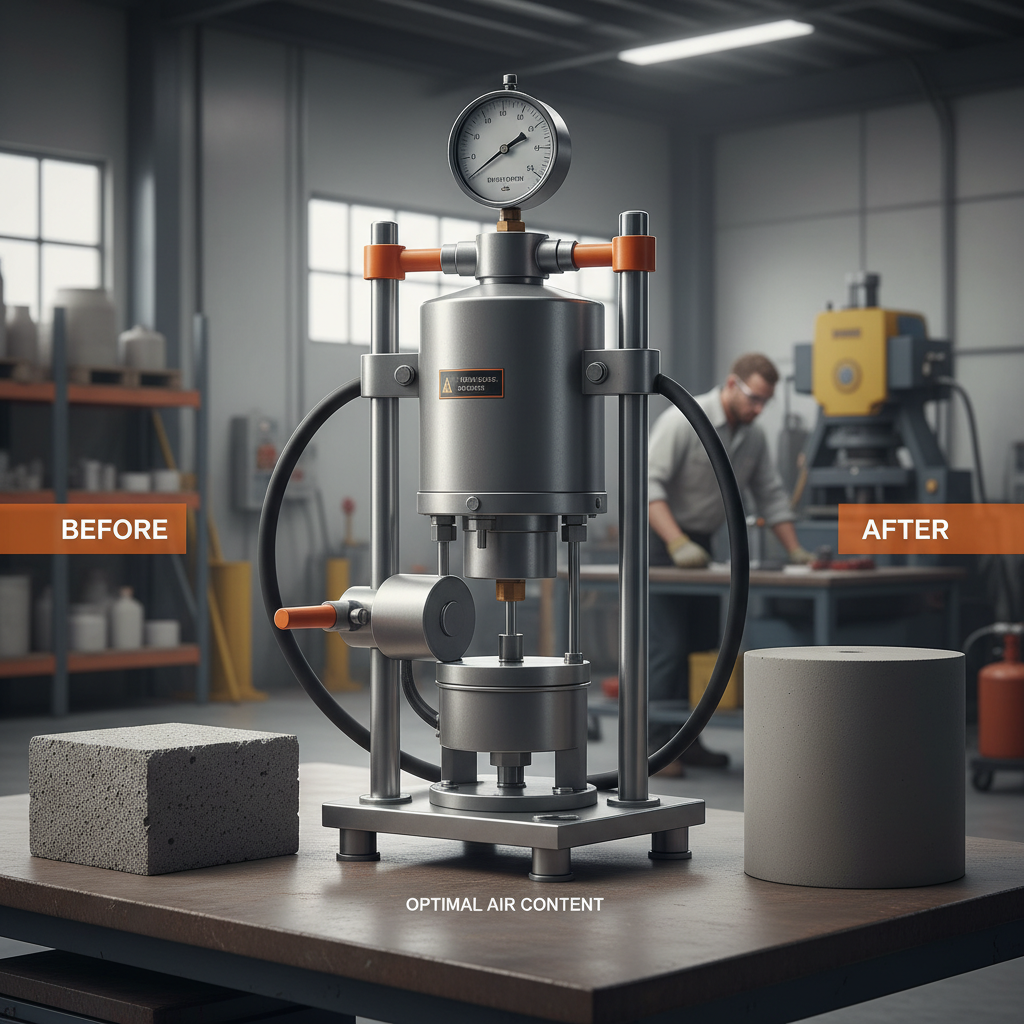
How an Air Meter for Concrete Works
An Air Meter for Concrete operates on the principle of pressure-volume relationships. By placing a fresh concrete sample into a sealed chamber and applying known air pressure, the device calculates the volume of air voids based on the compressibility of the air compared to the incompressible nature of the concrete paste. This allows technicians to determine the percentage of air entrainment quickly and accurately. Precision in this step is critical; too little air makes the concrete susceptible to frost damage, while too much air significantly reduces the compressive strength of the finished slab.
Technical Tip: Always ensure the sample is properly rodded and consolidated according to ASTM or EN standards to avoid "honeycombing," which can lead to falsely high air readings.
Importance of Air Entrainment in Concrete
Air entrainment involves the creation of billions of microscopic bubbles throughout the concrete mix. These bubbles act as "expansion chambers" for water when it freezes, preventing the internal pressure from rupturing the concrete matrix. Without the verification provided by an Air Meter for Concrete, construction teams risk catastrophic failures in bridge decks, runways, and parking lots. Beyond freeze-thaw protection, air entrainment enhances the plasticity of the mix, making it easier to pump and finish, which reduces labor costs and improves the overall aesthetic of the surface.
Comparing Air Meter Types: Pressure vs. Volumetric
Depending on the aggregate size and the specific requirements of the project, engineers choose between different types of air meters. The Pressure Method is the most common due to its speed and efficiency on-site. In contrast, the Volumetric Method is often used as a reference or for mixes with very porous aggregates. Using a high-quality Air Meter for Concrete ensures that the chosen method yields repeatable and reliable data.
Best Practices for Using an Air Meter for Concrete
To get the most accurate readings from your Air Meter for Concrete, consistency is key. First, ensure the equipment is calibrated regularly to avoid systemic errors. Second, the sample must be representative of the entire batch; taking samples from the middle of the truck is usually preferred. Third, operators should be trained to strike off the top of the sample perfectly level to prevent air gaps at the seal. Following these protocols ensures that the data collected is a true reflection of the concrete's properties, preventing costly rework or structural failure.
Technical Specifications of Professional Air Meters
When purchasing an Air Meter for Concrete, it is important to look at the technical build. Most professional units are constructed from heavy-duty aluminum or stainless steel to withstand the rigorous environment of a construction site. The gauges are often dampened to prevent needle vibration, ensuring a clear read. Below are the typical specifications you will find in industry-standard equipment:
Conclusion: Elevating Concrete Quality
Investing in a high-precision Air Meter for Concrete is a non-negotiable requirement for any serious construction project. By providing the means to accurately monitor air entrainment, these tools prevent structural deterioration and ensure that concrete remains durable across decades of use. Whether you are working on a municipal bridge or a private industrial floor, the right measurement tools lead to safer, stronger, and more sustainable infrastructure. Quality control starts with the right instrument.
Frequently Asked Questions (FAQs)
Why is air content measurement so important for concrete?
Air content measurement is vital because it directly affects the durability and strength of the concrete. In cold climates, air entrainment provides the necessary space for water to expand as it freezes, preventing the concrete from cracking. However, there is a trade-off: every 1% increase in air content can lead to a significant decrease in the concrete's compressive strength. An Air Meter for Concrete allows engineers to find the "sweet spot" where durability is maximized without compromising structural integrity.
How often should an air meter be calibrated?
To maintain compliance with ASTM and AASHTO standards, air meters should be calibrated at least once a year, or more frequently if the device is subjected to heavy use or rough handling on construction sites. Calibration ensures that the pressure gauge is reading accurately and that the seals are not leaking. Using a poorly calibrated meter can lead to incorrect air readings, which might result in the rejection of an entire batch of concrete or, worse, the installation of substandard material in a critical structure.
What are the most common errors when using an air meter?
The most common errors include improper consolidation of the sample and failing to strike off the top of the concrete level with the rim of the bowl. If the concrete is not rodded properly, large "honeycomb" voids are created, leading to an artificially high air reading. Conversely, if the sample is not level, the seal may leak or the volume will be incorrect. Training personnel to follow the standardized procedure step-by-step is the best way to ensure that your Air Meter for Concrete provides reliable results.
Can any concrete mix be tested with a pressure air meter?
While the pressure method is highly versatile, it is not suitable for all mixes. Specifically, concrete containing very porous aggregates (such as some lightweight aggregates) can absorb the pressure, leading to inaccurate readings. In these specific cases, the volumetric method is recommended. For the vast majority of standard construction projects involving normal-weight aggregates, a pressure-based Air Meter for Concrete is the industry standard for its balance of accuracy and speed.


