
Comprehensive Guide to Blast Laboratory Drying Oven Function and Selection
Understanding the Blast Laboratory Drying Oven: A Comprehensive Guide
In scientific research and industrial processes, precise temperature control is paramount. A blast laboratory drying oven plays a vital role in achieving this control, enabling accurate and repeatable results. This article delves into the function, applications, key features, and selection criteria for these essential pieces of equipment. We will explore how a quality drying oven can optimize your laboratory or production workflow and contribute to successful outcomes.

What is a Blast Laboratory Drying Oven?
A blast laboratory drying oven, also known as a forced convection oven, utilizes a fan to circulate heated air throughout the chamber. This forced convection ensures a uniform temperature distribution, which is crucial for consistent drying results. Unlike conventional ovens relying on natural convection, blast ovens offer faster drying times and are ideal for heat-sensitive materials. They are widely used in pharmaceutical, chemical, food processing, and environmental testing laboratories. The controlled environment helps prevent sample degradation and ensures accurate analysis. CZ Lab Instrument offers a wide range of these ovens designed for various applications.
Key Highlight: Forced convection ensures rapid and uniform drying, making it suitable for a wide range of applications.
Key Applications of Blast Drying Ovens
Blast drying ovens find applications in a diverse array of fields. In pharmaceutical research, they are used for drying drug formulations and excipients. Chemical laboratories employ them for drying precipitates, solvents, and reaction products. Food processing utilizes them for moisture analysis and preservation. Environmental testing relies on these ovens for drying samples prior to weighing or analysis. Quality control departments across various industries utilize them for routine drying processes. These ovens contribute to accurate testing, stable products, and reliable research findings.
Common Applications:
• Pharmaceutical Drying
• Chemical Precipitation Drying
• Food Moisture Analysis
• Environmental Sample Preparation
Blast Laboratory Drying Oven vs. Conventional Drying Ovens
The primary difference between blast and conventional drying ovens lies in the method of heat distribution. Conventional ovens rely on natural convection, where heated air rises and circulates slowly. Blast ovens, however, employ a fan to actively force heated air throughout the chamber. This results in faster drying times, more uniform temperature distribution, and reduced temperature gradients. While conventional ovens may be suitable for less demanding applications, blast ovens are essential when precise temperature control and rapid drying are required. CZ Lab Instrument's blast ovens are engineered for optimal performance and reliability.
Selecting the Right Blast Laboratory Drying Oven
Choosing the correct blast drying oven requires careful consideration of several factors. Capacity is a crucial aspect – determine the maximum sample size and volume you will need to dry. Temperature range should align with the drying requirements of your materials. Temperature accuracy and uniformity are critical for reliable results. Consider features like programmable controllers, digital displays, and safety mechanisms. Additionally, the material of construction (e.g., stainless steel) should be compatible with the substances being dried. CZ Lab Instrument offers expert guidance to help you select the ideal oven for your specific needs.
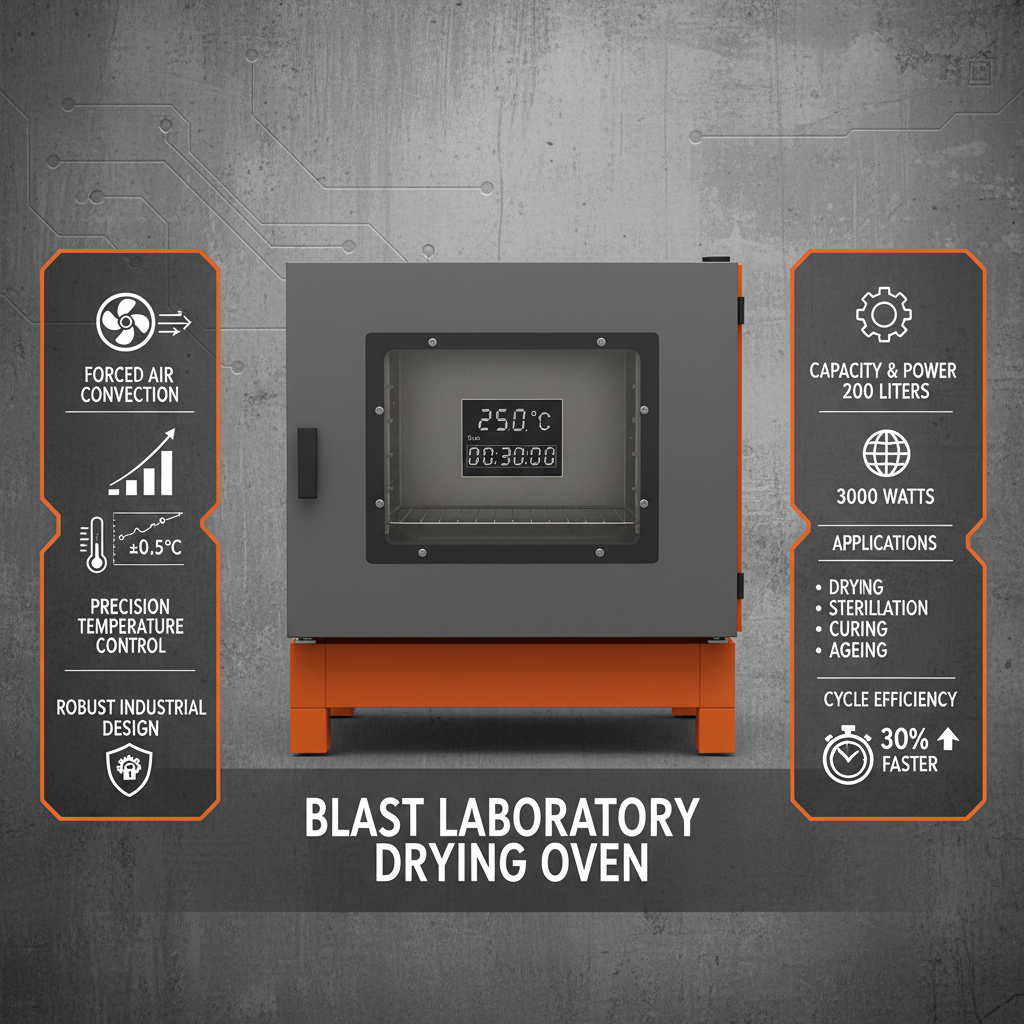
Key Specifications to Consider
When evaluating a blast laboratory drying oven, pay attention to the following key specifications:
Conclusion: Investing in Quality for Reliable Results
The blast laboratory drying oven is an indispensable tool for a wide range of scientific and industrial applications. By understanding its principles, applications, and key features, you can make an informed decision and select the best oven to meet your specific requirements. Investing in a high-quality oven from a reputable manufacturer like CZ Lab Instrument ensures accurate results, reliable performance, and long-term value.
Frequently Asked Questions (FAQs)
What safety features should I look for in a blast drying oven?
Safety is paramount. Look for ovens with over-temperature protection, which automatically shuts off the heater if the temperature exceeds a set limit. A door switch that disables the heater when the door is opened is also crucial. Consider models with a digital temperature controller that provides accurate and stable temperature control. Furthermore, ensure the oven has proper ventilation to prevent the build-up of fumes or vapors. Always follow the manufacturer's safety guidelines and operating procedures.
How often should I calibrate a blast drying oven?
Calibration frequency depends on the criticality of your application and the manufacturer's recommendations. As a general guideline, calibrate your oven at least once a year, or more frequently if it's used for highly sensitive applications or if you suspect inaccuracies. Calibration ensures that the displayed temperature accurately reflects the actual temperature inside the chamber. Certified calibration services can provide traceable documentation for regulatory compliance.
What is the difference between forced convection and natural convection?
Natural convection relies on the natural circulation of heated air, which is slower and less uniform. Forced convection, as utilized in blast ovens, uses a fan to actively circulate the air, resulting in faster drying times and a more consistent temperature throughout the chamber. For applications requiring precise temperature control and rapid drying, forced convection is the preferred method.


