
Comprehensive Guide to Cement Blaine Fineness Apparatus and Testing Procedures
Cement Blaine Fineness Apparatus: A Comprehensive Guide
Determining the fineness of cement is crucial for assessing its performance characteristics and ensuring quality control in construction projects. The Cement Blaine Fineness Apparatus is a vital instrument used to accurately measure the specific surface area of cement, which directly correlates to its fineness. This article provides an in-depth look at this apparatus, its principles, applications, and importance in cement manufacturing and quality assurance. Understanding the nuances of cement fineness is essential for producing durable and reliable concrete structures.
Understanding the Blaine Fineness Test
The Blaine fineness test, utilizing the Cement Blaine Fineness Apparatus, relies on the principle of determining the specific surface area of cement particles. A known mass of cement is dispersed in a standardized volume of air, and the time taken for the air to pass through the cement bed is measured. This time is then related to the specific surface area using a pre-calculated constant. Higher fineness values indicate smaller particle sizes, leading to increased reactivity and faster hydration, which are vital for cement performance. The test is standardized under ASTM C150 and EN 197-1, ensuring consistency and comparability of results worldwide.
Key Components of the Cement Blaine Fineness Apparatus
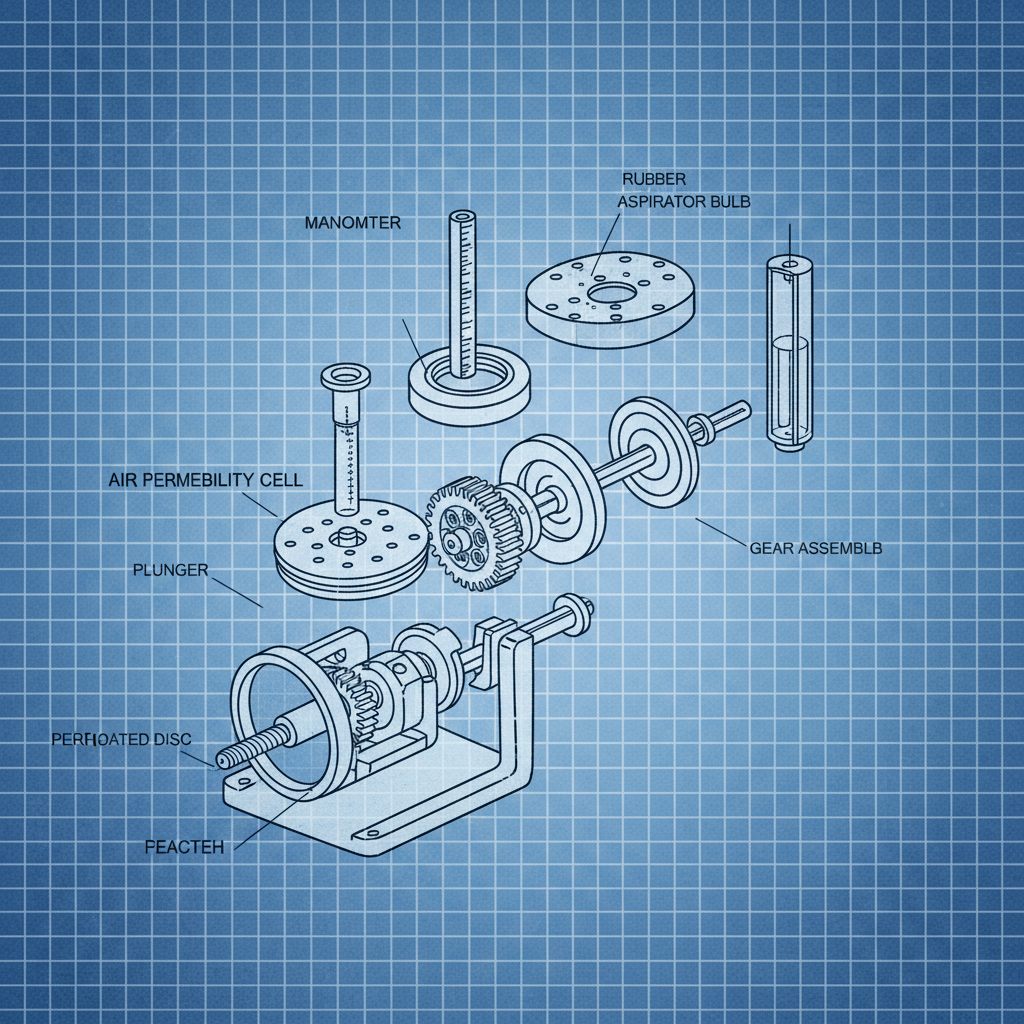
The Cement Blaine Fineness Apparatus typically comprises several key components working in synergy: a permeability cell made of high-quality stainless steel, a precision air pressure regulator to maintain consistent airflow, a graduated cylinder or digital timer to measure airflow time, a filter paper to prevent cement particles from entering the airflow measurement system, and a tamper to ensure uniform packing of the cement sample within the permeability cell. The quality of each component directly impacts the accuracy and reliability of the test results. CZLab Instrument provides instruments built with precision engineering and durable materials.
Factors Influencing Blaine Fineness & Cement Performance
Several factors influence the Blaine fineness of cement and, consequently, its performance. These include the clinker grinding process (duration and media type), the addition of grinding aids (to improve efficiency), the type of cement produced (e.g., Portland cement, blended cement), and the raw material composition. Higher Blaine fineness generally leads to faster hydration rates, increased early strength development, and improved workability. However, excessively fine cement can also exhibit increased water demand and potentially lead to shrinkage cracking. Therefore, maintaining optimal fineness is critical for balancing these competing factors.
Blaine Fineness Apparatus Specifications & Models
CZLab Instrument offers a range of Cement Blaine Fineness Apparatus models to suit various laboratory needs. Here's a comparison of key specifications:
Applications of Blaine Fineness Testing
The Blaine fineness test is indispensable across various stages of cement production and quality control. It's used for raw material assessment, monitoring the grinding process, ensuring consistency between batches, and verifying compliance with industry standards. Additionally, it’s crucial in research and development for optimizing cement formulations and improving cement performance characteristics. Regular Blaine fineness testing ensures the production of high-quality cement, leading to durable and safe construction.
Conclusion: Ensuring Cement Quality with Accurate Fineness Testing
The Cement Blaine Fineness Apparatus is an essential tool for cement manufacturers, quality control laboratories, and construction professionals. By accurately measuring the specific surface area of cement, it enables precise control over cement properties, ensuring optimal performance and durability in construction projects. Investing in a reliable and accurate apparatus like those offered by CZLab Instrument is a critical step towards maintaining high standards of cement quality.
Frequently Asked Questions (FAQs)
What is the typical Blaine fineness value for Portland cement?
The typical Blaine fineness value for ordinary Portland cement (OPC) ranges between 3200 to 3800 cm²/g. However, the specific required fineness can vary depending on the type of cement and the desired performance characteristics. For example, high early strength Portland cement often has a higher Blaine fineness to promote faster hydration. Blended cements may have different fineness requirements based on the supplementary cementitious materials used. It’s crucial to adhere to the specifications outlined in relevant standards like ASTM C150 or EN 197-1.
How often should the Blaine fineness test be performed?
The frequency of Blaine fineness testing depends on the scale of cement production and the level of quality control required. In continuous production facilities, testing should be performed at least once per shift, or more frequently if significant variations in the grinding process are observed. For smaller batches or specialized cement formulations, testing may be performed on each batch. Regular monitoring and record-keeping are essential for ensuring consistent cement quality and identifying potential issues promptly.
What are the consequences of cement with incorrect Blaine fineness?
Incorrect Blaine fineness can lead to several detrimental consequences. Cement that is too coarse hydrates slowly, resulting in reduced early strength development. Conversely, cement that is too fine may exhibit increased water demand, leading to reduced workability and potential shrinkage cracking. These issues can compromise the durability and structural integrity of concrete structures. Therefore, maintaining the correct Blaine fineness is critical for ensuring the desired performance characteristics and long-term reliability of cement-based materials.
How does the air pressure affect the Blaine fineness test results?
Maintaining a consistent and accurate air pressure is crucial for obtaining reliable Blaine fineness test results. Variations in air pressure can affect the airflow rate through the cement bed, leading to inaccurate measurements of the specific surface area. The Cement Blaine Fineness Apparatus from CZLab Instrument includes a precision air pressure regulator to ensure stable and controlled airflow, minimizing errors and enhancing the accuracy of the test.


