
Comprehensive Guide to the Blaine Air Permeability Apparatus and Its Applications
Understanding the Blaine Air Permeability Apparatus
The Blaine Air Permeability Apparatus is a critical instrument used in cement and pozzolanic material testing. It determines the fineness of powdered materials by measuring the rate at which air passes through a packed sample. This is a crucial parameter for controlling cement hydration rates, strength development, and overall concrete quality. Understanding its principles, applications, and available models is vital for quality control professionals in the construction and materials science fields. This article will delve into the details of the Blaine Air Permeability Apparatus, its operational principles, applications, and why CZ Lab Instrument offers reliable and accurate solutions for your testing needs.
The Principle Behind Blaine Air Permeability Testing
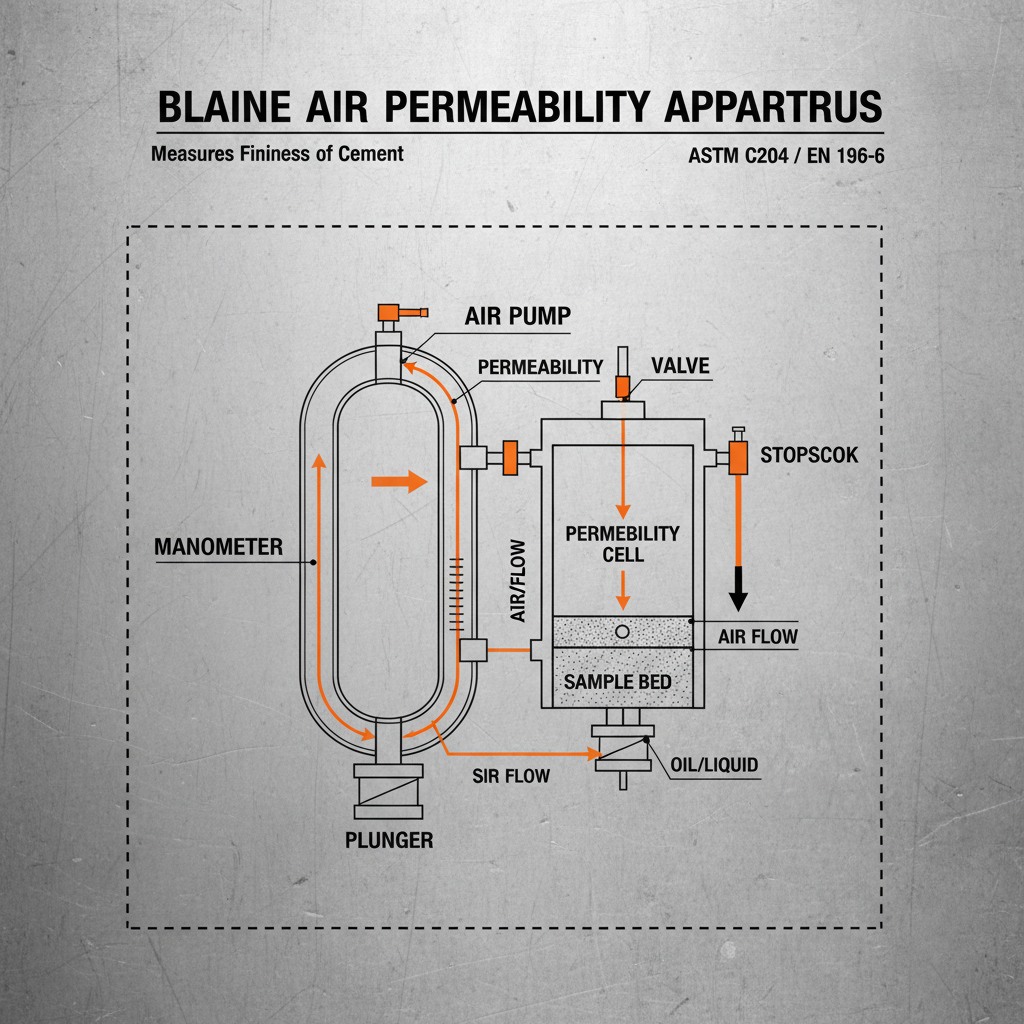
The Blaine Air Permeability test is based on Kozeny’s equation, which relates air permeability to the particle size distribution and specific surface area of a powder. A known mass of sample is packed into a porous disc within the apparatus. Controlled airflow is passed through the sample, and the pressure drop across the disc is measured. This pressure drop is inversely proportional to the permeability, which in turn correlates to the average particle size. A smaller average particle size leads to a lower permeability, and vice versa. The result is expressed in cm3/g, representing the specific surface area of the cement.
Key Components of a Blaine Air Permeability Apparatus
A typical Blaine Air Permeability Apparatus consists of several key components working in unison. These include a permeability cell (containing a porous disc and sample holder), a constant air supply (typically a compressed air source with regulator), a differential manometer to measure the pressure drop, a stopwatch for timing the airflow, and various accessories for sample preparation. The precision of each component directly impacts the accuracy of the final result. CZ Lab Instrument's apparatus are manufactured with high-precision components to guarantee reliable readings.
Key Components: A permeability cell, constant air supply, differential manometer, stopwatch, and sample preparation accessories are the core of the apparatus.
Applications of the Blaine Air Permeability Apparatus
The Blaine Air Permeability test is essential across a range of applications. Primarily, it’s used in cement manufacturing for quality control, ensuring consistent fineness which directly influences cement strength and hydration. It’s also vital for assessing the fineness of pozzolanic materials like fly ash, silica fume, and slag, impacting their reactivity and performance in concrete. Additionally, it finds application in the production of pigments, ceramics, and other powdered materials where particle size distribution is critical. Ensuring proper material fineness optimizes performance characteristics.
Application Areas:
• Cement Manufacturing Quality Control
• Pozzolanic Material Assessment
• Pigment and Ceramic Production
• Powdered Material Characterization
Blaine Air Permeability Apparatus: Comparing Manual vs. Automatic Models
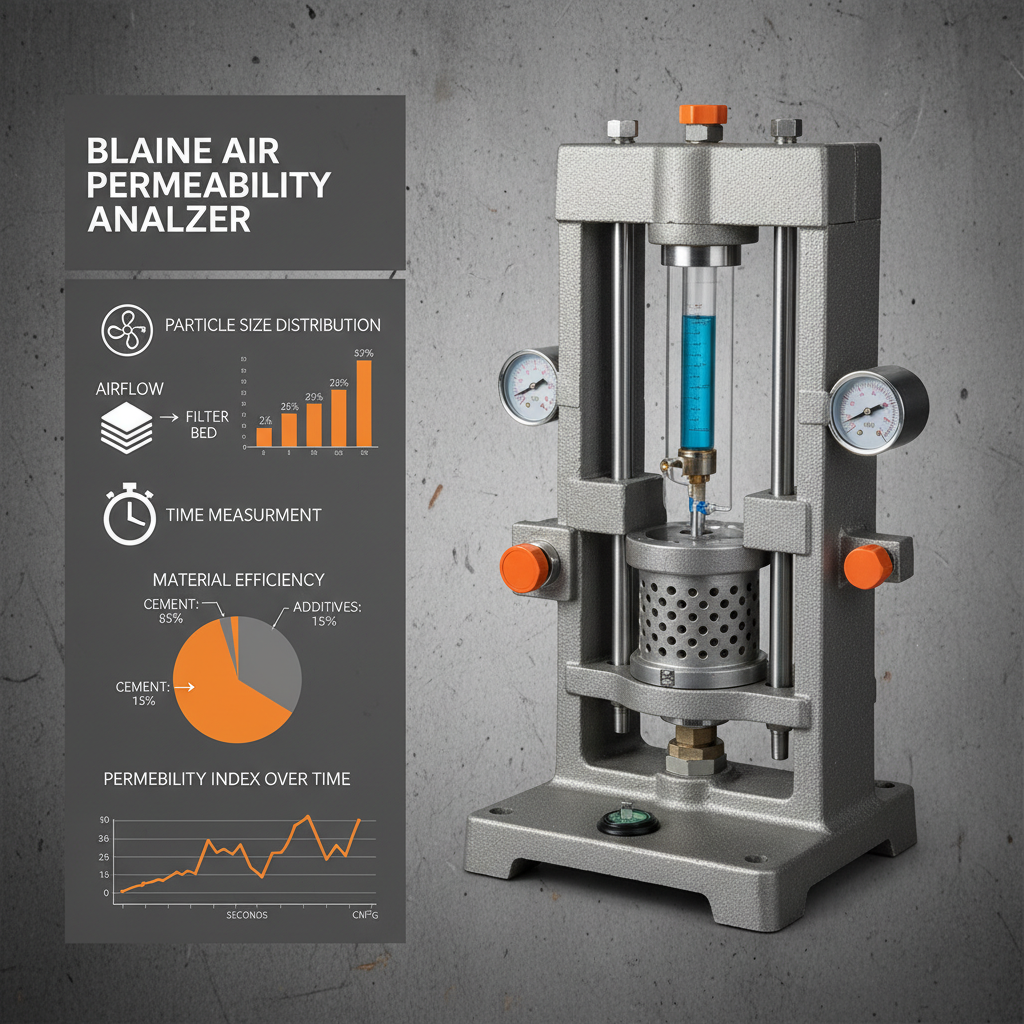
Blaine Air Permeability Apparatus come in manual and automatic versions. Manual models require operators to manually adjust airflow and record pressure readings, making them more labor-intensive. Automatic models feature integrated sensors, automated data acquisition, and often include data logging and analysis capabilities, reducing operator error and increasing throughput. The choice between the two depends on testing volume, budget, and desired level of automation.
Why Choose CZ Lab Instrument for Your Blaine Air Permeability Needs?
At CZ Lab Instrument, we are committed to providing high-quality, reliable, and accurate testing equipment. Our Blaine Air Permeability Apparatus are designed with precision engineering, adhering to international standards, and offering exceptional durability. We offer both manual and automatic models to suit a range of budgets and testing requirements. We also provide comprehensive technical support and calibration services, ensuring your instrument operates at peak performance.
Conclusion: Ensuring Quality with Accurate Blaine Testing
The Blaine Air Permeability test is a cornerstone of quality control in cement and related industries. Accurate and reliable testing is crucial for maintaining product consistency and achieving desired performance characteristics. CZ Lab Instrument provides the tools and expertise you need to confidently perform this essential test. Invest in a quality Blaine Air Permeability Apparatus from CZ Lab Instrument and ensure the integrity of your materials.
Frequently Asked Questions (FAQs)
What sample preparation is required for the Blaine Air Permeability test?
Proper sample preparation is critical for accurate results. The sample must be dry and free-flowing, without lumps or agglomerates. Typically, the sample is passed through a sieve (usually 200 μm) to ensure uniform particle size distribution. Avoid compacting the sample during sieving. A representative sample should be taken according to established sampling procedures. The sample mass used in the test is carefully measured, as it's a key factor in the calculation of permeability. Proper sample preparation minimizes errors and ensures the reliability of the test results.
How often should the porous disc be replaced?
The porous disc in a Blaine Air Permeability Apparatus gradually becomes clogged with fine particles over time, affecting the accuracy of the measurements. The frequency of replacement depends on the type of material being tested and the volume of samples analyzed. Generally, it’s recommended to check the permeability readings with a standard reference material periodically. If the readings deviate significantly, or if the air flow rate becomes excessively slow, the porous disc should be replaced. CZ Lab Instrument offers replacement porous discs to ensure continued accuracy.
What factors can influence the accuracy of the Blaine Air Permeability test?
Several factors can influence the accuracy of the Blaine Air Permeability test. These include the moisture content of the sample, proper compaction of the sample in the cell, accurate measurement of the pressure drop, and the condition of the porous disc. Temperature and air pressure also play a role and should be controlled. Calibration of the manometer and regular checks with standard reference materials are crucial. Following the standardized testing procedures outlined in ASTM C150 or equivalent standards is essential for ensuring reliable and reproducible results.
What standards govern Blaine Air Permeability testing?
The most common standards governing Blaine Air Permeability testing are ASTM C150 (Standard Specification for Portland Cement) and EN 197-1 (Cement – Part 1: Composition, specifications and testing of common cements). These standards detail the procedures for sample preparation, testing, and calculation of results. Adhering to these standards ensures consistency and comparability of results across different laboratories and organizations. CZ Lab Instrument's apparatus are designed to meet the requirements of these industry-standard testing methods.


