
The Criticality of Precision in Asphalt Research: The Foundation of Pavement Innovation with the Lab Asphalt Mixture Mixer
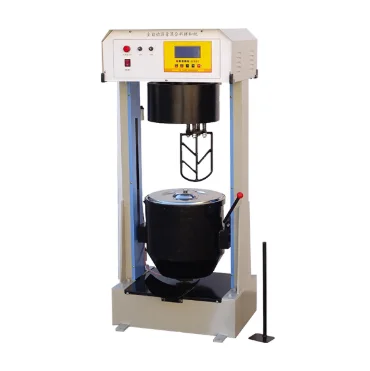
In the evolving landscape of civil engineering and material science, the durability, performance, and sustainability of asphalt pavements remain paramount. The cornerstone of achieving these objectives lies in meticulous research and development, where the accuracy of material preparation directly dictates the validity of subsequent tests and ultimately, the quality of real-world infrastructure. This is precisely where a high-performance Lab Asphalt Mixture Mixer asserts its indispensable role. Far beyond a mere blending apparatus, it is a sophisticated instrument designed to simulate field mixing conditions under controlled laboratory environments, ensuring a precise and homogeneous blend of aggregates, binders, and additives. Without this foundational precision, every downstream test – from Marshall stability to rutting resistance, fatigue life, and moisture sensitivity – risks yielding erroneous or unreliable data, potentially leading to suboptimal pavement designs, premature failures, and significant economic repercussions. The demand for resilient, long-lasting, and environmentally friendly asphalt solutions is escalating, driven by increasing traffic loads, extreme weather events, and a global emphasis on sustainable construction practices. Consequently, the tools used in material research must keep pace, providing an uncompromised level of control and repeatability. The ability to consistently produce identical asphalt mixtures is not merely a convenience; it is a scientific imperative, safeguarding the integrity of experimental results and accelerating the innovation cycle in asphalt technology.
Unveiling Technical Superiority: Key Features and Unmatched Benefits
Modern lab asphalt mixture mixers are engineered with a suite of advanced features that collectively elevate their performance far beyond conventional mixing equipment. At the heart of their superiority lies their unparalleled temperature control systems. These systems typically employ sophisticated PID controllers coupled with robust heating elements, often reaching and maintaining temperatures with an accuracy of ±1°C across a wide range, crucial for mimicking diverse climatic conditions and binder rheology. This precision is vital because asphalt binder viscosity is highly temperature-dependent, directly influencing aggregate coating efficiency and the workability of the mixture. Furthermore, variable mixing speeds, often ranging from 10 RPM to 60 RPM or more, provide the flexibility to simulate various plant types (batch or drum) and adjust to different material types, from conventional hot mix asphalt to warm mix asphalt and even cold mix applications. The design of the mixing paddles and bowl interior is also critical; many high-end models feature planetary or forced-action mixing mechanisms, ensuring every aggregate particle is uniformly coated with binder, eliminating segregation and producing truly homogeneous samples. Capacities vary, accommodating samples from as small as 5 kg for specialized research up to 60 kg or more for larger production simulations, all while maintaining consistent mixing quality. Integrated data logging capabilities often capture parameters like temperature profiles, mixing torque, and speed over time, providing a complete audit trail for each batch and enhancing experimental reproducibility. Safety features, including emergency stops, interlocks, and robust enclosures, are standard, protecting operators during high-temperature operations. These technical advantages translate directly into tangible benefits: superior mixture homogeneity guarantees representative samples for testing, high repeatability minimizes experimental variance, and robust construction ensures long-term operational reliability and minimal downtime. The ability to precisely control every variable of the mixing process empowers researchers to isolate and study the impact of individual components and processes, accelerating the development of innovative asphalt formulations and sustainable construction practices.
Driving Efficiency with Data: Quantifiable Impacts on Research and Development
The strategic deployment of an advanced lab asphalt mixture mixer transcends mere operational convenience; it fundamentally transforms the efficiency and cost-effectiveness of asphalt research. The data emanating from real-world applications and comparative studies consistently highlights significant improvements across several key metrics. For instance, laboratories upgrading from older, less precise equipment report a 25% reduction in re-mixing iterations due to improved batch homogeneity and repeatability. This translates directly into substantial time savings, allowing researchers to dedicate more effort to analysis rather than preparation. Furthermore, enhanced precision in binder coating and temperature control has been shown to reduce material waste by an average of 15% per experimental series. When considering the cost of specialized aggregates and modified binders, this waste reduction translates into significant financial savings over time, potentially recouping the initial investment in the mixer much faster than anticipated. Data logging and automated mixing protocols contribute to a 30% improvement in experimental throughput, enabling research teams to conduct more tests in a given timeframe without compromising data quality. For instance, a typical research project requiring 50 distinct asphalt mixtures might see its sample preparation phase reduced from 100 hours to just 75 hours. Beyond direct time and material savings, the verifiable consistency delivered by a high-end mixer significantly boosts the credibility and publishability of research findings. This level of confidence in data integrity accelerates the adoption of new mix designs and technologies by industry stakeholders. In a competitive research environment, the ability to generate reliable, reproducible data efficiently is a distinct advantage, positioning institutions and firms at the forefront of pavement innovation and material science advancements.
Strategic Selection: A Comparative Analysis of Leading Lab Asphalt Mixers
Navigating the diverse market for lab asphalt mixture mixers requires a discerning approach, as specifications and capabilities can vary significantly between manufacturers. A thorough comparison is essential to align the equipment with specific research needs, budget constraints, and long-term objectives. While many mixers offer basic functionality, distinguishing features in temperature control, mixing mechanism, automation, and data acquisition capabilities often define their true value proposition. Below is a comparative table highlighting key aspects of hypothetical leading models, demonstrating the spectrum of choices available. This analysis underscores that while some manufacturers prioritize cost-effectiveness, others focus on unparalleled precision, advanced automation, or specialized applications, making a careful evaluation critical for an informed investment. For instance, a high-volume quality control lab might prioritize throughput and robust construction, while a cutting-edge research facility might lean towards supreme temperature accuracy and comprehensive data logging for intricate binder modifications.
Feature / Model | ApexMix Pro 5000 | PrecisionBlend X-Series | RobustMix Classic |
Typical Capacity Range | 10 - 50 kg | 5 - 30 kg | 15 - 60 kg |
Temperature Control Accuracy | ±0.5°C | ±0.2°C | ±1.0°C |
Mixing Mechanism | Planetary, Forced-Action | Dual Planetary, High-Shear | Single Shaft, Ribbon Blade |
Variable Speed Range | 10 - 70 RPM | 5 - 90 RPM (fine increment control) | 15 - 50 RPM |
Data Logging & Software | Integrated Touchscreen, USB Export | Advanced PC Software, Cloud Integration | Basic Digital Display, Manual Recording |
Customization Options | Moderate (Paddles, Liners) | Extensive (Special Materials, Software APIs) | Limited (Capacity only) |
Estimated Price Range | $$$$ | $$$$$ | $$$ |
This table illustrates that while the "RobustMix Classic" offers a cost-effective solution for standard mixing tasks with larger batches, its temperature control and automation features are more rudimentary. The "ApexMix Pro 5000" represents a strong middle-ground, providing excellent precision and robust data capabilities suitable for a broad range of research and quality control applications. Conversely, the "PrecisionBlend X-Series" stands out for its extreme accuracy, advanced software integration, and extensive customization, making it ideal for highly specialized academic research or advanced material development where every fraction of a degree and detailed data point matters. The choice ultimately depends on balancing initial investment against long-term operational needs, required precision levels, and the complexity of the asphalt mixtures being investigated. Manufacturers also differentiate themselves through after-sales support, warranty periods, and the availability of spare parts, which are crucial considerations for maintaining continuous operation.
Tailored Solutions: Customization for Diverse Research and Production Demands
While standard models of lab asphalt mixture mixers offer exceptional capabilities, the diverse and often highly specialized nature of asphalt research frequently necessitates customization. Leading manufacturers understand this demand and offer a range of tailored solutions to meet unique experimental requirements, significantly enhancing the versatility and applicability of their equipment. One common area of customization involves the mixing paddles and bowl liners. Depending on the type of aggregates (e.g., highly abrasive, porous, or delicate) or binders (e.g., polymer-modified, rubberized, bio-binders), different materials (e.g., hardened steel, stainless steel, ceramic-coated) or paddle geometries (e.g., helical, ploughshare, or custom-designed configurations) can optimize mixing efficiency and prevent material degradation or contamination. For instance, high-shear paddle designs might be preferred for incorporating difficult-to-disperse additives, while gentler configurations preserve aggregate integrity. Another critical customization is the integration of specialized heating and cooling units. Beyond standard electric heating, some applications may require advanced radiant heating for precise surface temperature control, or even inert gas purging systems to prevent oxidation of certain binders during high-temperature mixing. For low-temperature asphalt applications, integrated cooling systems can be vital. Software customization is also increasingly important. This can range from bespoke programming for complex mixing cycles (e.g., multi-stage temperature ramps, pulsed mixing speeds) to integration with laboratory information management systems (LIMS) or other testing equipment (e.g., compactors, gyratory compactors, asphalt content extractors) for seamless data flow and process automation. Larger or smaller capacity bowls can also be custom-fabricated to accommodate unusual batch sizes, either for micro-scale research or for simulating specific plant outputs. Environmental controls, such as fume extraction ports or closed-loop systems, can be integrated for enhanced safety and compliance when working with hazardous materials. By collaborating closely with manufacturers, research institutions and industrial labs can acquire a mixer that is not just a piece of equipment, but a finely tuned instrument specifically designed to push the boundaries of asphalt technology, ensuring maximum utility and return on investment for their unique research endeavors.
Real-World Impact: Diverse Application Case Studies in Asphalt Technology
The practical utility of a high-precision lab asphalt mixture mixer extends across a broad spectrum of applications, demonstrating its vital role in both academic research and industrial quality assurance. Its capability to produce consistent, representative samples under controlled conditions is invaluable for a variety of stakeholders. For instance, in academic research institutions, these mixers are fundamental to developing next-generation pavement materials. A recent study at a prominent university utilized an advanced mixer to precisely combine various recycled plastic derivatives with traditional asphalt binders to create novel eco-friendly pavement solutions. The mixer’s precise temperature and speed control were critical in achieving homogeneous dispersion of the polymer modifiers, leading to promising improvements in fatigue resistance and reduced virgin material consumption – findings that would have been impossible to validate with inconsistent mixture preparation. In the realm of civil engineering firms and consulting agencies, lab mixers are crucial for optimizing mix designs for specific projects. A leading engineering firm contracted to design a highway overlay for a region experiencing extreme temperature fluctuations used their mixer to prepare multiple test batches with varying aggregate gradations and binder modifications. By systematically varying parameters and consistently producing samples, they identified a proprietary Superpave mix design that demonstrated a 20% improvement in rutting resistance and a 15% increase in low-temperature cracking resistance compared to standard local mixes. This data-driven approach directly informed the project specification, ensuring a more durable and cost-effective pavement. Government agencies and departments of transportation (DOTs) rely on these mixers for quality assurance and the evaluation of new materials and specifications. One state DOT employed their lab mixer to evaluate the performance of asphalt mixtures containing locally sourced recycled asphalt pavement (RAP) and recycled asphalt shingles (RAS). The mixer's ability to uniformly blend these reclaimed materials with virgin aggregates and binders allowed the agency to establish new specifications for sustainable pavement construction, projecting billions in savings over a decade by reducing reliance on virgin materials. Finally, asphalt binder and aggregate manufacturers use these mixers for product development and quality control. A major binder producer utilized their mixer to test the compatibility and performance of new polymer-modified asphalt (PMA) formulations. The mixer's consistent output enabled them to fine-tune modifier percentages, ensuring their new PMA product met demanding performance criteria before full-scale production. These diverse examples underscore that the lab asphalt mixture mixer is not just a piece of equipment, but a cornerstone of innovation and quality in the entire asphalt industry ecosystem, enabling precise experimentation that translates into real-world engineering excellence.
Future-Proofing Your Research: Investing in Advanced Lab Asphalt Mixture Mixer Technology
The pace of innovation in asphalt technology continues to accelerate, driven by global demands for more sustainable, resilient, and economically viable infrastructure. From self-healing asphalt to advanced warm mix technologies and pavements designed for autonomous vehicles, the future of civil engineering will increasingly rely on precise material characterization and development. Investing in a state-of-the-art Lab Asphalt Mixture Mixer is not merely an acquisition of equipment; it is a strategic commitment to future-proofing research capabilities and maintaining a competitive edge. The advanced features, unparalleled precision, and robust data integration offered by modern mixers are essential for tackling the complex challenges of tomorrow's infrastructure. By minimizing experimental variance, reducing material waste, and significantly enhancing research throughput, these instruments empower engineers and scientists to push the boundaries of what's possible in pavement science. The return on investment extends beyond immediate cost savings, manifesting in expedited research cycles, higher quality data, and the ability to confidently develop and implement groundbreaking solutions. As the industry continues to seek ways to mitigate environmental impact, improve longevity, and optimize performance under increasingly severe conditions, the role of a reliable and precise lab asphalt mixture mixer will only grow in importance. Choosing the right mixer today is an investment in the innovation, accuracy, and sustainability of asphalt research for decades to come, ensuring that laboratories remain at the forefront of engineering excellence and continue to contribute meaningful advancements to the built environment.
Frequently Asked Questions (FAQs) about Lab Asphalt Mixture Mixers
Here are some common questions regarding professional Lab Asphalt Mixture Mixers:
1. What is the primary purpose of a Lab Asphalt Mixture Mixer?
Its primary purpose is to precisely and homogeneously blend aggregates, asphalt binder, and additives in a controlled laboratory environment, simulating field conditions to prepare representative samples for various material tests and research studies.
2. How critical is temperature control in these mixers?
Temperature control is paramount. Asphalt binder viscosity is highly sensitive to temperature, directly affecting aggregate coating, mixture workability, and ultimately, the physical properties of the asphalt concrete. Precise temperature control (e.g., ±0.5°C) ensures consistent and reproducible mixtures.
3. What are the typical capacity ranges available for lab mixers?
Capacities can vary significantly, typically ranging from small research-scale batches of 5 kg up to larger production simulation batches of 60 kg or more, depending on the specific model and application needs.
4. Can these mixers handle different types of asphalt mixtures, such as Warm Mix Asphalt (WMA) or Cold Mix Asphalt (CMA)?
Yes, most modern lab mixers are designed with variable speed and wide temperature ranges, allowing them to accommodate a variety of mix types, including Hot Mix Asphalt (HMA), Warm Mix Asphalt (WMA), Cold Mix Asphalt (CMA), and specialized polymer-modified asphalt (PMA) mixtures.
5. What kind of maintenance is required for a Lab Asphalt Mixture Mixer?
Regular maintenance typically involves cleaning the mixing bowl and paddles after each use, inspecting heating elements and sensors, checking for wear on moving parts, and periodic calibration of temperature and speed controls. Refer to the manufacturer's manual for specific guidelines.
6. Are there any safety features built into these mixers?
Yes, standard safety features often include emergency stop buttons, interlocks that prevent operation when guards are open, overheating protection, and robust enclosures to protect operators from high temperatures and moving parts.
7. How does a lab mixer contribute to research repeatability and reliability?
By providing precise control over mixing parameters (temperature, speed, duration) and ensuring homogeneous blending, a high-quality lab mixer significantly reduces batch-to-batch variability. This consistency is crucial for generating reliable and repeatable experimental data, which enhances the credibility and validity of research findings.


