
The Criticality of Bitumen Elongation Testing and the Intelligent Bitumen Elongation Tester
Modern infrastructure forms the backbone of global economies, facilitating trade, connectivity, and daily life. At the heart of this infrastructure lies asphalt concrete, a composite material whose performance hinges significantly on the properties of its binder: bitumen. The longevity, durability, and safety of roads, runways, and other paved surfaces are directly correlated with the quality and characteristics of the bitumen used. Among the myriad tests conducted to assess bitumen quality, the elongation test stands as a paramount indicator of a binder’s ductility and ability to resist cracking under stress and temperature fluctuations. Traditional methods for evaluating bitumen elongation often involve manual processes, which are inherently prone to human error, inconsistencies, and environmental variables that can compromise test accuracy. These limitations lead to unreliable data, potentially resulting in suboptimal material selection, premature pavement failures, and substantial repair costs. The pressing need for enhanced precision, repeatability, and efficiency in bitumen testing has paved the way for advanced solutions. This demand is precisely what the Intelligent Bitumen Elongation Tester addresses. By integrating cutting-edge technology with rigorous testing protocols, this sophisticated instrument revolutionizes how civil engineers, materials scientists, and quality control professionals assess bitumen, ensuring that our infrastructure is built upon the most robust and reliable foundations possible. Its advent marks a significant leap forward, moving beyond conventional limitations to offer unparalleled insights into bitumen performance, thereby contributing directly to safer, more resilient, and economically sustainable infrastructure worldwide. The economic implications of inadequate bitumen quality are staggering; annual maintenance and rehabilitation costs for deteriorated pavements run into billions globally, underscoring the critical importance of accurate material characterization from the outset.
The Evolution of Accuracy in Bitumen Testing
The journey from rudimentary manual testing to the sophisticated capabilities of the latest generation of testing equipment underscores a relentless pursuit of accuracy and efficiency. The Intelligent Bitumen Elongation Tester embodies this evolution, setting new benchmarks in material characterization. At its core, this instrument leverages a suite of advanced technical advantages designed to eliminate the variables that plague older systems. It features a highly precise servo-motor controlled pulling mechanism, ensuring a uniform and consistent elongation rate throughout the test, a critical factor for reproducible results. Unlike older models that might suffer from mechanical jitters or speed variations, this system maintains a constant velocity with remarkable accuracy, typically within ±0.1 mm/min of the set speed. Temperature control, another pivotal aspect of bitumen testing, is managed by an integrated, high-precision thermal system capable of maintaining test temperatures within an unprecedented ±0.05°C across the entire water bath. This level of thermal stability is crucial because bitumen's rheological properties are acutely sensitive to temperature changes, directly impacting elongation values. Furthermore, the tester incorporates high-resolution optical or digital encoders that measure elongation with micron-level precision, capturing every nuanced deformation of the bitumen sample. Data logging and real-time analysis capabilities are central to its intelligence. Test parameters, elongation progress, load cell readings, and temperature profiles are continuously recorded and displayed on an intuitive touchscreen interface. This allows operators to monitor tests in real-time and review comprehensive datasets post-test, facilitating in-depth analysis and trend identification. The ability to store thousands of test results internally and export them via USB or network connectivity streamlines laboratory operations and enhances data traceability. Automatic sample detection, programmable test protocols conforming to various international standards (such as ASTM D113, AASHTO T51, and EN 13589), and automated breaking point detection further reduce operator intervention and potential for error, significantly boosting throughput and reliability. The robust construction and advanced calibration routines ensure long-term stability and minimal drift, cementing its position as a cornerstone for advanced bitumen characterization.
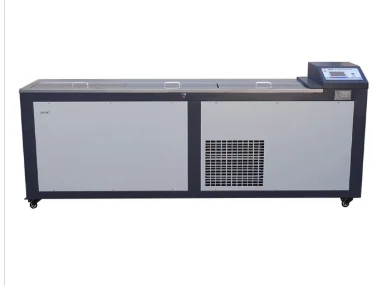
Addressing Industry Challenges with Data-Driven Insights
The global infrastructure sector faces persistent challenges related to pavement durability and maintenance costs. According to industry reports, premature pavement failures contribute to an estimated $100 billion annual expenditure worldwide on repairs and rehabilitation. A significant portion of these failures, particularly cracking and fatigue, can be traced back to an inadequate understanding or mischaracterization of bitumen properties. Here, the data-driven insights provided by an intelligent elongation tester prove invaluable. By delivering highly precise and reproducible elongation data, engineers gain a deeper understanding of a bitumen binder's ductility, elasticity, and its inherent resistance to thermal and load-induced stresses. For instance, studies have consistently shown that an increase in bitumen elongation capacity by just 10% can extend pavement service life by up to 15% under certain environmental conditions, translating into substantial long-term savings. The instrument's capacity for consistent data collection across multiple samples under identical, precisely controlled conditions allows for robust statistical analysis. This enables engineers to compare different bitumen grades, assess the impact of various additives and modifiers, and validate new mix designs with a level of confidence previously unattainable. For example, in regions experiencing extreme temperature fluctuations, selecting a bitumen with optimal elongation properties is critical to prevent thermal cracking. The intelligent tester quantifies this property with such accuracy that it allows for fine-tuning of binder formulations, reducing the likelihood of early-life distress. Moreover, its digital data output facilitates seamless integration into laboratory information management systems (LIMS) and predictive pavement performance models. This not only streamlines compliance and reporting but also empowers researchers and practitioners to develop more resilient and sustainable pavement solutions by leveraging actionable, high-fidelity data to inform every decision, from raw material sourcing to final mix design and construction.
Precision Engineering in Practice: A Comparative Analysis
The distinct advantages of the Intelligent Bitumen Elongation Tester become unequivocally clear when compared against conventional testing methodologies. The transition from manual or semi-automatic systems to fully intelligent platforms represents a paradigm shift in laboratory efficiency, accuracy, and data integrity. Below is a comparative analysis highlighting the superior performance attributes:
Feature | Generic Manual Tester | Standard Semi-Automatic Tester | Intelligent Bitumen Elongation Tester |
Automation Level | Low (manual pouring, pulling, reading) | Medium (motorized pulling, manual data logging) | High (automated pouring, precise pulling, digital data acquisition, auto-stop) |
Data Accuracy (Elongation) | Variable (±2-5 mm due to human error) | Good (±1-2 mm, prone to reading errors) | Excellent (±0.1 mm, digital encoder) |
Temperature Control Precision | Poor to Moderate (±1-2°C, often external bath) | Moderate (±0.5°C, integrated bath) | Superior (±0.05°C, sophisticated PID control) |
Data Logging & Analysis | Manual (handwritten, prone to errors) | Basic digital display, manual recording | Comprehensive digital logging, real-time graphs, LIMS integration, exportable data |
User Interface | Analog dials, manual switches | Simple push buttons, small LED screen | Intuitive color touchscreen, multi-language support, guided protocols |
Throughput (Tests/Hour) | Low (1-2 tests, labor-intensive) | Medium (2-3 tests, some automation) | High (3-5+ tests, minimal operator intervention) |
Reproducibility | Low (high standard deviation) | Moderate | Very High (low standard deviation, high confidence) |
Calibration Requirements | Frequent, complex manual checks | Periodic, semi-manual | Automated routines, guided digital calibration, alerts |
This comparison clearly illustrates that while generic manual testers are budget-friendly, their limitations in accuracy, consistency, and data handling make them unsuitable for critical applications or high-volume laboratories. Standard semi-automatic models offer some improvements but still fall short in precision thermal management and comprehensive data integration. The Intelligent Bitumen Elongation Tester, conversely, delivers unparalleled precision and efficiency, translating directly into more reliable results, reduced operational costs through lower re-testing rates, and ultimately, superior pavement performance. Its automated features minimize technician involvement, freeing up valuable lab personnel for other critical tasks, thereby optimizing overall laboratory productivity.
Tailoring Tomorrow's Infrastructure: Customization and Scalability
The diverse requirements of global infrastructure projects demand testing equipment that is not only highly accurate but also adaptable. The Intelligent Bitumen Elongation Tester is engineered with modularity and scalability at its core, allowing for extensive customization to meet specific laboratory needs, regional standards, and evolving research demands. One primary area of customization lies in software flexibility. The system's advanced operating software can be tailored to incorporate unique test protocols, specific elongation rates not covered by standard methods, or specialized reporting formats required by different national agencies or research institutions. This ensures full compliance with a broad spectrum of international and local standards, including ASTM, AASHTO, EN, and national equivalents, without requiring multiple pieces of equipment. For laboratories engaged in advanced research, specialized modules can be integrated. This might include enhanced environmental control chambers for testing bitumen at extreme sub-zero temperatures (e.g., down to -20°C) or elevated temperatures (e.g., up to 40°C), beyond the typical range, to simulate severe climate conditions more accurately. Custom sample molds or clamps for non-standard bitumen samples or modified binders can also be developed and integrated. Furthermore, the tester offers robust integration capabilities with existing Laboratory Information Management Systems (LIMS). This seamless data flow reduces manual transcription errors, improves data integrity, and enhances overall laboratory efficiency, making it a pivotal component in any modern testing facility. For high-throughput commercial labs, the scalability of the system allows for the integration of multiple test units managed by a central software platform, optimizing resource allocation and maximizing testing capacity. Conversely, smaller university labs or quality control units can invest in a base model and later upgrade with specific modules as their research or testing scope expands. This foresight in design ensures that the investment in an Intelligent Bitumen Elongation Tester remains future-proof, capable of adapting to new materials, methods, and regulatory landscapes, truly enabling tomorrow's infrastructure development today.
Real-World Impact: Case Studies in Advanced Bitumen Characterization
The tangible benefits of employing an intelligent elongation tester are best exemplified through its application in real-world scenarios, where precise bitumen characterization directly influences project success and longevity.
· Case Study 1: High-Performance Pavement for a Nordic Highway
A major highway expansion project in a Scandinavian country, known for its extreme freeze-thaw cycles and heavy vehicle loads, faced the challenge of developing a pavement resistant to severe thermal cracking. Traditional bitumen testing provided insufficient granularity to differentiate between high-performance modified binders. The project team deployed an Intelligent Bitumen Elongation Tester to rigorously evaluate various styrene-butadiene-styrene (SBS) polymer-modified bitumens. By precisely measuring elongation at sub-zero temperatures (e.g., -10°C) with unprecedented accuracy, they identified a specific binder formulation that exhibited a 35% higher elongation capacity compared to standard modified binders at that temperature. This precise data led to the selection of this particular blend, which, two years post-construction, has shown virtually no signs of thermal cracking, significantly outperforming previous pavement sections and projected to extend the highway's service life by at least 20% beyond initial estimates, translating into millions in maintenance savings.
· Case Study 2: Airport Runway Rehabilitation in a Tropical Climate
An international airport in a high-temperature tropical region required rehabilitation of its main runway, which was suffering from premature fatigue cracking and rutting due to intense heat and constant heavy aircraft loads. The project engineers utilized the intelligent tester to assess the long-term ductility and elastic recovery of various high-performance asphalt binders designed for tropical climates. By simulating high operational temperatures (e.g., 60°C) and accurately measuring elongation characteristics, they identified a polymer-modified asphalt (PMA) binder that demonstrated a remarkable 40% improvement in elastic recovery and maintained optimal ductility under sustained stress compared to less sophisticated binders. This detailed characterization allowed for the precise selection of a binder that could withstand the unique thermal and mechanical stresses of the runway environment. Post-rehabilitation, the runway has shown exceptional resistance to fatigue cracking and rutting, extending its operational lifespan by an estimated 10-15 years, a critical factor for avoiding costly disruptions to air traffic.
· Case Study 3: Research and Development of Bio-Binders
A leading university research consortium focused on sustainable infrastructure was developing novel bio-binders derived from agricultural waste to replace petroleum-based bitumen. Characterizing the mechanical properties of these experimental binders with high accuracy was paramount to their viability. The Intelligent Bitumen Elongation Tester became an indispensable tool in their lab. Its superior precision and automated data collection capabilities allowed researchers to conduct hundreds of tests on various bio-binder formulations, meticulously mapping their elongation properties across different temperatures and aging conditions. For example, they were able to quantify that a specific bio-binder blend exhibited comparable elongation performance to traditional bitumen at ambient temperatures, but showed a 25% reduction in ductility at lower temperatures, guiding further formulation adjustments. This detailed data proved crucial in refining the bio-binder composition, accelerating their research significantly and bringing sustainable pavement solutions closer to commercialization.
Future-Proofing Infrastructure with the Intelligent Bitumen Elongation Tester
In an era defined by rapid technological advancement and increasing demands on global infrastructure, the need for precision, efficiency, and reliability in material testing has never been more critical. The challenges posed by climate change, escalating traffic volumes, and the imperative for sustainable construction practices necessitate tools that can provide unparalleled insights into material performance. The Intelligent Bitumen Elongation Tester stands as a testament to this evolution, offering a sophisticated solution that transcends the limitations of conventional testing methods. Its core strengths—unrivalled accuracy in elongation measurement, superior temperature control, comprehensive data logging, and seamless integration capabilities—translate directly into tangible benefits: reduced material waste, extended pavement lifespans, lower maintenance costs, and ultimately, safer and more resilient infrastructure. By providing civil engineers and material scientists with granular data on bitumen's ductile properties, this intelligent instrument empowers them to make informed decisions regarding binder selection, modification strategies, and mix designs, effectively mitigating the risks of premature pavement failure. It is not merely a testing device; it is a strategic investment in the longevity and sustainability of our built environment. As the world moves towards smarter cities and more robust transportation networks, the ability to accurately predict and optimize the performance of foundational materials like bitumen will be paramount. The Intelligent Bitumen Elongation Tester is thus an indispensable tool for future-proofing infrastructure, ensuring that the roads and runways of tomorrow are not only built to last but are also designed with an intrinsic understanding of the materials that comprise them. Its adoption signifies a commitment to excellence, innovation, and long-term value in infrastructure development across the globe.
Frequently Asked Questions (FAQ) about the Intelligent Bitumen Elongation Tester
Q1: What is the primary advantage of an Intelligent Bitumen Elongation Tester over traditional models?
A1: The primary advantage is its superior precision and automation. It eliminates human error through servo-motor controlled pulling, ultra-precise temperature regulation (±0.05°C), and automated data acquisition, leading to highly reproducible and reliable results that are critical for modern infrastructure projects.
Q2: What international standards does the Intelligent Bitumen Elongation Tester comply with?
A2: This advanced tester is designed to meet and exceed the requirements of key international standards, including ASTM D113, AASHTO T51, EN 13589, and often includes programmable protocols for various national and regional specifications.
Q3: Can this tester be used for modified bitumen binders?
A3: Absolutely. The Intelligent Bitumen Elongation Tester is particularly effective for testing polymer-modified bitumens (PMB), bio-binders, and other modified asphalt binders due to its precise control over test parameters and its ability to accurately measure the unique ductile and elastic properties of these advanced materials.
Q4: How does the Intelligent Bitumen Elongation Tester improve laboratory efficiency?
A4: It significantly improves efficiency through automation, reducing operator intervention and test duration. Features like automated sample detection, programmable test protocols, real-time data logging, and seamless LIMS integration streamline workflows, minimize re-testing, and free up laboratory personnel for other tasks.
Q5: What are the typical temperature ranges for testing with this equipment?
A5: The standard temperature range typically spans from 0°C to 40°C. However, advanced models or customized versions can extend this range significantly, often enabling testing down to -20°C or up to 60°C to simulate extreme environmental conditions more accurately.
Q6: Is data reporting and analysis comprehensive?
A6: Yes, it offers comprehensive data reporting. The system captures and stores all test parameters, elongation curves, load readings, and temperature profiles. This data can be displayed graphically, exported in various formats (e.g., CSV, PDF) for detailed analysis, and easily integrated with LIMS for enhanced traceability and compliance.
Q7: What kind of maintenance is required for the Intelligent Bitumen Elongation Tester?
A7: While robust, it requires routine maintenance similar to other precision lab equipment, including periodic cleaning of the water bath and sample areas, checking for wear on moving parts, and annual calibration by certified technicians to ensure continued accuracy and optimal performance. Automated self-diagnostic features often assist in proactive maintenance.


