
The Indispensable Role of a Drying Oven in Modern Industries
In the intricate tapestry of modern scientific research, industrial manufacturing, and quality control, the drying oven stands as an often-underestimated yet profoundly critical piece of equipment. Far from being a mere heating chamber, it represents a precision instrument designed for the controlled removal of moisture, the curing of materials, sterilization, and a multitude of thermal processing tasks that demand unwavering consistency and accuracy. Its pervasive presence spans sectors ranging from pharmaceuticals, where it ensures the purity and stability of active compounds and excipients, to electronics, where it safeguards delicate components from humidity-induced failures. In materials science, these ovens are crucial for preparing samples, annealing polymers, and curing composites, directly influencing the mechanical properties and performance of end products. The reliability of a research outcome, the efficacy of a drug, or the longevity of an electronic device frequently hinges on the precise conditions afforded by a high-quality drying oven. This article delves into the foundational importance of these thermal workhorses, exploring their technological sophistication, application versatility, and the strategic considerations involved in selecting the optimal system for specific operational demands. We aim to illuminate why investing in a superior drying oven is not merely an equipment purchase, but a critical investment in product quality, process efficiency, and ultimately, the integrity of scientific and industrial endeavors.
Unpacking the Core Technology and Precision Engineering
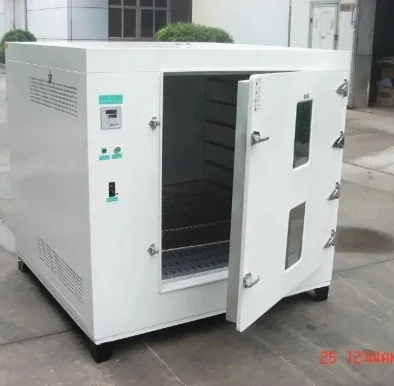
The operational prowess of a modern drying oven stems from a meticulously engineered interplay of heating elements, airflow dynamics, and advanced control systems. At its heart, a typical drying oven utilizes electrical resistance heaters, often strategically placed to ensure uniform heat distribution. Forced-air convection models employ powerful fans to circulate heated air throughout the chamber, rapidly transferring thermal energy to samples and evacuating moisture-laden air through adjustable vents. This active circulation minimizes temperature gradients, achieving exceptional uniformity across the entire working volume—a crucial factor for reproducible results. In contrast, gravity convection ovens rely on the natural buoyancy of heated air, offering a gentler, less turbulent drying environment suitable for delicate samples or powders that might be disturbed by forced airflow. Vacuum drying ovens represent another leap in technology, operating under reduced pressure to lower the boiling point of water and other solvents. This allows for significantly faster and more efficient drying at lower temperatures, preserving heat-sensitive materials and preventing oxidation. Insulation, typically high-density ceramic fiber or mineral wool, plays a vital role in minimizing heat loss, thereby improving energy efficiency and maintaining stable internal temperatures. Contemporary models integrate sophisticated PID (Proportional-Integral-Derivative) controllers, often microprocessor-based, which continuously monitor and adjust heating power to maintain setpoint temperatures with remarkable precision, frequently achieving accuracy within ±0.1°C to ±0.5°C of the target. These controllers also support programmable ramp and soak cycles, allowing for complex temperature profiles essential for specific curing or annealing processes. The interior chamber, frequently constructed from corrosion-resistant stainless steel, ensures longevity and ease of cleaning, while robust exterior casings protect internal components and enhance operator safety.
Quantitative Edge: Performance Metrics and Efficiency Gains
The true value proposition of an advanced drying oven is quantifiable through its performance metrics and the tangible efficiency gains it delivers. Key performance indicators (KPIs) such as temperature uniformity, recovery time, energy consumption, and ramp-up rates are not mere technical specifications; they directly translate into operational savings, improved product quality, and enhanced experimental reproducibility. For instance, a high-performance oven can achieve temperature uniformity of less than ±1.5°C at 150°C across the entire chamber, a critical factor for sensitive applications where even minor temperature variations can compromise results. Faster recovery times, often less than 5 minutes after a door opening, ensure process continuity and minimize downtime, particularly in high-throughput environments. This efficiency is further bolstered by optimized insulation and intelligent heating algorithms that can reduce energy consumption by up to 25% compared to older models, leading to significant long-term operational cost reductions. Consider a pharmaceutical manufacturing facility where precise moisture content is paramount for tablet integrity. An oven maintaining ±0.8°C uniformity across 500 liters of capacity ensures that every batch receives consistent thermal treatment, reducing product waste by an estimated 7-10% annually. Similarly, in an electronics assembly line, efficient curing of epoxy adhesives at 120°C with rapid ramp-up rates (e.g., reaching 150°C in under 20 minutes) can accelerate production cycles by 15-20%, directly impacting output volume. The ability to precisely control ramp and soak profiles minimizes thermal stress on materials, extending component lifespan and reducing defect rates. These measurable advantages underscore why scrutinizing performance data is essential; the initial investment in a superior oven is often quickly offset by operational efficiencies and quality improvements that safeguard both reputation and bottom line.
Navigating the Landscape: A Comparative Analysis of Leading Manufacturers
The market for drying ovens is diverse, populated by numerous manufacturers each offering a range of models tailored for specific applications and budgets. Choosing the right supplier requires a careful evaluation of their product lines, technological advancements, support services, and industry reputation. While core functionalities are shared, manufacturers often differentiate themselves through proprietary control systems, innovative chamber designs, unique safety features, or specialized customization options. For instance, some manufacturers excel in high-temperature industrial ovens, while others dominate the precise, small-scale laboratory drying oven market. A critical aspect of this evaluation involves understanding the trade-offs between cost, performance, and features. Below is a comparative table illustrating key differentiators among hypothetical leading manufacturers, highlighting the spectrum of choices available to buyers.
Feature/Manufacturer | PrecisionDry Systems | ThermalTech Solutions | AccuHeat Innovations | LabTemp Excellence |
Typical Temperature Range | Ambient +5°C to 300°C | Ambient +10°C to 250°C | Ambient +15°C to 350°C | Ambient +7°C to 200°C |
Temperature Uniformity (at 150°C) | ±0.8°C | ±1.5°C | ±0.5°C | ±1.2°C |
Chamber Material | 304 Stainless Steel | Galvanized Steel, Optional 304 SS | 316L Stainless Steel | 304 Stainless Steel |
Control System | Advanced PID with Touchscreen | Digital PID with LED Display | Multi-segment Programmable Logic | Basic Digital PID |
Connectivity/Data Logging | Ethernet, USB, Real-time Graphing | USB Export (basic) | Cloud-based Monitoring, SCADA Integration | Manual Log Optional |
Safety Features | Over-temp Protection (Class 2), Door Lock | Basic Over-temp Cutoff | Multi-level Alarms, Explosion-proof Option | Single Over-temp Sensor |
Typical Application Focus | R&D, Quality Control, Pharma | General Lab, Small Production | High-tech Manufacturing, Aerospace | Educational, Basic Lab Use |
Approx. Price Range (relative) | $$$ | $ | $$$$ | $ |
This illustrative comparison underscores the importance of aligning specific application requirements with manufacturer capabilities. While PrecisionDry Systems might appeal to a high-end research facility due to its advanced controls and robust construction, LabTemp Excellence could be a cost-effective choice for educational institutions. AccuHeat Innovations, with its emphasis on extreme precision and safety, caters to highly regulated industries. Beyond specifications, factors like warranty, availability of local service technicians, and the manufacturer's commitment to compliance standards (e.g., ISO, CE, UL) are equally vital in making an informed purchasing decision.
Tailoring Excellence: Bespoke Solutions for Diverse Demands
While standard drying ovens offer robust capabilities for a wide array of applications, the truly specialized requirements of certain industries and research fields often necessitate bespoke or highly customized solutions. Recognizing that a one-size-fits-all approach is insufficient for optimal performance in niche scenarios, leading manufacturers now offer extensive customization options, transforming their base models into highly specialized tools. This customization extends across several critical parameters. Chamber capacity can be scaled from compact benchtop units (e.g., 20 liters) ideal for individual lab experiments, to walk-in or truck-in ovens (e.g., 5000+ liters) designed for large-batch industrial processing of components like aerospace parts or automotive coatings. Temperature ranges can be extended, with high-temperature models capable of reaching 500°C or even 600°C for applications like advanced ceramics or material stress testing, contrasting with lower temperature ovens designed for sensitive biological samples. The internal atmosphere can be precisely controlled: options include inert gas purging systems (e.g., nitrogen) to prevent oxidation of sensitive materials during high-temperature processes, or vacuum systems for accelerated, low-temperature drying of solvents or moisture, particularly beneficial for pharmaceuticals and electronics. Specific features can be integrated, such as reinforced shelving for heavy loads, explosion-proof designs for volatile solvents, specialized interior coatings for corrosive environments, or cleanroom compatibility (e.g., ISO Class 7 or Class 5) to prevent particulate contamination. Advanced programmable controllers can be specified to manage complex multi-segment drying profiles with precise ramp rates and hold times, coupled with sophisticated data logging and remote monitoring capabilities vital for compliance and process optimization. For example, a composite manufacturing plant might require an oven with multiple independently controlled zones to cure large, irregularly shaped components, each section demanding a unique temperature profile. Similarly, a biomedical facility might need an oven with validated sterilization cycles and integrated HEPA filtration to maintain aseptic conditions. This ability to tailor every aspect ensures that the oven perfectly aligns with the user's specific process parameters, regulatory requirements, and operational workflow, maximizing efficiency, ensuring compliance, and safeguarding the integrity of sensitive materials and processes.
Transformative Applications Across Scientific and Industrial Frontiers
The versatility of the modern drying oven positions it as a cornerstone technology across an astonishing breadth of scientific and industrial disciplines, enabling processes that are foundational to innovation and quality. In the pharmaceutical sector, these ovens are indispensable for critical steps like moisture determination in raw materials and finished products, drying granulations for tablet manufacturing, and glassware sterilization to maintain aseptic conditions in laboratories and production environments. For instance, the precise drying of active pharmaceutical ingredients (APIs) at specific temperatures prevents degradation, ensuring drug stability and efficacy. The electronics industry relies heavily on these ovens for curing epoxy resins used in component bonding, removing moisture from printed circuit boards (PCBs) before soldering to prevent defects, and baking semiconductor wafers to enhance material properties. A single batch of PCBs might undergo a 4-hour drying cycle at 125°C to ensure optimal adhesion of conformal coatings. In materials science, their applications are equally profound: from annealing polymers to improve their mechanical strength and stress resistance, to the controlled drying of advanced ceramic precursors to prevent cracking, and the curing of composite materials used in aerospace and automotive industries. For example, curing carbon fiber composites in a large industrial oven at 180°C for several hours imparts the structural integrity required for aircraft components. Research laboratories across chemistry, biology, and physics utilize drying ovens for routine tasks such as drying laboratory glassware, preparing samples for analysis, and incubating cultures under specific temperature regimes. In food and beverage production, they are used for moisture analysis of ingredients and finished products, crucial for shelf life and quality control, and for dehydrating various food items. Even in forensic science, controlled drying of evidence is vital to preserve its integrity. Each application, while distinct, underscores the shared requirement for precise temperature control, uniform heating, and often, the ability to operate under specific atmospheric conditions. The transformative impact of these ovens lies in their capacity to provide a consistent, controlled environment that guarantees product quality, facilitates scientific discovery, and ensures process reliability, making them truly indispensable tools in the pursuit of excellence.
Choosing Your Ideal Drying Oven: A Strategic Decision
The selection of an appropriate drying oven is a strategic decision that reverberates through the entire operational framework of any laboratory, research facility, or industrial production line. It is not merely a matter of acquiring a piece of equipment, but of investing in a solution that will directly influence product quality, process efficiency, compliance, and ultimately, the integrity of your work. The ideal drying oven is one that perfectly aligns with the specific technical requirements of your applications, the volume of samples or materials processed, your budget constraints, and your long-term operational goals. Consider the nuances of temperature range and uniformity: will a standard forced-air convection suffice, or do your materials demand the gentle, oxygen-free environment of a vacuum oven? Evaluate the control system – is a basic digital controller adequate, or do you require a multi-segment programmable unit with advanced data logging capabilities for regulatory compliance and process optimization? Material compatibility, safety features, energy efficiency, and post-sales support from the manufacturer are all critical factors that warrant careful scrutiny. A thorough assessment of these elements, combined with a comprehensive understanding of the technical specifications detailed previously, will guide you towards a choice that not only meets immediate needs but also provides robust, reliable performance for years to come. Ultimately, the right drying oven is a foundational element that empowers precise experimentation, ensures consistent product quality, and underpins the pursuit of innovation across myriad scientific and industrial frontiers, making its selection a pivotal moment in operational planning.
Frequently Asked Questions (FAQs) about Drying Ovens
1. What is the primary difference between a forced-air and a gravity convection drying oven?
A forced-air (or mechanical convection) drying oven uses a fan to circulate heated air throughout the chamber, resulting in faster heat transfer, superior temperature uniformity, and quicker drying times. Gravity convection ovens rely on the natural rise of hot air and descent of cooler air, offering a gentler airflow suitable for delicate samples or powders that might be disturbed by forced air, but with slower drying rates and potentially less uniformity.
2. How often should a drying oven be calibrated?
The calibration frequency for a drying oven depends on its usage intensity, criticality of applications, and industry regulations (e.g., ISO, GMP). Generally, it is recommended to calibrate laboratory drying ovens at least once annually. For highly critical processes or frequently used ovens, semi-annual or even quarterly calibration may be necessary to ensure continued accuracy and compliance.
3. What safety precautions are essential when operating a high-temperature drying oven?
Essential safety precautions include ensuring proper ventilation, especially when drying materials that release volatile organic compounds (VOCs); using appropriate personal protective equipment (PPE) such as heat-resistant gloves; never exceeding the oven's maximum temperature rating; regularly inspecting electrical components and door seals; and ensuring the oven is equipped with independent over-temperature protection systems to prevent runaway heating.
4. Can a drying oven be used for sterilization?
Yes, many drying ovens, particularly those designed for laboratory or medical use, can be effectively used for dry heat sterilization. This typically involves maintaining temperatures between 160°C and 170°C for 2-3 hours for effective sterilization of glassware and heat-stable instruments. However, specific validated sterilization ovens or autoclaves are often preferred for critical medical or pharmaceutical applications due to their precise control and validation capabilities.
5. What factors influence the temperature uniformity within an oven chamber?
Temperature uniformity is influenced by several factors, including the heating element placement, fan design (in forced-air models), insulation quality, chamber design (e.g., absence of cold spots, internal baffling), door sealing integrity, and the loading pattern of samples. Overloading the oven or blocking airflow can significantly impede uniformity.
6. How do vacuum drying ovens differ from standard atmospheric models?
Vacuum drying ovens operate under reduced atmospheric pressure, which significantly lowers the boiling point of water and other solvents. This allows for rapid and efficient drying at much lower temperatures compared to atmospheric ovens, making them ideal for heat-sensitive materials. The vacuum environment also prevents oxidation, which is beneficial for certain materials.
7. What are the typical maintenance requirements for a laboratory drying oven?
Regular maintenance includes cleaning the interior chamber to prevent contamination, especially after spills; checking and cleaning air filters (if applicable) to ensure proper airflow; inspecting door gaskets for wear and tear to maintain a tight seal; verifying the functionality of safety devices like over-temperature alarms; and ensuring the external casing is free from obstructions to allow for adequate ventilation. Annual professional service and calibration are also highly recommended.


