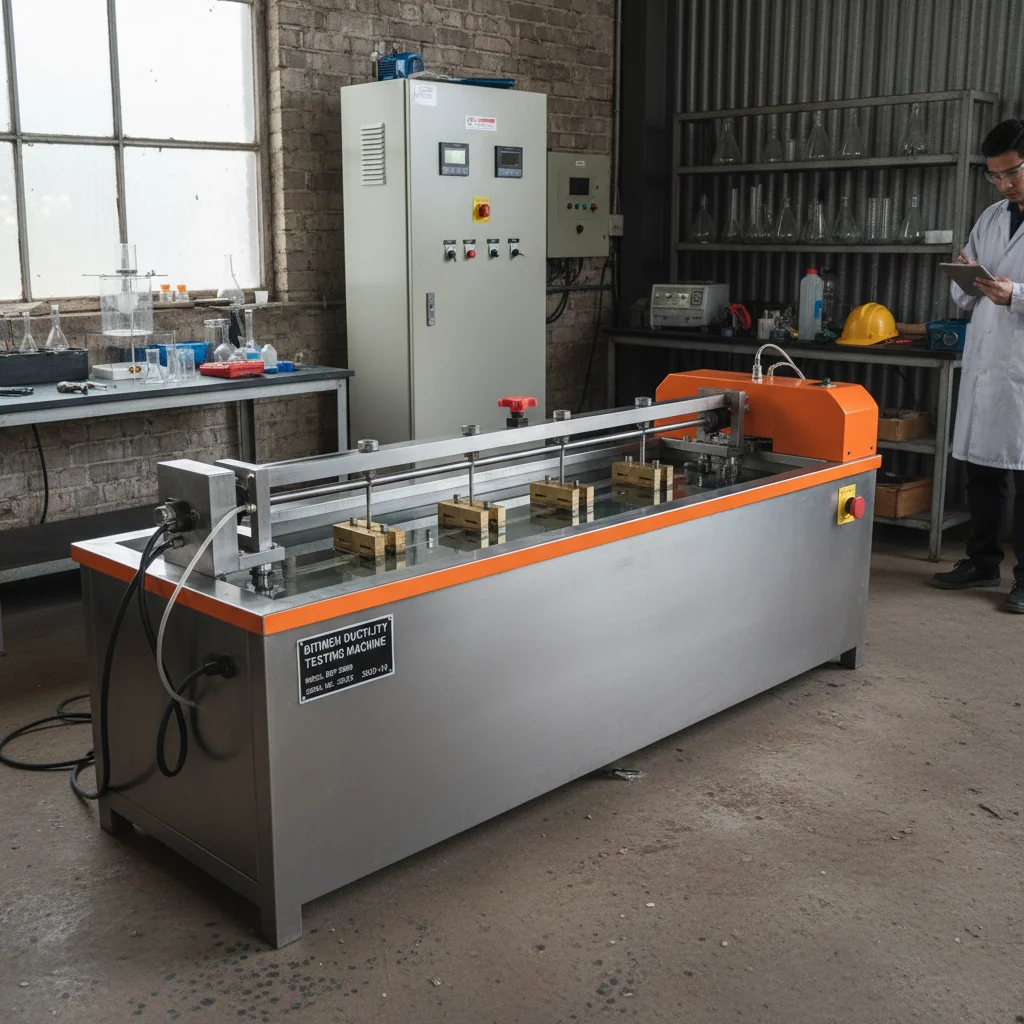
In the precision-driven world of materials testing, the efficiency of sample preparation and extraction often dictates the accuracy of the final results. A Centrifuge extractor represents a critical intersection of mechanical engineering and laboratory science, ensuring that components are separated and extracted with high precision to maintain the integrity of the specimen.
Globally, the demand for rigorous quality control in construction and industrial manufacturing has surged, leading to a greater reliance on standardized testing tools. Whether dealing with bitumen, soil, or concrete aggregates, the ability to effectively separate materials using centrifugal force allows engineers to analyze the fundamental properties of a substance without contamination.
Understanding the operational nuances of a Centrifuge extractor is essential for any laboratory aiming to meet ISO or ASTM standards. By optimizing the extraction process, facilities can reduce waste, shorten testing cycles, and ensure that the data derived from their material tests is both repeatable and reliable.

Global Industry Context of Centrifuge extractor
The global infrastructure boom, particularly in developing economies, has placed immense pressure on materials testing laboratories to accelerate their throughput without sacrificing accuracy. The integration of a Centrifuge extractor into these workflows addresses the challenge of manual separation, which is often prone to human error and inconsistency.
Adhering to international benchmarks like ISO, the industry has shifted toward automated extraction methods. This transition ensures that the physical properties of materials—such as the viscosity of bitumen or the permeability of soil—are measured under controlled conditions, minimizing the variance that can lead to catastrophic structural failures.
Defining the Centrifuge extractor Mechanism
At its core, a Centrifuge extractor is a device that utilizes centrifugal force—the apparent force that acts on a body moving in a circular path—to separate fluids of different densities or to isolate solids from a liquid medium. By rotating a sample at high velocities, the device forces the denser particles to the outer edge of the container, allowing for a clean and precise extraction of the target material.
In the context of modern industrial laboratories, this mechanism is indispensable for purifying samples and concentrating analytes. This process is not merely a convenience but a necessity for humanitarian and safety-critical needs, such as testing the stability of concrete in earthquake-prone regions or ensuring the purity of industrial lubricants in aerospace applications.
The synergy between rotational speed and time allows technicians to fine-tune the extraction process based on the specific gravity of the materials involved. This level of control transforms the Centrifuge extractor from a simple spinning tool into a high-precision instrument capable of delivering laboratory-grade results.
Core Components of Centrifuge extractor Systems
The durability of a Centrifuge extractor is primarily determined by its rotor assembly. High-grade alloys or reinforced polymers are used to withstand the extreme G-forces generated during high-speed rotation, ensuring that the device remains stable and safe over thousands of cycles.
Scalability is another critical factor; modern Centrifuge extractor units are designed with interchangeable buckets or tubes, allowing the user to switch from small-scale pilot tests to larger batch extractions without needing to invest in multiple machines.
Finally, the control system—often featuring digital timers and variable speed drives—provides the cost efficiency needed for high-volume labs. By reducing the time required for separation, the Centrifuge extractor lowers labor costs and increases the overall productivity of the testing facility.
Operational Efficiency and Performance Metrics
When evaluating the performance of a Centrifuge extractor, technicians look at the "Separation Factor," which measures the efficiency of the device in isolating a specific component from a mixture. Higher centrifugal force generally leads to faster separation, but it must be balanced against the fragility of the sample to prevent degradation.
To maintain operational excellence, laboratories often compare different extraction methods to determine which offers the best yield and purity. The following data illustrates the relative performance ratings of various centrifugal approach configurations.
Comparison of Centrifuge extractor Performance Methods
Real-World Applications in Material Science
In the bitumen and asphalt industry, the Centrifuge extractor is used to determine the bitumen content of an asphalt mixture. By utilizing a centrifugal force to separate the binder from the aggregate, engineers can ensure that road surfaces meet the specific elasticity and durability requirements needed to withstand heavy traffic and extreme weather.
Beyond roadworks, these devices are used in remote industrial zones for soil analysis. In post-disaster relief operations, portable centrifugal systems allow engineers to quickly assess the load-bearing capacity of the ground before deploying temporary housing or bridges, directly impacting the speed and safety of recovery efforts.
Long-Term Value and Sustainability
Investing in a high-quality Centrifuge extractor provides tangible long-term value by reducing the reliance on chemical solvents for separation. Many traditional extraction methods require hazardous acids or organic solvents; however, centrifugal separation is a purely mechanical process, making it a far more sustainable and eco-friendly choice for the modern lab.
From a logical perspective, the reliability of centrifugal systems reduces the risk of "re-testing" due to contaminated samples. This reliability fosters trust between the testing laboratory and the end client, as the results are backed by a consistent, repeatable mechanical process rather than subjective manual filtration.
Ultimately, the social impact of using precise extraction tools is seen in the longevity of our infrastructure. When the binder content of a road or the purity of a concrete additive is perfectly extracted and analyzed, the resulting structures are safer, lasting longer and requiring fewer costly repairs over their lifespan.
Future Innovations in Centrifuge extractor Tech
The future of the Centrifuge extractor is being shaped by the digital transformation of the laboratory. We are seeing the rise of "Smart Centrifuges" equipped with IoT sensors that can monitor vibration levels in real-time, predicting mechanical failure before it occurs and ensuring that the operator's safety is never compromised.
Automation and AI are also playing a role in optimizing rotation profiles. Instead of a fixed speed, next-generation extractors will use AI to adjust the RPM based on the density of the sample detected in real-time, maximizing separation efficiency while minimizing energy consumption.
Sustainability continues to drive innovation, with new materials like carbon-fiber reinforced polymers replacing heavy metals in rotor design. This not only allows for higher rotational speeds but also reduces the energy required to accelerate the rotor, aligning with global green energy goals.
Comparative Analysis of Centrifuge extractor Technological Evolution
| Technology Era |
Primary Material |
Control Method |
Energy Efficiency |
| Traditional |
Cast Iron / Steel |
Manual Timer |
Low (3/10) |
| Modern Standard |
Aluminum Alloy |
Digital Interface |
Medium (6/10) |
| High-Precision |
Titanium Alloys |
Programmable Logic |
High (8/10) |
| Smart-Gen |
Carbon Fiber |
AI Adaptive |
Ultra (10/10) |
| Eco-Hybrid |
Recycled Polymers |
Cloud Managed |
High (9/10) |
| Industrial Max |
Reinforced Steel |
Remote Control |
Medium (7/10) |
FAQS
A Centrifuge extractor removes the human error associated with manual filtration. By applying a consistent centrifugal force, it ensures that the bitumen is separated from the asphalt aggregates completely and uniformly across all samples, providing a precise measurement of binder content that is essential for road durability standards.
Yes, the versatility of a Centrifuge extractor allows it to be used for various materials. By adjusting the rotational speed (RPM) and the duration of the cycle, it can be adapted for everything from separating heavy soils in geotechnical engineering to isolating refined oils in chemical labs, provided the appropriate rotor and tubes are used.
Regular maintenance is key to safety and precision. This includes checking the rotor for signs of metal fatigue or corrosion, ensuring the drive belt is tensioned correctly, and calibrating the digital tachometer. Proper balancing of the sample tubes is also critical to prevent excessive vibration that could damage the motor.
In the long run, yes. While the initial investment in a Centrifuge extractor is higher than buying solvents, it eliminates the ongoing cost of chemical purchases and the expensive hazardous waste disposal fees. Additionally, the speed of centrifugal separation reduces labor hours per sample.
The ideal RPM depends on the density difference between the two components you are separating. Heavier particles require less force, while fine emulsions require higher speeds. We recommend consulting the specific ISO or ASTM standard for your material or conducting a pilot test starting at low speeds and increasing gradually.
The primary risk is rotor failure due to imbalance. Modern Centrifuge extractor units mitigate this with reinforced steel casings and automatic imbalance sensors that shut down the machine instantly if abnormal vibrations are detected. Always ensure the load is balanced symmetrically.
Conclusion
The Centrifuge extractor stands as a cornerstone of modern material analysis, bridging the gap between raw sampling and precise data. By leveraging the physics of centrifugal force, it provides a sustainable, efficient, and highly accurate means of separating complex mixtures in the construction and industrial sectors. From enhancing the safety of our roads to advancing the purity of industrial materials, its role in quality assurance is irreplaceable.
As we look toward a future defined by automation and green technology, the evolution of centrifugal systems will likely focus on AI-driven optimization and ultra-lightweight materials. For laboratories seeking to upgrade their capabilities and ensure compliance with global standards, investing in high-precision extraction technology is the most effective way to guarantee reliability and long-term growth. Visit our website for more professional solutions: www.czlabinstrument.com