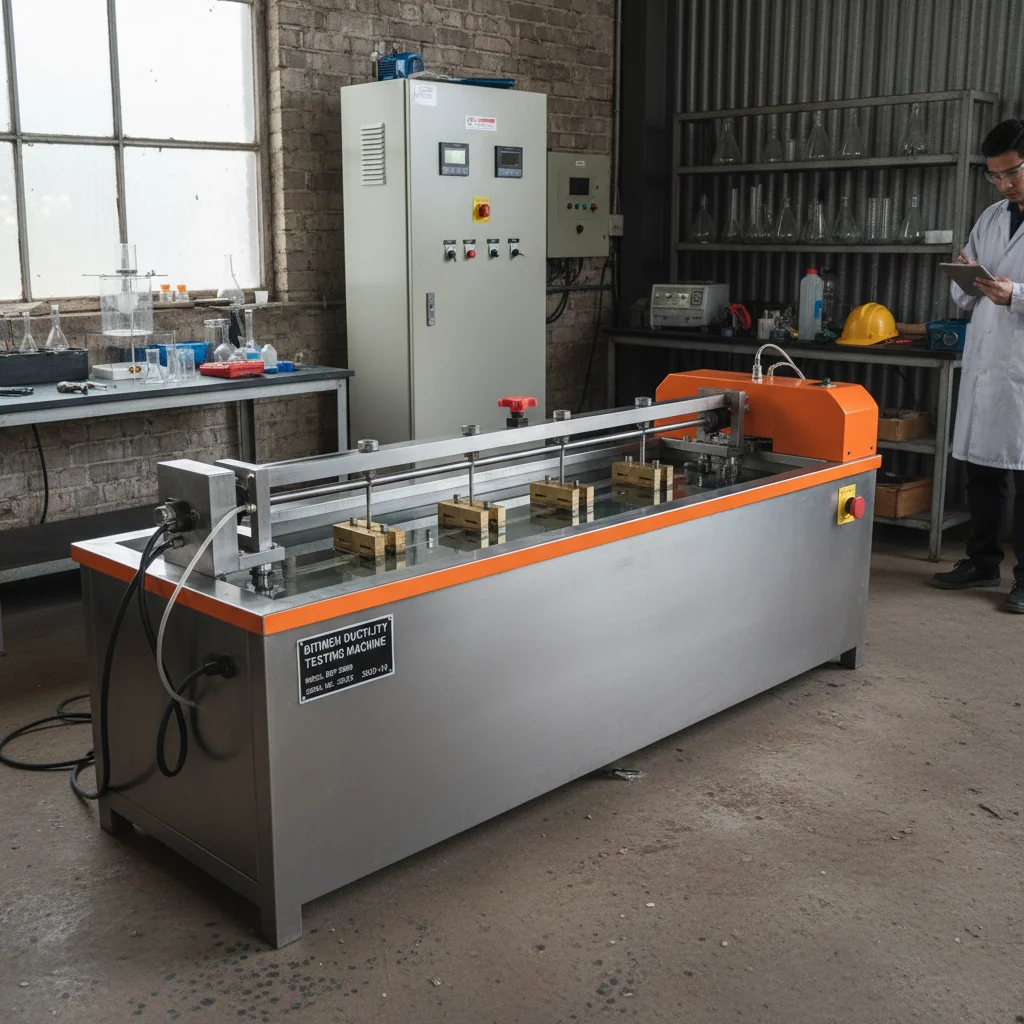
Determining the relationship between moisture content and dry unit weight is a cornerstone of geotechnical engineering, ensuring that foundations, roads, and embankments do not fail under load. The Soil Proctor Compaction Test Apparatus provides the standardized means to achieve this, allowing engineers to identify the optimum moisture content (OMC) for maximum dry density.
When soil is compacted, air is expelled, increasing the soil's shear strength and reducing its permeability and compressibility. However, the efficiency of this process depends heavily on the water present; too little water creates too much friction between particles, while too much water occupies space that should be filled by soil solids.
For procurement officers and laboratory managers in the construction sector, selecting the right compaction equipment is not merely about compliance with ASTM or AASHTO standards, but about reducing the risk of structural settlement and long-term maintenance costs across infrastructure projects.

The Fundamental Role of Compaction Testing in Geotechnics

The Proctor compaction test is designed to simulate the effect of heavy machinery on a soil sample within a controlled laboratory environment. By applying a specific amount of energy through a falling hammer, the apparatus helps establish the compaction curve, where the peak represents the maximum dry density.
Understanding this curve is essential because soil behaves differently based on its plasticity and grain size. For instance, sandy soils reach maximum density faster than clay-heavy soils, requiring different energy levels—Standard or Modified—to achieve the necessary stability for high-load structures.
Without precise measurement provided by a Soil Proctor Compaction Test Apparatus, site engineers are forced to rely on estimations, which often lead to over-compaction (causing soil heave) or under-compaction (leading to premature pavement cracking and subsidence).
Key Technical Specifications for Accurate Compaction Results
The reliability of a compaction test depends on the consistency of the energy applied to the soil. This is governed by the mass of the rammer, the height of the drop, and the number of layers into which the soil is compacted within the mold.
Standard Proctor tests typically use a 5.5 lb rammer falling from 12 inches, while Modified Proctor tests—used for heavier loads like airport runways—use a 10 lb rammer falling from 18 inches. The apparatus must be constructed from wear-resistant materials to prevent deformation of the mold over thousands of impact cycles.
Furthermore, the precision of the mold's internal diameter and the flatness of the base plate are critical. Any deviation in these dimensions can introduce volumetric errors, which directly skew the calculated dry density and lead to incorrect field specifications.
Critical Applications Across Civil Engineering Projects
The application of compaction testing extends far beyond simple dirt roads. It is a mandatory phase in the quality control process for any project involving earthworks, from residential foundations to massive hydroelectric dams.
In highway construction, the subgrade must be compacted to a specific percentage of the Proctor maximum dry density to prevent rutting. In the case of embankments for railways, the high-frequency vibration of trains requires an extremely high degree of stability that can only be verified through rigorous laboratory compaction curves.
Additionally, environmental engineering utilizes these tests when designing landfill liners. Ensuring that the soil is compacted to its lowest permeability prevents hazardous leachates from contaminating groundwater, making the precision of the testing apparatus a matter of environmental safety.
Analyzing Test Precision and Density Correlation Metrics
The value of using a professional Soil Proctor Compaction Test Apparatus lies in the reduction of variance. When comparing manual, improvised methods against standardized equipment, the consistency of the results increases significantly, reducing the margin of error in density calculations.
Precision is measured by the ability to replicate the same peak density across multiple samples of the same soil type. Standardized apparatuses minimize energy loss through mechanical stability, ensuring that nearly 100% of the potential energy is transferred into the soil matrix.
Soil Proctor Compaction Test Apparatus Performance Metrics
As illustrated in the performance metrics, the use of standardized equipment improves the repeatability of the optimum moisture content (OMC) detection and increases the accuracy of the dry density peak, which is vital for avoiding project delays caused by failed field inspections.
Practical Implementation and Operational Best Practices
Operating a compaction apparatus requires strict adherence to procedural steps to avoid "false peaks" in the compaction curve. The most common error is improper soil preparation, where oversized particles are not correctly screened out according to the mold size.
Operators should ensure that the mold is securely fastened to the base plate to prevent energy dissipation through vibration or movement. Each layer must be compacted evenly across the surface; concentrating the blows in the center of the mold leads to uneven density distribution and inaccurate weight readings.
Post-test maintenance is equally important. The interior of the mold must be cleaned of all residue, and the rammer head should be inspected for wear. Even a slight rounding of the rammer's impact surface can change the way energy is distributed into the soil, affecting the results of subsequent tests.
Evolution Toward Automated Soil Testing Systems
The industry is gradually moving away from manual ramming toward automatic compaction systems. These systems utilize programmable actuators to deliver a precise, repeatable force, eliminating the human error associated with manual drop heights and timing.
Digital integration allows for the real-time recording of energy application, which can be synced with moisture sensors. This evolution is likely to reduce the time required to produce a full compaction curve from several hours to a fraction of that time, increasing laboratory throughput.
However, the core physics of the Proctor test remain the same. Whether manual or automated, the goal is to find the point where the soil reaches its maximum density at the lowest possible moisture content, ensuring long-term structural integrity for civil infrastructure.
Comparative Evaluation Guide for Procurement Decisions
When selecting a compaction apparatus, the decision should be based on the specific standards required by the region (e.g., ASTM D698 vs ASTM D1557) and the expected volume of testing. A low-cost manual set may suffice for small projects, but high-volume labs require heavy-duty, precision-machined equipment.
Buyers should evaluate the material grade of the mold and the stability of the base plate. For those integrating multiple soil and concrete tests, sourcing from a comprehensive provider like Cangzhou Blue Beauty Instrument Co., Ltd. ensures that all laboratory instruments meet a unified quality standard.
| Configuration Type | Primary Use Case | Energy Level | Precision Grade |
|---|---|---|---|
| Standard Proctor Set | Residential Foundations | Low (5.5 lb rammer) | Standard |
| Modified Proctor Set | Airport/Highway Runways | High (10 lb rammer) | High |
| Automatic Compactor | High-Volume Commercial Labs | Programmable | Ultra-High |
| Heavy Duty Manual | Field-Site Temporary Labs | Standard/Modified | Industrial |
| Precision Research Kit | University/R&D Facilities | Variable/Controlled | Laboratory |
| Combined Soil Suite | Full-Service Geotech Firms | Multi-Standard | Enterprise |
Ultimately, the investment in a high-quality Soil Proctor Compaction Test Apparatus is an investment in risk mitigation. Accurate lab data prevents the costly necessity of ripping up and re-compacting failed site layers during the construction phase.
Conclusion
The Soil Proctor Compaction Test Apparatus remains an indispensable tool in the geotechnical arsenal, bridging the gap between raw geological data and engineered structural stability. By precisely determining the optimum moisture content and maximum dry density, engineers can dictate field requirements that ensure the longevity and safety of civil infrastructure.
Whether upgrading to an automated system or maintaining a manual laboratory, prioritizing precision in equipment selection is key to avoiding costly project failures. Professionals seeking a comprehensive range of high-precision testing instruments can explore the detailed specifications and capabilities available through www.czlabinstrument.com.