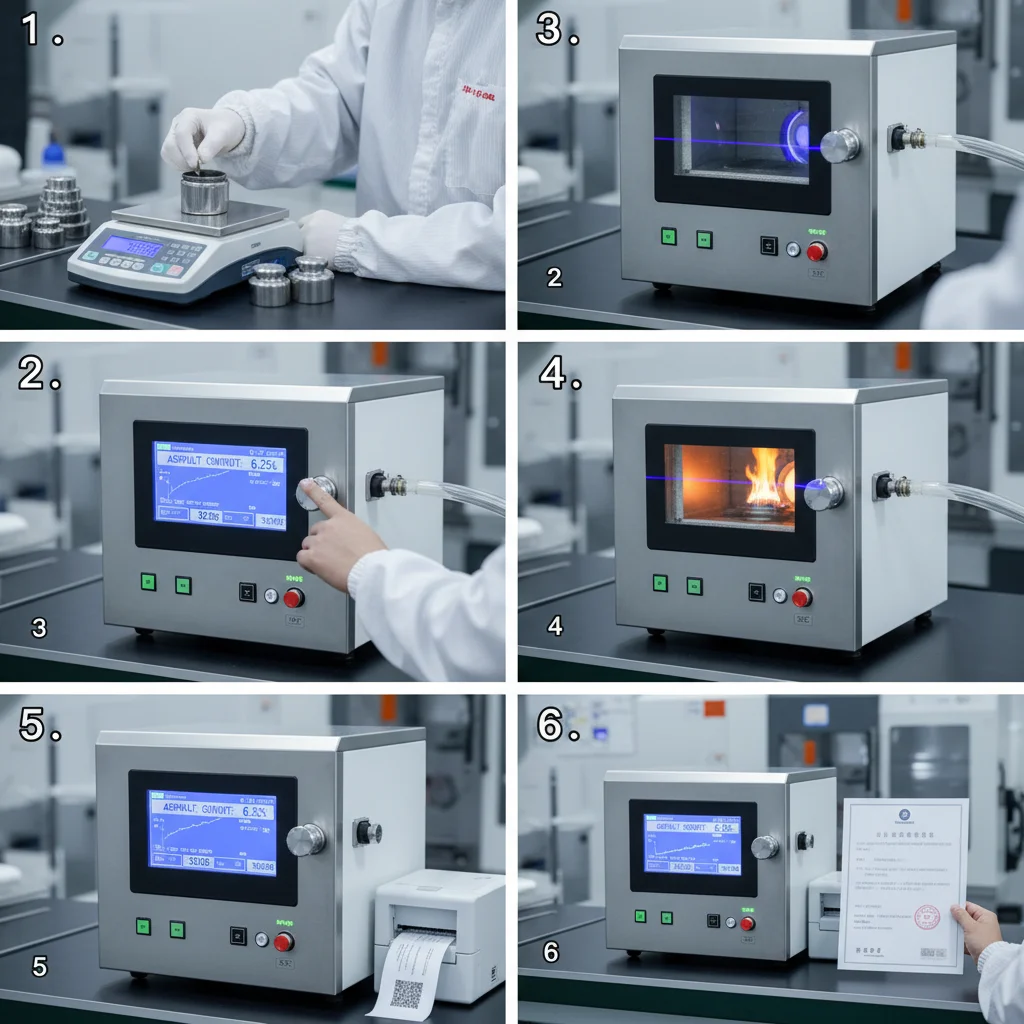
In the demanding world of construction materials testing, the precision of analyzing binder properties is paramount. The Automatic Softening Point of Bitumen represents a critical benchmark in determining the temperature at which a bituminous material ceases to behave as a viscous solid and starts to flow, which is essential for preventing road rutting in hot climates.
Understanding the thermal stability of asphalt binders allows engineers to design pavements that can withstand extreme weather variations. By utilizing an Automatic Softening Point of Bitumen testing approach, laboratories can eliminate the human error associated with manual ring-and-ball observations, ensuring that the infrastructure we build is safe, durable, and compliant with international standards.
Beyond simple measurement, the transition toward automation in bitumen testing reflects a broader global trend toward digitalization and quality assurance. Integrating an Automatic Softening Point of Bitumen system into a modern lab not only accelerates the testing cycle but also provides the traceable data necessary for high-stakes government and commercial infrastructure projects.

Global Relevance of Automatic Softening Point of Bitumen
The global infrastructure boom, particularly in rapidly developing regions of Asia and Africa, has placed immense pressure on the quality of road construction. The Automatic Softening Point of Bitumen is no longer just a luxury for high-end labs but a necessity for maintaining ISO and ASTM compliance. As global temperatures rise due to climate change, the risk of road deformation increases, making the precise determination of softening points a matter of public safety.
Industry data suggests that premature pavement failure due to incorrect binder selection can cost governments billions in annual maintenance. By implementing an Automatic Softening Point of Bitumen testing regime, agencies can ensure that the bitumen used is specifically graded for the local climate, thereby extending the lifespan of highways and reducing the carbon footprint associated with frequent road repairs.
Defining the Automatic Softening Point of Bitumen Concept
In simple terms, the Automatic Softening Point of Bitumen is the temperature at which a bitumen sample reaches a specific degree of softness, typically defined by the moment a steel ball penetrates a bitumen-filled ring to a specified depth. Unlike manual methods, the "automatic" aspect refers to the system's ability to control heating rates and detect the exact moment of penetration without human intervention.
This concept is intrinsically linked to the rheological properties of asphalt. In modern industry, this measurement is used to categorize bitumen into different penetration grades. If the softening point is too low, the road will soften under the summer sun; if it is too high, the material may become brittle in winter, leading to cracks.
From a humanitarian and developmental perspective, providing affordable and accurate Automatic Softening Point of Bitumen testing tools to developing nations allows them to build more resilient transport networks. This connectivity is vital for the movement of food, medical supplies, and people, demonstrating that a technical lab parameter has real-world social implications.
Core Components for Precision Testing
The efficacy of an Automatic Softening Point of Bitumen system relies on several critical engineering factors. Firstly, thermal stability is paramount; the heating bath must maintain a perfectly linear temperature increase to prevent "thermal shock" which could lead to inaccurate readings.
Precision sensors and automated detection mechanisms are the heart of the Automatic Softening Point of Bitumen process. These sensors monitor the position of the ball and the temperature of the medium simultaneously, recording the result with a precision of up to 0.1°C, far exceeding the capabilities of a human observer.
Furthermore, the scalability and durability of the hardware ensure that the Automatic Softening Point of Bitumen tester can be used in high-volume industrial settings. Using corrosion-resistant materials and intuitive digital interfaces allows technicians to run multiple samples in parallel without sacrificing the integrity of the data.
Practical Applications Across Global Industries
The application of Automatic Softening Point of Bitumen testing extends far beyond highway construction. In the aerospace and automotive industries, bitumen-based sealants are used for sound dampening and waterproofing. Ensuring the softening point is correct prevents these materials from leaking or migrating when the vehicle or aircraft is exposed to high operating temperatures.
In remote industrial zones, such as oil sands mining or arctic pipeline installations, the Automatic Softening Point of Bitumen helps in selecting modified binders that can withstand extreme thermal cycles. Whether it is in the scorching heat of the Middle East or the freezing plains of Siberia, automation ensures consistent results regardless of the lab's environment.
Performance Comparison of Bitumen Testing Methods
Tangible Advantages and Long-Term Value
The shift to an Automatic Softening Point of Bitumen system provides an immediate increase in laboratory throughput. By removing the need for a technician to stare at a stopwatch and a beaker for hours, the lab can reallocate human resources to more complex analysis and data interpretation, significantly reducing operational costs over time.
Moreover, the emotional value of trust cannot be overstated. When a contractor presents a report based on an Automatic Softening Point of Bitumen test, the client knows the result is not subject to the fatigue or bias of a human operator. This reliability builds professional dignity and trust between government regulators and private construction firms, fostering a culture of innovation and safety.
Future Trends in Bitumen Automation
The future of the Automatic Softening Point of Bitumen lies in the integration of AI and Machine Learning. We are moving toward "predictive testing," where historical data from automatic testers is used to predict the behavior of new binder blends before they are even synthesized, drastically reducing material waste.
Sustainability is also driving innovation. New Automatic Softening Point of Bitumen devices are being designed to use eco-friendly heating mediums and lower energy consumption. This aligns with global green energy goals, ensuring that the process of testing for road durability does not come at the cost of environmental health.
Digital transformation is further enabling the "Cloud Lab" concept. Data from an Automatic Softening Point of Bitumen tester can now be uploaded instantly to a centralized database, allowing engineers in different cities to collaborate on a single project in real-time, ensuring total quality control across thousands of miles of roadwork.
Overcoming Challenges in Thermal Analysis
Despite the advantages, achieving a perfect Automatic Softening Point of Bitumen reading can be challenging due to sample impurities. Air bubbles trapped in the bitumen can lead to premature "collapse" of the sample, which the automated system might record as a lower softening point. To solve this, advanced degassing protocols are now being integrated into the pre-testing phase.
Another limitation is the variance in heating rates across different brands of equipment. Expert insight suggests that strict adherence to the heating rate (e.g., 5°C per minute) is the only way to ensure repeatability. Modern Automatic Softening Point of Bitumen testers solve this by using PID controllers that adjust power output in real-time to maintain a flawless linear ramp.
Finally, the transition from manual to automatic testing often meets resistance from staff accustomed to old ways. The solution is comprehensive training and the demonstration of the Automatic Softening Point of Bitumen's ability to provide a "digital fingerprint" of the material, which provides a level of professional security and accountability that manual testing simply cannot offer.
Comparative Analysis of Automatic Softening Point Testing Dimensions
| Test Parameter |
Manual Method Score |
Automatic Method Score |
Impact on Road Life |
| Thermal Precision |
3/10 |
9/10 |
High |
| Operator Bias |
8/10 (High Bias) |
1/10 (Low Bias) |
Medium |
| Testing Speed |
2/10 |
9/10 |
Low |
| Data Traceability |
4/10 |
10/10 |
High |
| Consistency |
5/10 |
9/10 |
High |
| Cost per Sample |
6/10 |
4/10 |
Medium |
FAQS
The primary difference lies in the detection and control mechanisms. Manual testing requires a technician to visually observe the moment the ball drops and manually record the temperature. The Automatic Softening Point of Bitumen system uses high-precision sensors to detect the drop and an automated controller to ensure the heating rate is perfectly linear, eliminating human error and bias.
By providing a highly accurate softening point, engineers can select the exact grade of bitumen that matches the local climate. This prevents "rutting" (permanent deformation) in hot weather and cracking in cold weather, directly increasing the service life of the pavement and reducing maintenance costs.
Yes, most modern automatic testers are designed specifically to meet or exceed ASTM D36 and EN 1427 standards. They ensure that the heating rates and dimensions of the rings and balls are standardized, making the results globally acceptable for government and commercial tenders.
Absolutely. The Automatic Softening Point of Bitumen system is versatile enough to handle Portland bitumen, blended cements, and polymer-modified bitumen. Its precision sensors are capable of detecting the transition point regardless of the additive used in the binder.
Maintenance is minimal but critical. It involves regular cleaning of the heating bath to prevent residue buildup and periodic calibration of the temperature sensors. Most high-quality testers are built with durable materials to withstand daily industrial use with minimal wear.
Most Automatic Softening Point of Bitumen testers come with digital output options (such as USB or RS232) and software that allows for seamless data export. This enables labs to integrate results directly into LIMS (Laboratory Information Management Systems) for better traceability.
Conclusion
The transition to an Automatic Softening Point of Bitumen testing system represents a critical leap forward in materials science. By combining thermal precision, automated detection, and digital traceability, laboratories can ensure that every kilometer of road is built on a foundation of scientific accuracy. The reduction in human error and the increase in throughput provide a clear economic and safety advantage for any infrastructure project.
Looking ahead, the integration of smarter sensors and cloud-based data sharing will further refine our ability to combat climate-related pavement failure. We encourage lab managers and civil engineers to embrace this automation to not only meet current regulatory standards but to lead the way in sustainable and resilient urban development. Visit our website for more information: www.czlabinstrument.com