
Understanding Drying Ovens for Lab Applications
In scientific research and quality control, consistent and reliable drying processes are crucial. A drying oven lab provides a controlled environment to remove moisture or other volatile substances from samples. This article provides a comprehensive guide to laboratory drying ovens, exploring their types, applications, key features, and selection considerations. Choosing the right drying oven is essential for accurate results and the integrity of your experiments. We will explore how to select the best oven for your specific needs from CZ Lab Instrument.
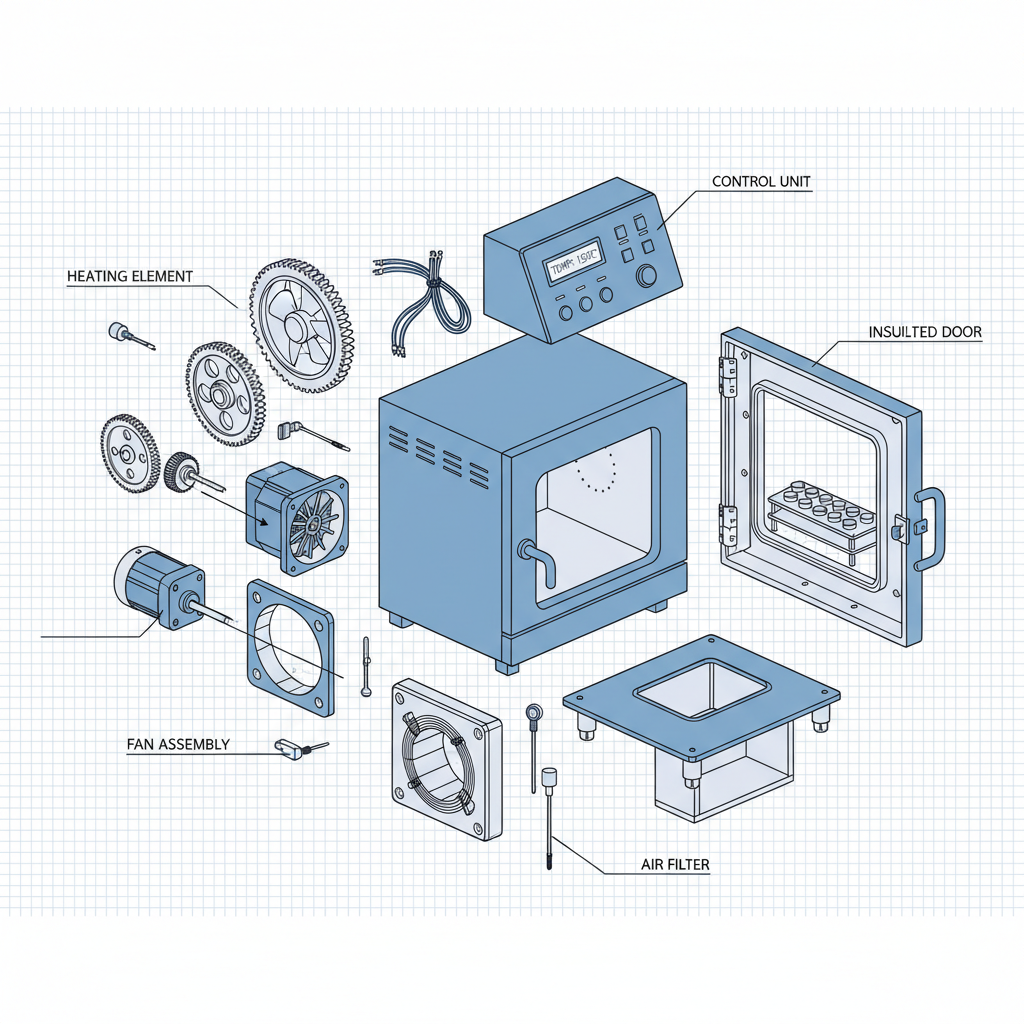
Types of Drying Ovens
Laboratory drying ovens come in various types, each designed for specific applications. The most common types include:
- Conventional Drying Ovens: Utilize convective heat transfer for general-purpose drying.
- Vacuum Drying Ovens: Reduce the boiling point of liquids, allowing for faster drying at lower temperatures, ideal for heat-sensitive materials.
- Forced Air Drying Ovens: Employ a fan to circulate air, ensuring uniform temperature distribution and faster drying.
- Inert Gas Drying Ovens: Utilize inert gases (like nitrogen or argon) to prevent oxidation during drying.
Key Features to Consider When Selecting a Drying Oven Lab
Several key features are crucial when selecting a drying oven. These include:
- Temperature Range: Ensure the oven can reach the required temperature for your applications.
- Temperature Accuracy & Uniformity: Critical for reproducible results; look for ovens with precise temperature control and minimal temperature gradients.
- Chamber Size & Material: Choose a size that accommodates your samples and a material resistant to corrosion (e.g., stainless steel).
- Control System: Digital controllers offer greater precision and programming capabilities.
- Safety Features: Over-temperature protection, door locks, and alarms are essential for safe operation.
Key Highlights: Accurate temperature control, durable construction, and robust safety features are essential for a reliable and reproducible drying process.
Applications of Drying Ovens in Laboratories
Drying ovens are employed in a wide range of laboratory applications, including:
- Pharmaceuticals: Drying raw materials, intermediates, and finished products.
- Food Science: Determining moisture content in food samples.
- Chemistry: Drying precipitates, solvents, and glassware.
- Materials Science: Preparing samples for analysis.
- Environmental Monitoring: Determining the total solids content of water samples.
Comparing Drying Oven Types: A Detailed Overview
Choosing the right type of drying oven can be challenging. The following table compares the key features of different oven types to help you make an informed decision:
Product Spotlight: CZ Lab Instrument Drying Ovens
CZ Lab Instrument offers a comprehensive range of drying ovens to meet diverse laboratory needs. Our ovens are renowned for their precision, reliability, and durability. They feature advanced control systems, uniform temperature distribution, and robust safety features. Explore our selection of drying ovens to find the perfect solution for your application.

Ensuring Safe Operation and Maintenance
Safety is paramount when operating a drying oven. Always follow these guidelines:
- Wear appropriate personal protective equipment (PPE), such as heat-resistant gloves.
- Never place flammable materials inside the oven without proper precautions.
- Ensure adequate ventilation in the laboratory.
- Regularly inspect the oven for any damage or malfunctions.
- Follow the manufacturer’s instructions for cleaning and maintenance.
Conclusion: Choosing the Right Drying Oven
Selecting the appropriate drying oven lab is crucial for achieving accurate and reliable results in your experiments. Consider your specific application, temperature requirements, and budget. CZ Lab Instrument provides high-quality, dependable drying ovens designed to meet the needs of modern laboratories. Invest in quality to ensure consistent and safe operation.
Frequently Asked Questions (FAQs)
What temperature should I use for drying samples?
The optimal drying temperature depends on the nature of your sample. For heat-sensitive materials, use lower temperatures and consider a vacuum oven. For solvents with low boiling points, a vacuum oven is also recommended. Always consult the material safety data sheet (MSDS) for the substance being dried to determine a safe and appropriate temperature. Start with a lower temperature and gradually increase it if necessary, monitoring the sample closely to prevent degradation or decomposition. Generally, temperatures between 60-100°C are suitable for many common laboratory applications, but specific requirements vary.
How do I ensure uniform drying?
Uniform drying is crucial for accurate results. Use a forced air drying oven to circulate air evenly throughout the chamber. Ensure samples are spread out and not overcrowded. If possible, rotate samples during the drying process to expose all surfaces to the heated air. Consider using a shallow layer of sample to maximize surface area. Proper sample preparation and oven loading are essential for achieving consistent drying.
What safety precautions should I take when using a vacuum drying oven?
Vacuum drying ovens require extra safety precautions. Always wear safety glasses to protect your eyes from potential implosion hazards. Ensure the vacuum pump is properly maintained and in good working condition. Never open the oven while it is under vacuum. Use a vacuum trap to prevent solvent vapors from entering the pump. Be aware of the potential for bumping (sudden boiling) of liquids and use appropriate safeguards. Properly vent the oven before opening it to prevent pressure imbalances. Always follow the manufacturer’s safety guidelines.
How often should I calibrate my drying oven?
Regular calibration is essential for maintaining the accuracy of your drying oven. The frequency of calibration depends on usage and the criticality of your applications. Generally, annual calibration is recommended. However, if the oven is used frequently or for critical applications, more frequent calibration may be necessary. Maintain calibration records to demonstrate compliance with quality standards. CZ Lab Instrument offers calibration services to ensure your oven is operating accurately.
Related Posts

Ethan Turner
Ethan is the Marketing Director at Cangzhou Jiujiang, focusing on expanding the brand's presence in North America. With over a decade of experience in outdoor apparel marketing, Ethan leverages his knowledge to promote the company’s PU rainwear, emphasizing its BSCI and GRS certifications.


