
Advancements in Laboratory Processes with Digital Precision Oven Heating Technology
Achieving Unparalleled Precision with Digital Precision Oven Heating
In the realm of laboratory and industrial processes, temperature control is paramount. Digital Precision Oven Heating systems, like those offered by CZ Lab Instrument, provide the accuracy, reliability, and control necessary for achieving optimal results. This article delves into the benefits of this technology, its applications, key features, and how it compares to traditional heating methods. Whether you're conducting research, quality control, or materials testing, understanding the advantages of digital precision heating is crucial for maximizing efficiency and accuracy.

The Importance of Precise Temperature Control
Precise temperature control isn't merely about hitting a target number; it's about consistency and repeatability. Inaccurate or fluctuating temperatures can lead to flawed experiments, inconsistent product quality, and wasted resources. Digital precision oven heating systems eliminate these risks by utilizing advanced control algorithms and sensors to maintain a stable and uniform temperature throughout the chamber. This level of control is essential for applications such as drying, baking, sterilization, aging, and materials testing, where even minor temperature variations can significantly impact outcomes. The ability to program precise temperature profiles—ramps, dwells, and cooling rates—further enhances the versatility and effectiveness of these systems.
Key Benefit: Consistent and repeatable results thanks to precise temperature maintenance and programmable profiles.
Key Features of Digital Precision Oven Heating Systems
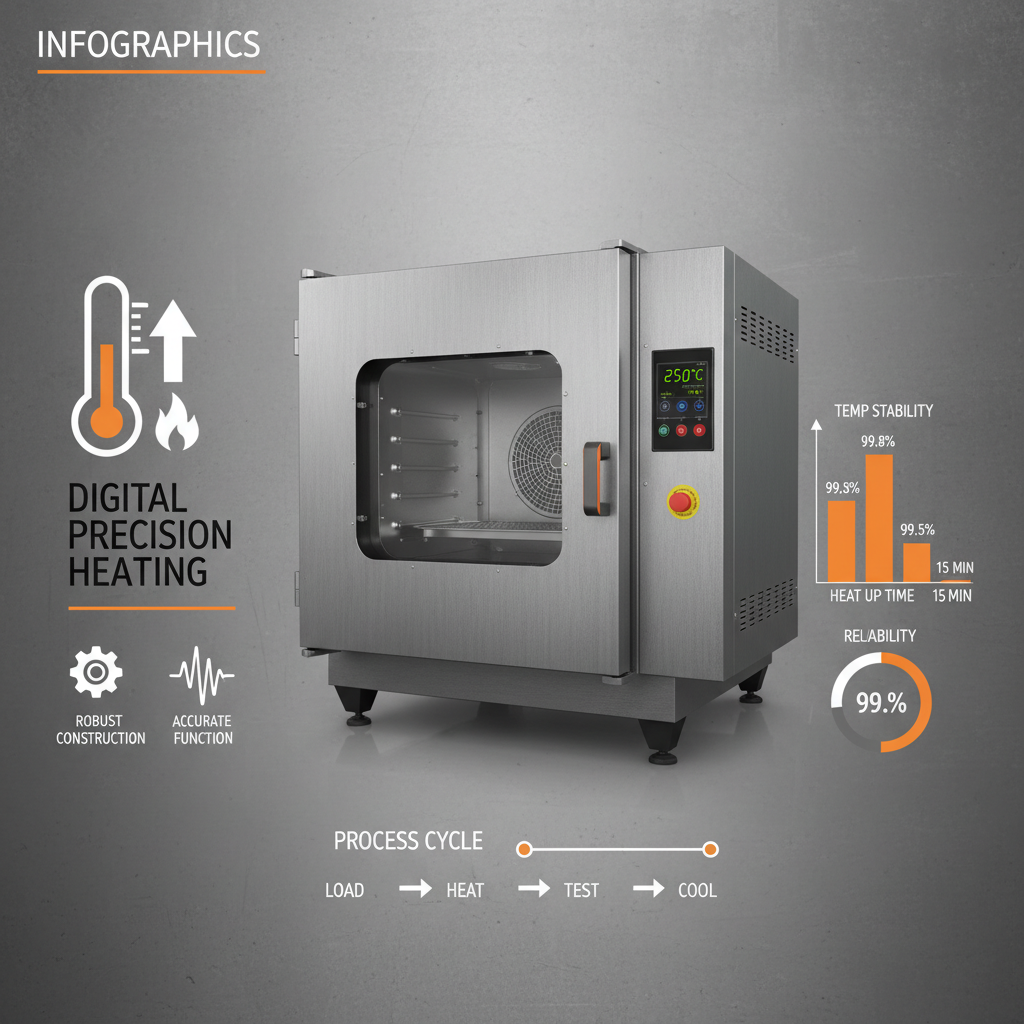
Modern digital precision ovens boast a range of features designed to optimize performance and usability. These include: Microprocessor control for accurate temperature regulation, digital displays for easy monitoring and programming, programmable temperature profiles for automated processes, and over-temperature protection for safety. Many systems also incorporate forced convection fans to ensure uniform temperature distribution throughout the chamber. Furthermore, advanced models often offer data logging capabilities, allowing users to track temperature variations over time for quality control and analysis. CZ Lab Instrument offers a range of ovens incorporating these features, tailored to meet diverse application needs.
Digital Precision Oven Heating: A Comparative Analysis
Compared to traditional ovens relying on analog controls, digital precision oven heating offers significant advantages. Analog ovens often struggle with temperature stability and uniformity, leading to variations across the chamber. Digital systems, with their feedback loops and precise sensors, maintain a consistent temperature regardless of load or ambient conditions. This eliminates the guesswork and inconsistencies inherent in manual temperature control. The ability to program temperature profiles also allows for automation of complex processes, saving time and reducing the risk of human error.
Applications of Digital Precision Oven Heating
The applications for digital precision oven heating are vast and span numerous industries. These ovens are essential for drying samples in quality control laboratories, sterilizing medical equipment, curing coatings, annealing metals, and conducting materials research. The pharmaceutical industry relies on precise temperature control for drug development and stability testing. Food processing utilizes ovens for baking, drying, and pasteurization. Even the aerospace industry benefits from digital precision heating for composite material curing and stress relieving.
Choosing the Right Digital Precision Oven: Key Considerations
When selecting a digital precision oven, consider factors such as chamber size, temperature range, temperature accuracy, and programmability. Also, evaluate the oven's construction materials and safety features. Look for ovens with robust insulation, corrosion-resistant interiors, and over-temperature protection. Ensure the oven meets relevant industry standards and certifications. CZ Lab Instrument provides detailed specifications and expert guidance to help you choose the optimal oven for your specific requirements.
Conclusion: Investing in Precision for Superior Results
Digital precision oven heating represents a significant advancement over traditional heating methods. By providing accurate temperature control, programmability, and enhanced safety features, these systems empower researchers and professionals to achieve consistent, reliable, and reproducible results. Investing in a high-quality digital precision oven is an investment in the integrity and efficiency of your work. Consider CZ Lab Instrument for all your precision heating needs.
Frequently Asked Questions (FAQs)
What is the typical temperature range for a digital precision oven?
The temperature range varies depending on the oven model. However, most digital precision ovens offer a range from ambient temperature to 300°C, with some models capable of reaching up to 600°C or even higher. It's important to choose an oven with a temperature range that meets the specific requirements of your application. Consider the highest temperature you'll need to achieve, as well as the required temperature stability and uniformity at that temperature.
How important is temperature uniformity in a precision oven?
Temperature uniformity is critically important in applications where consistent results are essential. Non-uniform temperatures can lead to variations in drying rates, uneven curing, and inaccurate experimental outcomes. A well-designed precision oven with forced convection fans ensures that temperature is evenly distributed throughout the chamber, minimizing these variations. The level of acceptable temperature variation is typically specified in the oven's technical specifications.
What safety features should I look for in a digital precision oven?
Essential safety features include over-temperature protection, which automatically shuts off the heating element if the temperature exceeds a pre-set limit. Other important features include a door safety switch that prevents operation when the door is open, and a robust insulation system to minimize heat loss and prevent burns. Look for ovens that meet relevant safety standards and certifications.
Can I use a digital precision oven for sterilizing equipment?
Digital precision ovens can be used for dry heat sterilization, but it's crucial to ensure the oven reaches and maintains the appropriate sterilization temperature for a sufficient duration. Typically, dry heat sterilization requires a temperature of 160-170°C for at least two hours. Always consult the sterilization guidelines for the specific equipment being sterilized and verify that the oven's capabilities meet those requirements.


