
Comprehensive Guide to Digital Test Hammer for Concrete Applications
Digital Test Hammer for Concrete: A Comprehensive Guide
In the realm of construction and material testing, accurately assessing the compressive strength of concrete is crucial for ensuring structural integrity and safety. The Digital Test Hammer for Concrete provides a reliable and efficient solution for non-destructive testing. This article will delve into the principles of operation, features, applications, and benefits of this essential tool. We will also explore how it compares to traditional testing methods and how it can improve quality control processes.
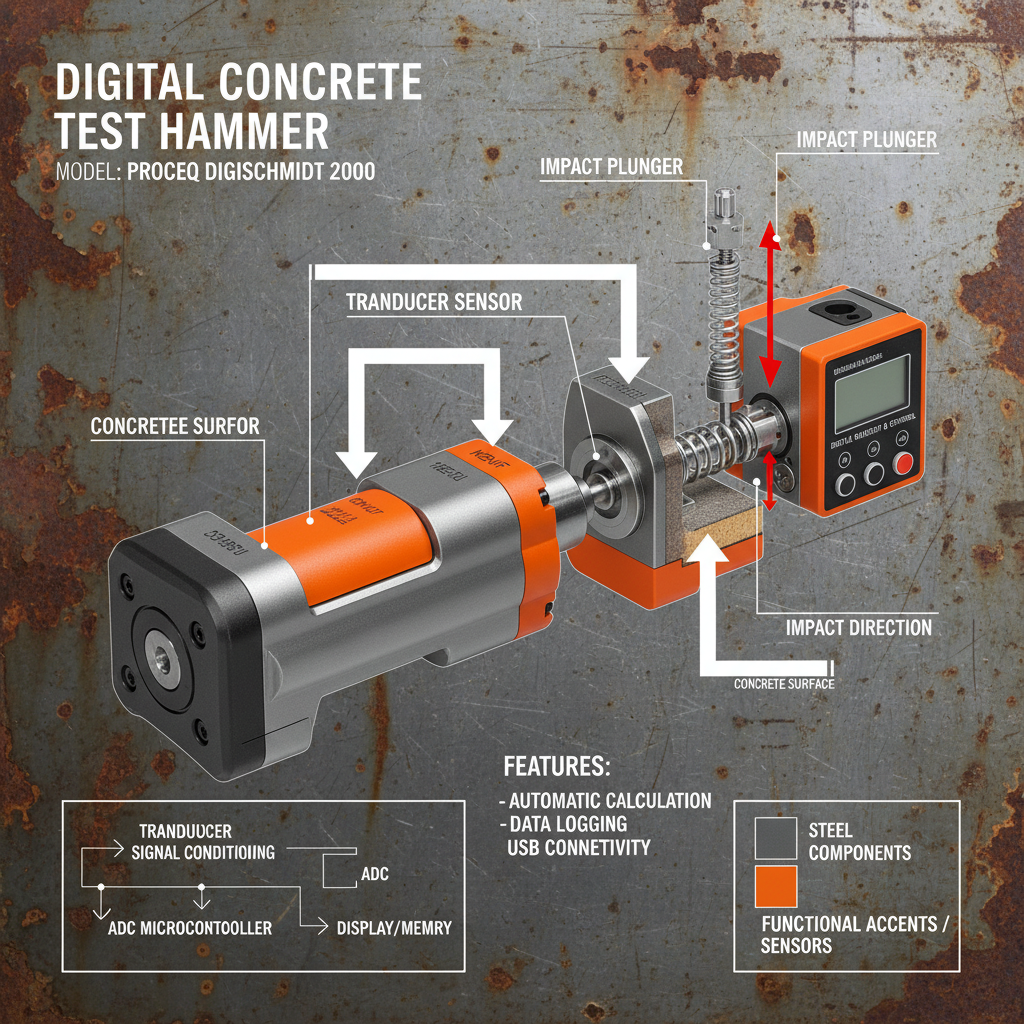
Understanding the Principles of Concrete Test Hammers
Concrete test hammers, also known as Schmidt hammers, operate on the principle of rebound distance. When the hammer impacts the concrete surface, the energy absorbed by the concrete is directly related to its compressive strength. The hammer measures the height to which the rebound mass travels after impact. A higher rebound indicates a harder concrete surface and, consequently, a higher compressive strength. CZ Lab's digital test hammers utilize advanced sensors and microprocessors to accurately measure and display the rebound value, eliminating subjective reading errors associated with traditional mechanical hammers.
Key Features of a Digital Test Hammer for Concrete
Digital concrete test hammers offer a significant upgrade over their mechanical counterparts. Key features include: Digital display: Providing clear and accurate readings, minimizing interpretation errors. Data storage: Allowing for recording and analysis of multiple readings. Statistical analysis: Calculating average rebound values, standard deviation, and other statistical parameters. Adjustable impact energy: Enabling testing on a wider range of concrete strengths. USB connectivity: Facilitating data transfer to computers for further analysis and reporting. Real-time readings: Instantaneous results for quick on-site assessment.
Key Highlights: Digital display for accurate readings, data storage capabilities, statistical analysis, adjustable impact energy, and USB connectivity.
Applications of Digital Concrete Test Hammers
These hammers are invaluable in various applications, including: Construction sites: Assessing the strength of concrete structures during and after construction. Infrastructure inspection: Evaluating the condition of bridges, tunnels, and other concrete infrastructure. Quality control: Ensuring concrete mixes meet specified strength requirements. Forensic engineering: Investigating concrete failures and determining the cause of structural defects. Non-destructive testing: Providing a quick and efficient way to assess concrete strength without causing damage. CZ Lab’s range of concrete test hammers caters to these diverse needs.
Digital vs. Traditional Concrete Test Hammers: A Comparative Analysis
While traditional mechanical hammers have been used for decades, digital hammers offer superior accuracy and efficiency. The following table highlights the key differences:
Choosing the Right Digital Test Hammer: Considerations
Selecting the right digital test hammer depends on specific testing requirements. Factors to consider include: Impact energy: Choose a hammer with an appropriate impact energy range for the concrete strength being tested. Display resolution: A higher resolution display provides more precise readings. Data storage capacity: Ensure the hammer can store enough data for your project. Software compatibility: Verify compatibility with data analysis software. Calibration: Regular calibration is crucial for maintaining accuracy. CZ Lab offers a variety of digital test hammers to suit diverse applications and budgets.
Conclusion: Enhancing Concrete Testing with Digital Technology
The Digital Test Hammer for Concrete represents a significant advancement in non-destructive testing technology. Its accuracy, efficiency, and data management capabilities make it an indispensable tool for construction professionals, engineers, and quality control inspectors. By embracing digital testing methods, you can ensure the structural integrity, safety, and longevity of concrete structures.
Frequently Asked Questions (FAQs)
How often should a digital test hammer be calibrated?
Calibration is recommended at least once a year, or more frequently if the hammer is used extensively or subjected to harsh conditions. Regular calibration ensures the accuracy of readings and compliance with industry standards. CZ Lab provides calibration services to maintain the performance of your equipment. Proper calibration involves comparing the hammer’s readings against known standards and adjusting it to ensure accuracy. Ignoring calibration can lead to inaccurate assessments of concrete strength and potentially compromise structural safety.
What surface preparation is required before testing?
The concrete surface should be clean, dry, and smooth before testing. Remove any loose particles, coatings, or contaminants that could affect the rebound value. A grinding wheel may be used to smooth out irregularities on the surface. Ensure the test area is representative of the concrete being evaluated and free from cracks or voids. Consistent surface preparation is crucial for obtaining reliable and comparable results.
How do I interpret the rebound values?
Rebound values are typically correlated with compressive strength using calibration curves or charts. These curves are specific to the concrete mix design and the test hammer used. Consult the manufacturer's documentation or relevant standards for guidance on interpreting rebound values. It’s important to take multiple readings and calculate the average value to minimize the impact of individual variations. Remember that rebound values are an indication of surface hardness and may not directly reflect the internal compressive strength.
What are the limitations of using a concrete test hammer?
Concrete test hammers are non-destructive tools, but they have limitations. They assess the surface hardness of the concrete, which may not always correlate perfectly with the internal compressive strength. Factors like concrete age, moisture content, and surface conditions can influence the rebound value. The hammer is most effective when used to compare the relative strength of different areas within the same concrete structure, rather than providing absolute strength measurements. Always supplement hammer testing with other methods for critical applications.


