
Comprehensive Guide to Pharmaceutical Drying Equipment and Technologies
Pharmaceutical Drying Equipment: A Comprehensive Guide
In the pharmaceutical industry, maintaining product quality and safety is paramount. A critical step in many pharmaceutical manufacturing processes is drying – removing moisture from active pharmaceutical ingredients (APIs), intermediates, and excipients. The selection of the right pharmaceutical drying equipment is therefore essential. This article provides a detailed overview of the different types of drying equipment used in pharmaceutical manufacturing, their applications, and key considerations for choosing the optimal solution. Investing in the correct technology can dramatically improve efficiency, reduce costs, and ensure compliance with stringent regulatory standards.
Understanding the Importance of Pharmaceutical Drying
Drying is a crucial unit operation in pharmaceutical manufacturing for several key reasons. First, it ensures the stability of APIs and finished products. Moisture can promote degradation, leading to reduced potency and shelf life. Second, proper drying is essential for achieving the desired particle size and morphology, impacting downstream processing steps like granulation and tableting. Third, it’s vital for meeting strict regulatory requirements concerning residual solvent levels and overall product purity. Effective drying techniques preserve the integrity of sensitive compounds and guarantee product safety.
Types of Pharmaceutical Drying Equipment
A variety of drying technologies are employed in the pharmaceutical industry, each with its advantages and disadvantages. The optimal choice depends on factors such as the product's thermal sensitivity, particle size, and required drying rate. Common types include: Fluid Bed Dryers, Tray Dryers, Vacuum Dryers, Spray Dryers, and Freeze Dryers. Each offers unique benefits for different applications.
Key Considerations: Product characteristics (thermal stability, particle size, and moisture content) dictate the most suitable drying method. Process requirements (drying time, energy consumption, and scalability) also play a crucial role in equipment selection.
Fluid Bed Drying vs. Vacuum Drying: A Comparative Analysis
Fluid bed drying and vacuum drying are two frequently used methods in pharmaceutical manufacturing. Fluid bed drying utilizes heated air to fluidize particles, promoting rapid moisture evaporation. It's suitable for granular materials and offers excellent mixing and heat transfer. Vacuum drying, on the other hand, lowers the boiling point of the solvent by reducing pressure, allowing for drying at lower temperatures – essential for heat-sensitive compounds. This is crucial for preserving the integrity of delicate pharmaceutical ingredients. Understanding the nuances of each method is key to optimal process design.
Fluid Bed Drying vs. Vacuum Drying:
• Fluid Bed Drying: High drying rates, suitable for granular materials, lower cost.
• Vacuum Drying: Lower drying temperatures, ideal for heat-sensitive compounds, higher initial cost.
• Particle Characteristics: Fluid bed works well with uniform particle sizes while vacuum drying is good for a wide range.
• Scalability: Both are readily scalable for large-scale production.
Selecting the Right Pharmaceutical Drying Equipment
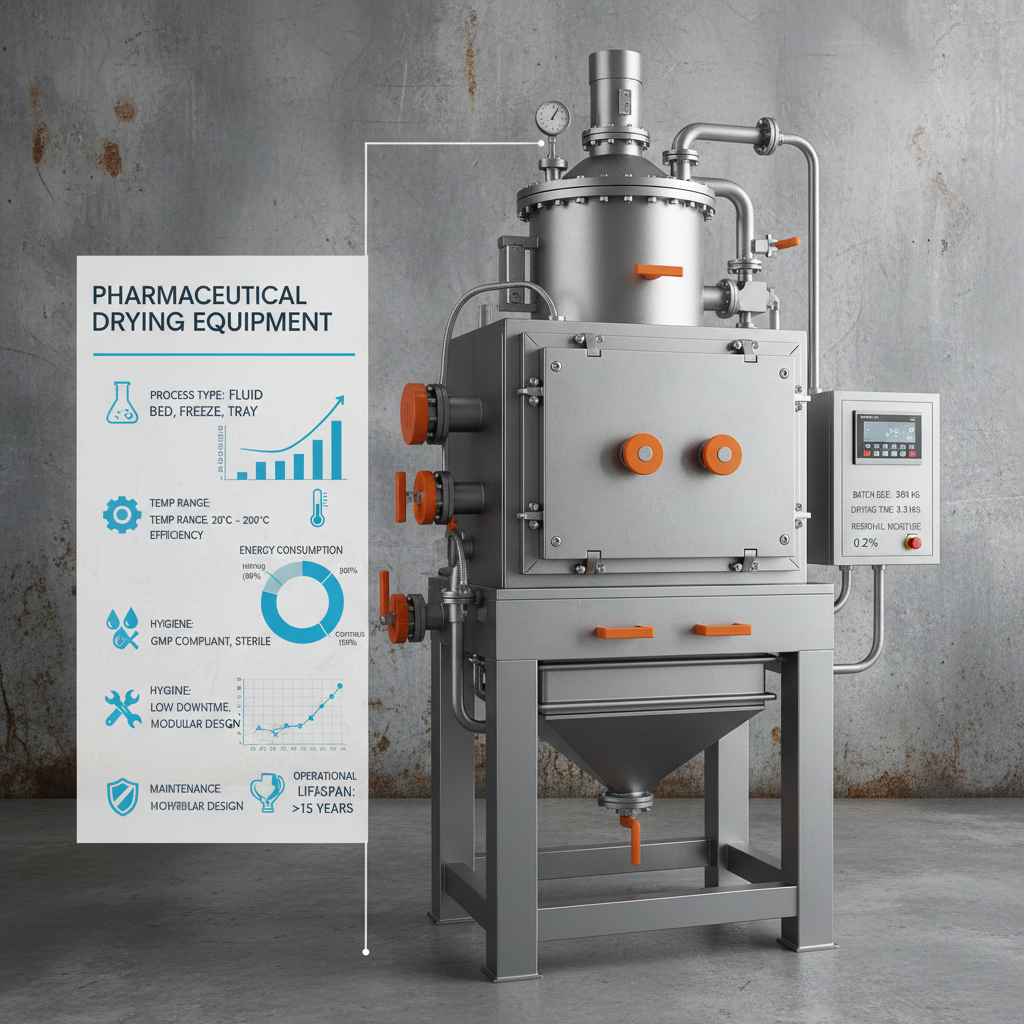
Choosing the appropriate pharmaceutical drying equipment requires a thorough evaluation of several factors. These include the product’s properties, the required drying rate, energy efficiency, capital costs, and compliance with Good Manufacturing Practices (GMP). Factors such as particle size distribution, thermal sensitivity, and solvent type must also be considered. Working with experienced equipment suppliers like CZ Lab Instrument can provide valuable insights and guidance.
Future Trends in Pharmaceutical Drying Technologies
The pharmaceutical drying landscape is constantly evolving, driven by the need for increased efficiency, improved product quality, and reduced environmental impact. Emerging technologies include continuous manufacturing systems and advanced process control strategies. Continuous drying offers several advantages over batch processing, including reduced cycle times, lower energy consumption, and improved process consistency. These innovations are poised to revolutionize pharmaceutical manufacturing processes.
Conclusion: Optimizing Pharmaceutical Manufacturing with Advanced Drying Solutions
Selecting the right pharmaceutical drying equipment is a critical decision impacting product quality, manufacturing efficiency, and regulatory compliance. By carefully considering the factors outlined in this guide and partnering with reputable suppliers like CZ Lab Instrument, pharmaceutical manufacturers can optimize their drying processes and achieve superior results.
Frequently Asked Questions (FAQs)
What are the typical drying times for different pharmaceutical products?
Drying times vary significantly depending on the product’s characteristics, the drying method used, and the scale of operation. For example, vacuum drying typically takes 12-24 hours for sensitive materials, while fluid bed drying can achieve complete drying in as little as 1-4 hours for granular products. Spray drying is the fastest, often completed in seconds to minutes. Careful optimization of process parameters, such as temperature, pressure, and airflow, is essential for minimizing drying time while maintaining product quality. Factors like initial moisture content and desired residual solvent levels also significantly influence the overall drying duration.
How do I ensure GMP compliance in pharmaceutical drying processes?
GMP compliance requires meticulous documentation, validation, and control of all drying processes. This includes establishing Standard Operating Procedures (SOPs) for equipment operation, cleaning, and maintenance. Thorough validation studies must demonstrate that the drying process consistently achieves the desired product quality attributes and meets regulatory requirements. Regular monitoring of critical process parameters (CPPs), such as temperature, humidity, and vacuum pressure, is essential, along with maintaining complete batch records. Qualification of the equipment itself (IQ, OQ, PQ) is also vital for ensuring reliable performance.
What are the key considerations for scaling up a pharmaceutical drying process?
Scaling up a drying process requires careful consideration of several factors. Maintaining consistent airflow patterns, heat transfer rates, and mixing efficiency is critical. Pilot-scale studies are essential for identifying potential challenges and optimizing process parameters. Equipment design must account for increased batch sizes and ensure uniform drying across the entire product volume. Furthermore, the impact of scale-up on product morphology, particle size distribution, and residual solvent levels must be thoroughly evaluated and controlled. Collaboration with experienced equipment suppliers is highly recommended.
How important is energy efficiency in pharmaceutical drying?
Energy efficiency is becoming increasingly important in pharmaceutical drying due to both economic and environmental concerns. Drying processes are often energy-intensive, so optimizing energy consumption can significantly reduce operating costs and minimize the carbon footprint. Techniques such as heat recovery, efficient airflow management, and the use of advanced control systems can improve energy efficiency. Selecting drying equipment with energy-saving features and implementing best practices for process optimization are key strategies for achieving sustainable drying operations.


