In the realm of geotechnical engineering and materials science, ensuring the structural integrity of the ground is paramount for any sustainable construction project. The process of soil stabilization and density verification often relies on high-precision instrumentation to determine the optimal moisture-density relationship. Understanding these parameters allows engineers to prevent future subsidence and ensure that the load-bearing capacity of the earth meets rigorous international safety standards.
Globally, the demand for precise earthwork verification has grown as urban expansion pushes infrastructure into more challenging terrains, including soft clays and expansive soils. Whether constructing high-speed railways, skyscrapers, or hydroelectric dams, the ability to quantify the compaction level of the soil is a critical failure-preventative measure. Failure to achieve proper density can lead to catastrophic structural collapses, making standardized testing an indispensable part of modern civil engineering.
To achieve these results, laboratories utilize a variety of specialized tools, and while a Soil Compaction Tester is central to field and lab density checks, the overall analysis often requires auxiliary thermal processing for sample preparation. By integrating precise testing with high-quality laboratory equipment, professionals can ensure that every cubic meter of earth is fit for purpose, reducing long-term maintenance costs and increasing public safety.

The Role of Precision in Soil Compaction Tester Analysis
Precision in geotechnical testing is not merely about accuracy; it is about the reliability of the foundation upon which entire cities are built. When utilizing a Soil Compaction Tester, the goal is to remove air voids from the soil to increase its shear strength and decrease permeability. This process requires a meticulous approach to moisture control and mechanical energy application, ensuring that the soil reaches its maximum dry density.
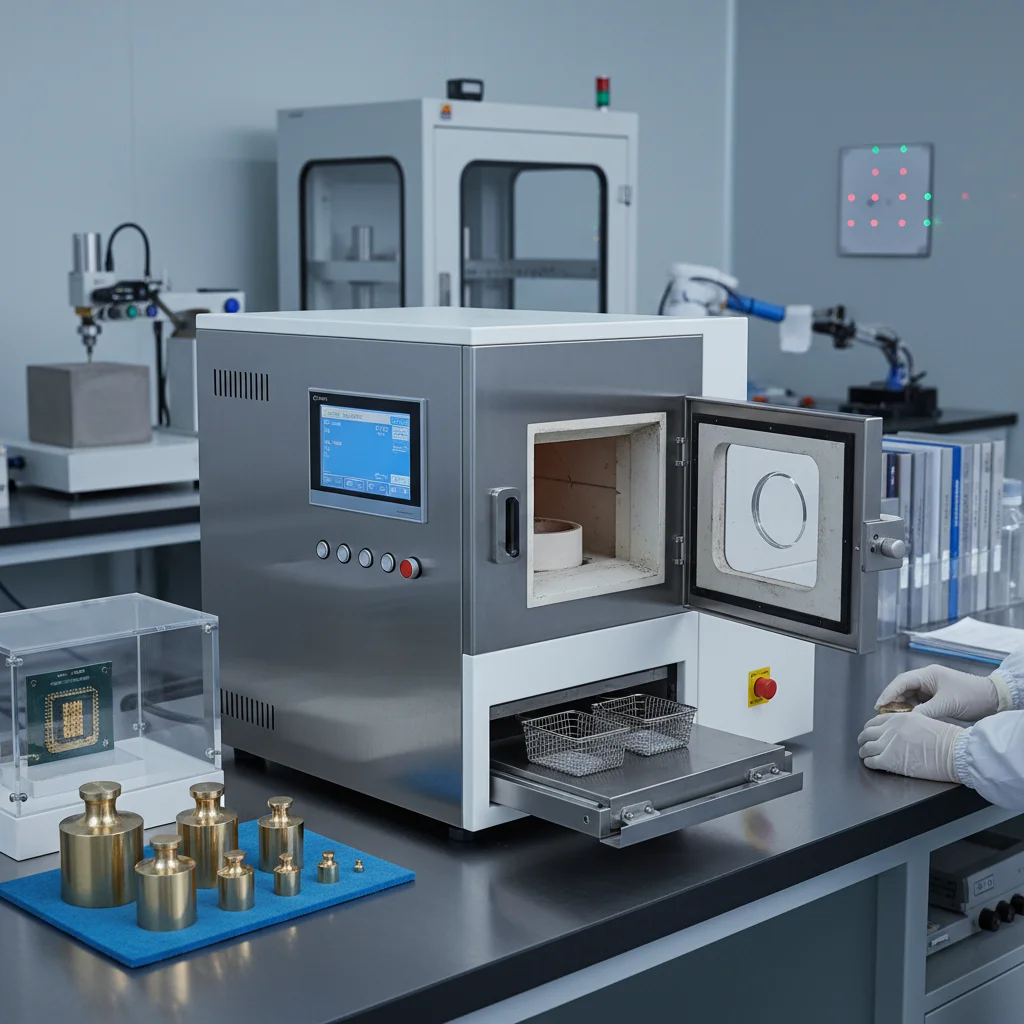
In professional laboratory settings, this precision is complemented by high-temperature equipment. For instance, when preparing mineral samples or analyzing elements within soil for research, muffle furnaces are used for annealing and tempering. The synergy between mechanical compaction testing and thermal analysis allows researchers to understand how heat and pressure jointly affect the molecular structure of the earth, leading to more durable construction materials.
Global Standards for Soil Compaction Tester Implementation
The implementation of soil testing is governed by strict international standards, such as those set by ASTM and ISO. These guidelines ensure that a Soil Compaction Tester provides consistent results regardless of whether the test is performed in North America, Europe, or Asia. By standardizing the drop height of the hammer and the volume of the mold, engineers can compare site data against historical benchmarks to predict long-term settlement.
Many developing nations are currently upgrading their infrastructure under the guidance of World Bank and UN urban development programs. In these contexts, the deployment of standardized testing equipment is critical to prevent the "sinking city" phenomenon seen in areas with poor soil management. The adoption of rigorous compaction protocols reduces the risk of road cracking and building tilts, directly impacting the socio-economic stability of growing urban centers.
The challenge often lies in the transition from field testing to laboratory verification. While field tests provide immediate feedback, the laboratory environment allows for the control of variables such as temperature and humidity. This dual-approach ensures that the data derived from the tester is not just a snapshot of the current state, but a predictive model for the soil's behavior over several decades of service life.
Core Components of an Effective Soil Compaction Tester System
An effective testing system is defined by its durability and repeatability. A high-quality Soil Compaction Tester must be constructed from wear-resistant materials to withstand the repetitive impact of heavy rams. The stability of the base ensures that energy is transferred directly into the soil sample rather than being absorbed by the machine frame, which would lead to underestimated density values.
Scalability is another vital factor. Depending on the project size, laboratories may require different mold sizes and impact energies. A versatile Soil Compaction Tester allows technicians to switch between Standard Proctor and Modified Proctor tests easily. This flexibility is essential when dealing with diverse soil types, from sandy loams to heavy clays, each requiring a different energy level to achieve optimum compaction.
Finally, the integration of digital monitoring systems has revolutionized the industry. Modern testers often include electronic counters and automated timing mechanisms to eliminate human error. When paired with auxiliary lab instruments, such as precise drying ovens or muffle furnaces for organic matter removal, the resulting data provides a holistic view of the soil's composition and its response to mechanical stress.
Comparative Performance of Soil Compaction Tester Methods
Comparing different compaction methodologies is essential for selecting the right tool for a specific project. Some methods prioritize speed and field deployment, while others focus on absolute laboratory precision. The choice of a Soil Compaction Tester method often depends on the required load-bearing capacity of the final structure and the inherent characteristics of the local soil.
For instance, the Modified Proctor test is typically used for airfield runways and heavy industrial foundations, as it applies significantly more energy than the Standard Proctor test. This ensures that the soil is compacted to a level that can withstand extreme pressures without shifting. By analyzing these methods side-by-side, engineers can optimize the balance between construction time and structural longevity.
Comparative Efficiency of Soil Compaction Tester Methods
Industrial Applications Across Diverse Terrains
The application of a Soil Compaction Tester varies significantly across different industrial sectors. In road construction, for example, the tester is used to ensure that the subgrade can support the cyclic loading of thousands of vehicles per day. In remote industrial zones, such as mining sites, these instruments help in stabilizing the ground for heavy machinery and ore processing plants.
Furthermore, in post-disaster relief operations, rapid soil assessment is critical for the safe deployment of temporary housing and emergency roads. Using a portable Soil Compaction Tester allows engineers to quickly identify unstable ground that could lead to further collapse, ensuring that humanitarian aid reaches affected populations safely and efficiently.
Long-Term Value of Accurate Soil Density Testing
Investing in high-precision testing equipment yields tangible long-term benefits in terms of cost reduction and sustainability. By using a Soil Compaction Tester to achieve optimal density from the start, developers can avoid the exorbitant costs associated with ground stabilization repairs after a project is completed. This proactive approach significantly reduces the need for future corrective injections of grout or chemical stabilizers.
From a sustainability perspective, accurate compaction minimizes the consumption of additional raw materials. When the existing soil is properly compacted, there is less need to import expensive engineered fill from distant quarries, thereby reducing the carbon footprint associated with transportation. This aligns with global "green building" initiatives that emphasize the use of on-site materials.
Beyond the logic of cost and ecology, there is a profound emotional value in the trust provided by rigorous testing. For the end-users of a bridge or a residential complex, the knowledge that the ground was verified by a certified Soil Compaction Tester provides a sense of safety and dignity. Innovation in this field is not just about better machines, but about building a world where infrastructure is inherently reliable.
Future Innovations in Soil Compaction Tester Technology
The future of soil testing is leaning heavily toward digital transformation and automation. We are seeing the rise of "intelligent compaction," where the Soil Compaction Tester is integrated with GPS and real-time sensors to create a 3D map of soil density across a whole site. This eliminates the need for sporadic sampling and provides a continuous stream of data, ensuring no "soft spots" are left behind.
Additionally, new materials are being developed for the equipment itself. The use of high-strength alloys and composite materials in the ram and mold of the tester is extending the service life of the machinery and reducing maintenance downtime. Integration with AI-driven software now allows the tester to suggest the optimal number of blows based on real-time resistance feedback, further streamlining the construction process.
As the industry moves toward a more sustainable future, we can expect the integration of green energy sources to power field testing equipment. The transition from diesel-powered compaction machinery to electric and hybrid systems, coupled with cloud-based data reporting, will make the use of a Soil Compaction Tester more efficient and environmentally friendly.
Analysis of Soil Compaction Tester Performance Across Different Soil Types
|
Soil Category
|
Compaction Efficiency
|
Recommended Tester Method
|
Reliability Score (1-10)
|
| Sandy Soil |
High |
Standard Proctor |
9 |
| Clayey Soil |
Medium |
Modified Proctor |
7 |
| Silty Soil |
Medium-Low |
Modified Proctor |
6 |
| Gravelly Soil |
Very High |
Heavy-Duty Impact |
10 |
| Organic Soil |
Low |
Specialized Vibratory |
5 |
| Loam Soil |
High |
Standard Proctor |
8 |
FAQS
The primary purpose is to determine the maximum dry density and the optimum moisture content of a soil sample. By applying a controlled amount of energy, the tester helps engineers understand how much water is needed to achieve the tightest possible packing of soil particles, which is critical for ensuring the stability of foundations and roads.
The Standard Proctor test is designed for lighter loads and general embankments, applying a moderate amount of energy. The Modified Proctor test applies significantly higher energy (through a heavier hammer or higher drop) and is used for heavy-duty applications like airport runways or industrial slabs where extreme stability is required.
Moisture acts as a lubricant between soil particles. If the soil is too dry, friction prevents particles from sliding into a dense configuration. If it is too wet, the water occupies space that should be filled by soil, reducing the dry density. The tester helps find the "optimum" point where maximum density is achieved.
While most testers are versatile, different soils require different approaches. Cohesive soils like clay respond better to kneading or impact energy, whereas non-cohesive soils like sand respond better to vibration. High-quality testers offer adjustable settings or interchangeable parts to accommodate these varying soil characteristics.
To maintain ISO and ASTM compliance, compaction equipment should be calibrated annually or after any major repair. Calibration ensures that the drop height and hammer weight are exact, as even a small deviation can lead to incorrect density readings and potential structural failure on-site.
Yes, modern high-end testers now feature integrated digital controllers and USB ports. This allows technicians to export results directly to a PC, reducing manual transcription errors and enabling the use of software to automatically generate compaction curves and reports.
Conclusion
The use of a Soil Compaction Tester is a cornerstone of geotechnical engineering, bridging the gap between raw earth and stable infrastructure. By precisely determining the relationship between moisture and density, these instruments ensure that every construction project—from a simple road to a complex industrial plant—is built on a foundation that is safe, durable, and sustainable. The integration of high-quality laboratory equipment and standardized testing protocols is the only way to mitigate the risks of subsidence and structural failure in an ever-expanding urban world.
Looking forward, the evolution toward intelligent, automated, and green testing technologies will further refine our ability to interact with the environment. We encourage engineers and lab managers to invest in equipment that not only meets today's standards but is prepared for the digital transition. By prioritizing precision today, we secure the infrastructure of tomorrow. Visit our website for professional equipment solutions: www.czlabinstrument.com