Ensuring the structural integrity of modern infrastructure requires rigorous material testing and precise analysis. In the realm of road construction and bitumen research, the ability to evaluate material properties accurately is paramount to preventing premature pavement failure. A key instrument in this process is the Compaction Test Apparatus, which allows engineers to simulate field conditions and determine the optimal density and moisture content of materials.
On a global scale, the demand for high-performance road surfaces has led to an increased reliance on standardized testing equipment. By utilizing a professional Compaction Test Apparatus, laboratories can ensure that asphalt and soil mixtures meet stringent international quality standards, reducing the risk of cracking, rutting, and overall structural instability in diverse climates.
For professionals in construction engineering and petroleum industries, integrating a reliable Compaction Test Apparatus into their workflow is not merely about compliance, but about optimizing material formulations for maximum longevity. This commitment to precision ensures that infrastructure projects are both sustainable and cost-effective over their entire lifecycle.

Global Relevance of Compaction Test Apparatus
The global infrastructure landscape is currently undergoing a massive expansion, with the World Bank and other international bodies emphasizing the need for resilient transport networks. In this context, the Compaction Test Apparatus serves as a fundamental tool for ensuring that road bases and asphalt layers are compacted to their maximum dry density, which is critical for supporting heavy traffic loads without deformation.
Failure to achieve proper compaction often leads to catastrophic pavement failure, resulting in billions of dollars in maintenance costs globally. By adhering to ISO and national standards through the use of a certified Compaction Test Apparatus, construction firms can mitigate these risks, ensuring that the material's physical properties are optimized for the specific environmental stresses of the region.
Defining the Modern Compaction Test Apparatus
In simple terms, a Compaction Test Apparatus is a precision-engineered laboratory instrument used to determine the relationship between the moisture content and the dry unit weight of a soil or asphalt sample. By applying a standardized amount of energy—either through static pressure or dynamic impact—the equipment allows technicians to identify the "Optimum Moisture Content" (OMC), the point at which the material can be compacted to its highest possible density.
Beyond simple density checks, modern iterations of this apparatus are integral to humanitarian and developmental needs. In post-disaster relief operations, where temporary roads and airstrips must be constructed rapidly using local materials, the use of a Compaction Test Apparatus ensures that these vital lifelines are stable enough to support heavy aid convoys and aircraft, potentially saving countless lives through improved logistics.
The evolution of the apparatus from purely manual rams to automated systems reflects the industry's shift toward the E-E-A-T principles of Experience, Expertise, Authoritativeness, and Trustworthiness. Today's equipment minimizes human error, providing reproducible data that serves as the legal and technical basis for quality acceptance in multi-million dollar public works projects.
Core Components of Compaction Test Apparatus
Durability and precision are the hallmarks of a high-quality Compaction Test Apparatus. The core components typically include high-strength alloy molds that resist deformation under pressure, precision-weighted rammers, and calibrated weighing scales. These elements work in tandem to ensure that the energy applied to the specimen is consistent across every trial, eliminating variables that could skew the results.
Scalability in testing is another critical factor. A versatile Compaction Test Apparatus is designed to handle various sample sizes and material types, from fine-grained silts to coarse aggregate asphalt. This flexibility allows a single laboratory to serve multiple project types, whether they are testing for a small residential driveway or a massive interstate highway system.
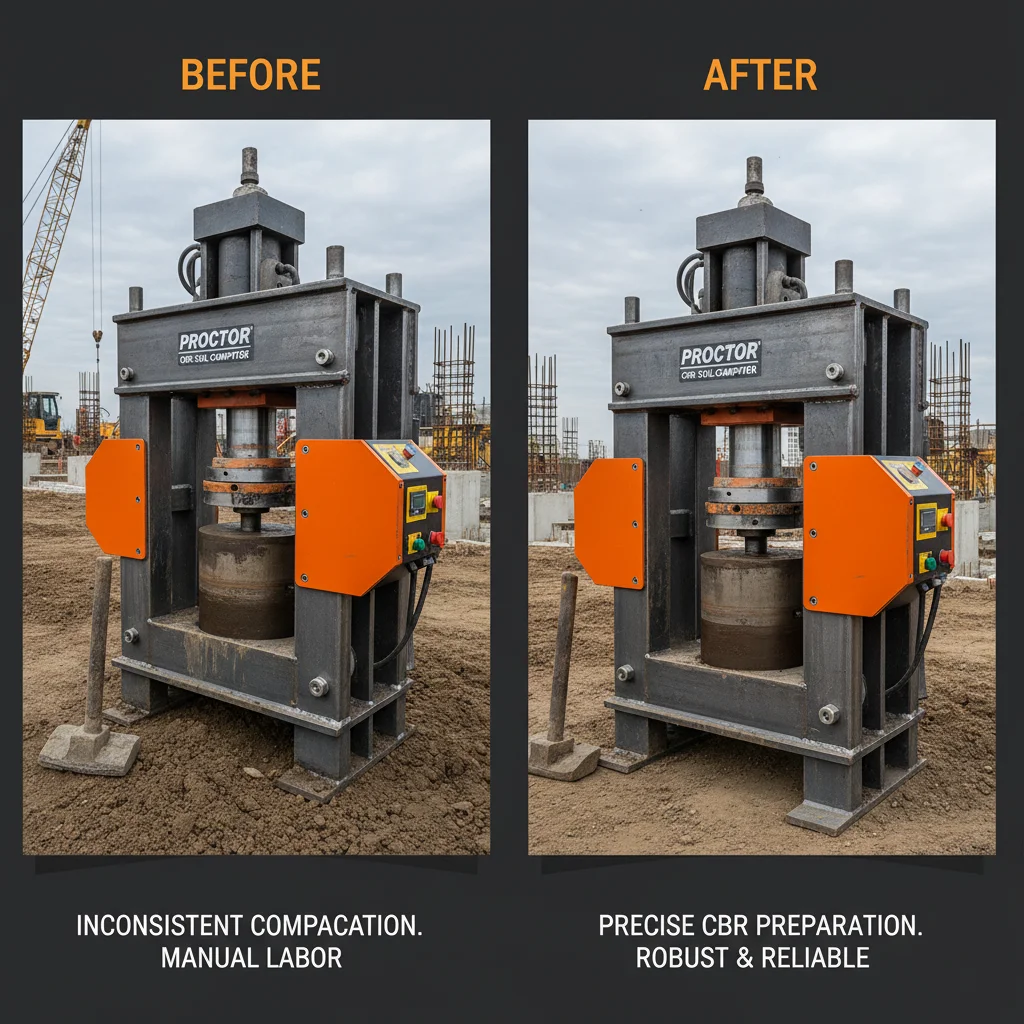
Cost efficiency is achieved through the integration of automation and corrosion-resistant materials. By reducing the manual labor required for repeated blows and utilizing materials that withstand harsh laboratory chemicals, the Compaction Test Apparatus offers a low total cost of ownership while increasing the throughput of the laboratory, allowing for faster project turnaround times.
Practical Applications and Industry Use Cases
The application of a Compaction Test Apparatus extends across various sectors, from petroleum-based asphalt research to civil soil engineering. In the petroleum industry, it is used to evaluate how different bitumen formulations react to compaction, helping chemists optimize the wax content and binder properties to ensure the asphalt remains flexible in winter and stable in summer.
In remote industrial zones, such as mining sites or oil fields, the use of portable compaction testing solutions is vital. Engineers utilize the Compaction Test Apparatus to validate the bearing capacity of haul roads, ensuring that massive machinery can transport raw materials without causing deep ruts or soil failure, which would otherwise lead to expensive operational delays.
Comparative Performance of Compaction Test Apparatus Methods
Long-Term Value and Reliability Benefits
The long-term value of investing in a high-end Compaction Test Apparatus manifests in the drastic reduction of structural rework. When materials are compacted based on scientifically proven data rather than guesswork, the resulting pavement exhibits superior resistance to water infiltration and freeze-thaw cycles, significantly extending the lifespan of the asset.
Beyond the financial gains, there is a profound emotional and logical angle: safety. Roads tested with a precise Compaction Test Apparatus are less prone to potholes and sudden collapses, ensuring the safety of thousands of commuters daily. This reliability builds trust between the construction contractor and the government agency, fostering a reputation for excellence and engineering integrity.
Future Trends in Compaction Testing Technology
The future of compaction testing is moving toward complete digital transformation. We are seeing the integration of IoT sensors into the Compaction Test Apparatus, allowing for real-time data streaming to cloud platforms. This enables engineers to monitor testing progress remotely and apply AI-driven analytics to predict material behavior under varying environmental stressors.
Sustainability is also driving innovation. New "green" compaction methods are being developed to reduce the energy required during the testing process. By optimizing the mechanical energy transfer within the apparatus, laboratories can reduce their carbon footprint while maintaining the high precision required by international standards.
Furthermore, the shift toward modular design allows laboratories to upgrade their Compaction Test Apparatus without replacing the entire system. This "plug-and-play" approach ensures that the equipment can evolve alongside new material science discoveries, such as the use of recycled plastics in road binders, without requiring massive capital reinvestment.
Overcoming Challenges in Compaction Analysis
One of the most common challenges in compaction testing is the variability of natural materials. Soil and bitumen samples can vary significantly even within a single site, making it difficult to establish a universal compaction curve. To solve this, experts recommend a multi-point sampling approach using a high-precision Compaction Test Apparatus to capture a comprehensive data set.
Human error during manual ramming and weighing remains a significant bottleneck. The transition to fully automated systems is the most effective solution, as it ensures that the exact same force and frequency are applied to every sample. This not only increases the repeatability of the results but also frees up technicians to focus on the analysis and interpretation of the data.
Finally, the challenge of maintaining equipment calibration in harsh environments can be addressed through the use of corrosion-resistant alloys and scheduled digital calibration checks. By implementing a strict maintenance protocol for the Compaction Test Apparatus, laboratories can ensure that their data remains legally defensible and technically accurate over decades of use.
Analytical Comparison of Compaction Testing Solutions
| Testing Dimension |
Manual Apparatus |
Semi-Auto Apparatus |
Fully Auto Apparatus |
| Precision Level |
Moderate (Human Dependent) |
High |
Ultra-High |
| Testing Speed |
Slow |
Medium |
Fast |
| Operator Fatigue |
High |
Low |
Negligible |
| Data Consistency |
Variable |
Consistent |
Identical Repeatability |
| Initial Investment |
Low |
Moderate |
High |
| Maintenance Need |
Minimal |
Periodic |
Specialized |
FAQS
The primary purpose is to determine the relationship between moisture content and dry density of a material. By finding the optimum moisture content, engineers can ensure that soil or asphalt is compacted to its maximum density, which provides the necessary load-bearing capacity and stability for roads, dams, and building foundations.
By ensuring maximum dry density, the apparatus helps eliminate air voids within the material. This prevents water from seeping into the road base, which would otherwise cause erosion or freeze-thaw damage. The result is a more durable pavement with a significantly lower risk of cracking and rutting over time.
Yes, for most professional laboratories. Automated systems eliminate human error in the ramming process, ensuring 100% repeatability. This reduces the need for re-testing and provides legally defensible data for quality control, which often offsets the initial investment through increased productivity and reduced risk of project failure.
While the basic principle of compaction is similar, specific molds and rammers are used depending on the material. A high-quality Compaction Test Apparatus is often modular, allowing technicians to swap components to meet different standards (such as AASHTO or ASTM) for either soil or bitumen-based mixtures.
Calibration should be performed at least annually, or more frequently if the equipment is used in high-volume environments. Regular calibration of the weights, molds, and electronic sensors ensures that the energy applied to the sample remains constant and compliant with international testing standards.
NGOs can deploy portable versions of the Compaction Test Apparatus to ensure that critical infrastructure, like rural access roads or emergency shelters, are built on stable ground. This ensures that aid delivery remains uninterrupted and that community infrastructure is safe and sustainable.
Conclusion
The use of a professional Compaction Test Apparatus is fundamental to the success of any modern construction or material research project. By providing precise data on the relationship between moisture and density, this equipment ensures that infrastructure is built on a foundation of scientific certainty, maximizing durability and minimizing long-term maintenance costs. From the high-tech labs of petroleum companies to remote disaster relief zones, the ability to control compaction is the key to structural resilience.
Looking forward, the integration of automation and digital analytics will only further enhance the precision of compaction testing. We encourage laboratories and engineering firms to invest in high-quality, calibrated apparatuses to stay competitive and ensure the highest safety standards. For more information on professional testing solutions, visit our website: www.czlabinstrument.com.