0%

Table of Contents

The Proctor CBR Soil Compactor is a cornerstone of modern geotechnical engineering and construction, playing a vital role in ensuring the stability and longevity of infrastructure projects globally. This specialized equipment is crucial for assessing the bearing strength of soils, a fundamental requirement for road construction, foundation design, and various other civil engineering applications. Its importance stems from the direct link between soil compaction and the ability of structures to withstand loads and environmental stresses.

Globally, the demand for robust and reliable soil compaction assessment is continually increasing, driven by rapid urbanization, expanding infrastructure networks, and a heightened awareness of safety standards. The Proctor CBR Soil Compactor allows engineers and technicians to determine the California Bearing Ratio (CBR), a key indicator of soil’s load-carrying capacity. This information directly impacts project costs, timelines, and – most importantly – public safety. Investing in accurate CBR testing, utilizing the Proctor CBR Soil Compactor, minimizes risks associated with structural failure.

From large-scale highway projects to localized building foundations, the Proctor CBR Soil Compactor provides essential data for informed decision-making. Understanding the principles and application of this equipment is therefore paramount for professionals in the construction industry and those involved in land development. It’s a tool that directly translates to safer, more durable, and more sustainable infrastructure.
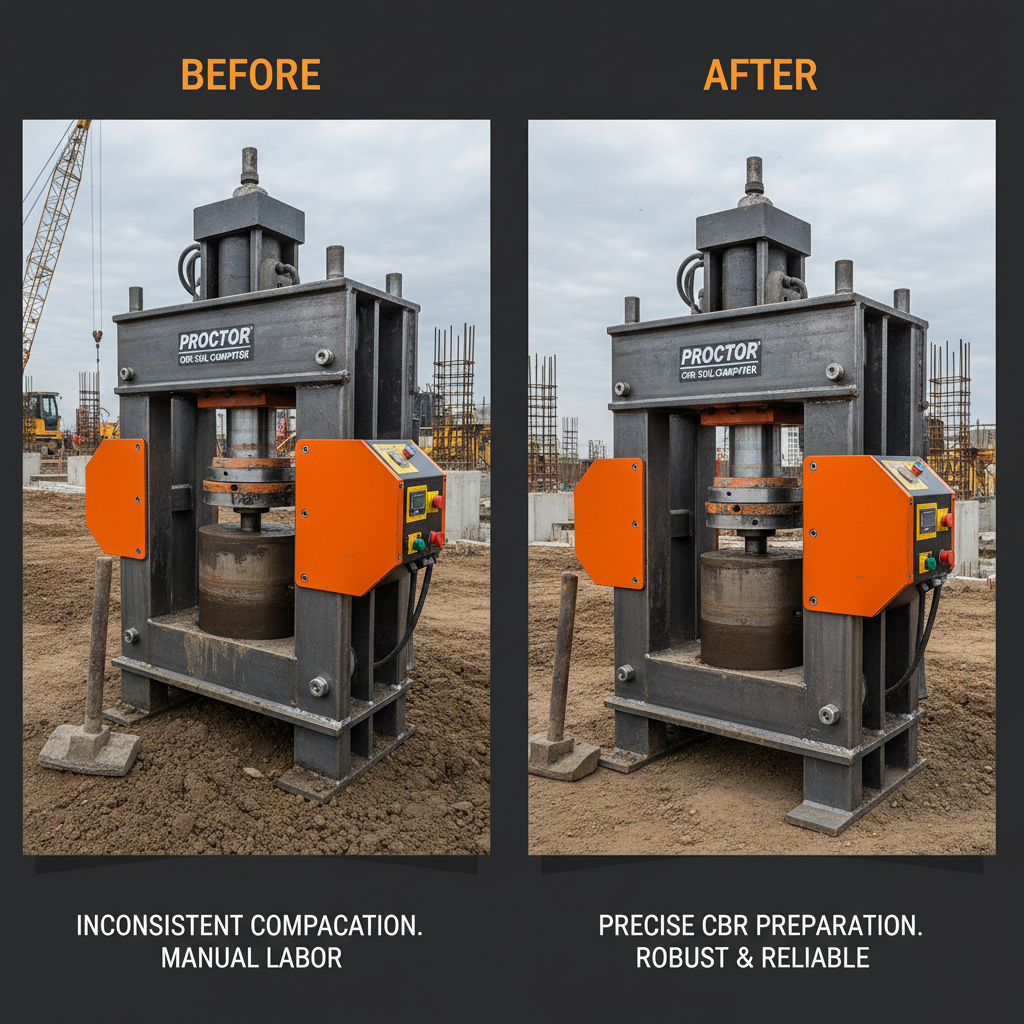
Proctor CBR Soil Compactor

Defining Proctor CBR Soil Compactor

Proctor CBR Soil Compactor

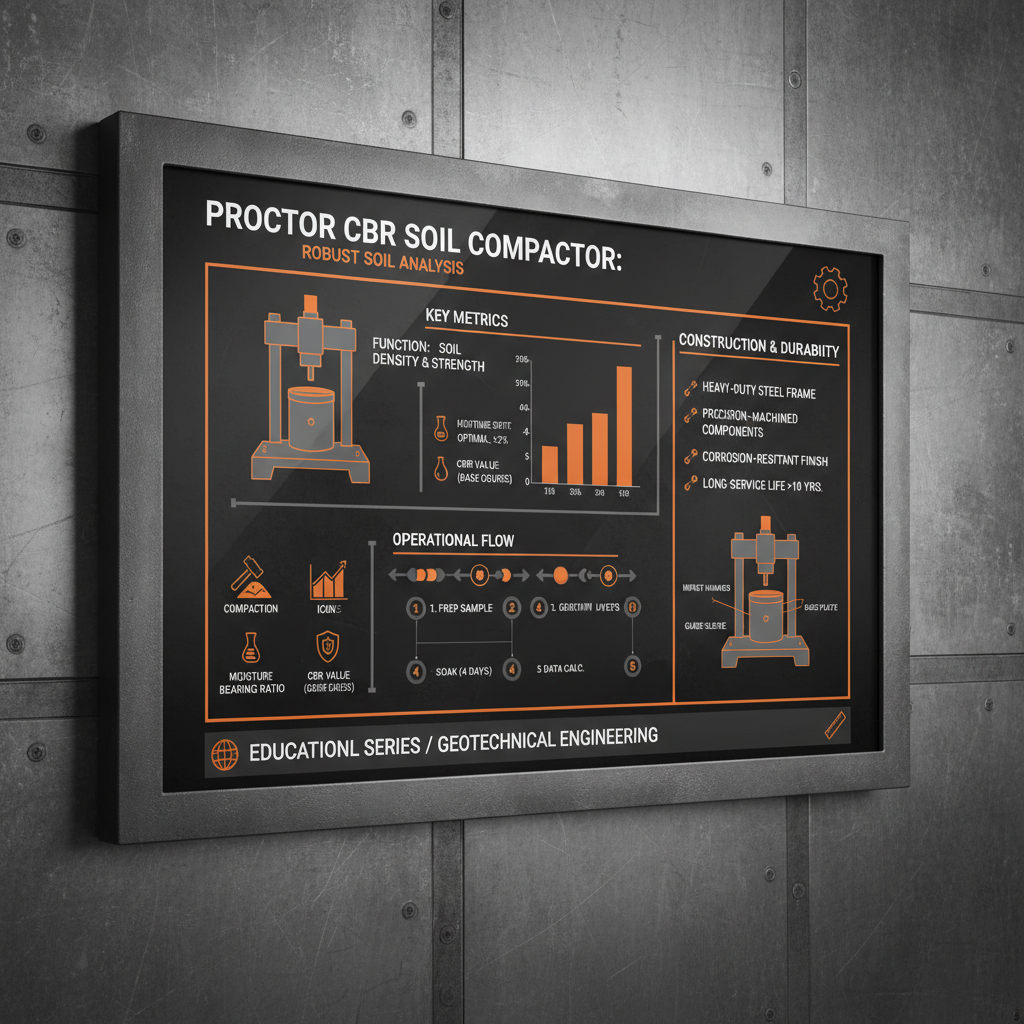
The Proctor CBR Soil Compactor, fundamentally, is a device used to determine the relationship between the moisture content of a soil sample and its density. This process, known as Proctor compaction, is essential for achieving optimal soil compaction for construction purposes. The resulting maximum dry density and optimum moisture content values are then used to calculate the California Bearing Ratio (CBR).

Its connection to modern industry and humanitarian needs is direct. Reliable soil compaction is critical for building stable roads, airport runways, foundations for structures, and embankments. In disaster relief scenarios, quick and accurate soil assessment is vital for establishing temporary shelters, repairing damaged infrastructure, and ensuring safe access for aid workers. A Proctor CBR Soil Compactor is a crucial piece of equipment in these situations.

Global Relevance and Industry Context

The need for accurate soil compaction assessment is globally significant. According to the UN, over half the world’s population lives in urban areas, a figure projected to reach 68% by 2050. This rapid urbanization necessitates significant infrastructure development, placing increasing demands on soil quality and compaction standards. The World Bank estimates that trillions of dollars are invested annually in infrastructure projects worldwide, all of which rely on robust geotechnical data.

The construction industry faces a critical challenge: ensuring long-term infrastructure durability while minimizing environmental impact and construction costs. Insufficient soil compaction can lead to premature pavement failure, structural instability, and costly repairs. Using a Proctor CBR Soil Compactor allows engineers to proactively address these risks, optimizing soil conditions for maximum performance.

International standards organizations like the ISO have established rigorous testing procedures for soil compaction, further emphasizing the importance of accurate assessment. Meeting these standards is not just a matter of compliance; it’s a matter of public safety and responsible construction practices.

Understanding the Core Principles

At its core, the Proctor CBR Soil Compactor operates on the principle that the density of a soil sample is directly related to its moisture content. By systematically varying the moisture content and compacting the soil in a controlled manner, engineers can determine the optimum moisture content at which the maximum dry density is achieved. This relationship is visualized through a Proctor curve.

The California Bearing Ratio (CBR) test, often performed in conjunction with Proctor compaction, measures the bearing capacity of the soil relative to a standard crushed stone. This ratio is a crucial input for pavement design, enabling engineers to determine the appropriate thickness and materials required for a durable road surface. The Proctor CBR Soil Compactor provides the necessary data to accurately calculate this critical parameter.

This process isn’t just about achieving a certain density; it’s about understanding how the soil behaves under load and ensuring it can withstand the stresses imposed by traffic, structures, or environmental factors. A proper assessment, facilitated by the Proctor CBR Soil Compactor, is the foundation of any successful construction project.

Key Factors Influencing Compaction Quality

Several factors directly impact the quality of soil compaction, all of which need to be carefully considered during testing with a Proctor CBR Soil Compactor. Soil type is paramount – sandy soils compact differently than clay soils, requiring different compaction techniques and moisture levels. Particle size distribution, grain shape, and mineral composition all play a role.

Compaction energy, typically measured in foot-pounds, is another critical factor. The standard Proctor test uses a specific amount of energy, while modified Proctor tests employ higher energy levels for more demanding applications. The choice of compaction method depends on the intended use of the compacted soil and the required level of strength.

Proctor CBR Soil Compactor Test Parameters

Real-World Applications Across Sectors

The applications of Proctor CBR Soil Compactor data are vast and span numerous industries. In road construction, it’s fundamental for designing pavement layers that can withstand heavy traffic loads and varying weather conditions. Airport runways also rely heavily on accurate soil compaction data to ensure safe aircraft operations.

Foundation engineering utilizes Proctor CBR data to assess the bearing capacity of the soil supporting building structures. This ensures stability and prevents settlement issues. In dam construction, proper soil compaction is critical for preventing seepage and maintaining structural integrity. Furthermore, the data is essential in earthwork projects such as embankments and retaining walls.

Advantages and Long-Term Value Proposition

Investing in reliable soil compaction assessment using a Proctor CBR Soil Compactor offers substantial long-term benefits. From a cost perspective, preventing premature infrastructure failure translates to significant savings in repair and maintenance expenses. Sustainability is also enhanced through reduced material consumption and longer-lasting structures.

The social impact is equally important. Safe and durable infrastructure contributes to economic growth, improves quality of life, and fosters community development. Reliable soil assessment builds trust with stakeholders – clients, engineers, and the public – demonstrating a commitment to quality and safety.

Future Trends and Technological Advancements

The field of soil compaction assessment is continuously evolving with the integration of new technologies. Digital sensors and automated data logging systems are streamlining the testing process and improving accuracy. Geospatial technologies like GPS and GIS are enabling more detailed site characterization and mapping of soil properties.

There's a growing focus on sustainable compaction methods, such as the use of recycled materials and alternative binders. These innovations aim to reduce the environmental footprint of construction projects while maintaining or improving performance. The integration of Artificial Intelligence (AI) and machine learning to predict soil behavior, optimize compaction efforts, and identify potential issues before they arise is a significant trend.

Challenges and Solutions

Despite advancements, challenges remain in achieving consistent and reliable soil compaction assessment. Variability in soil composition, operator skill, and testing procedures can introduce errors. Ensuring proper calibration and maintenance of the Proctor CBR Soil Compactor is crucial for minimizing these errors.

Standardization of testing protocols and implementation of robust quality control measures are essential for improving data consistency. Investing in operator training and certification programs can enhance skill levels and reduce human error. The adoption of automated systems and digital data management tools offers a path toward greater accuracy and efficiency.

Addressing these challenges through a combination of technological innovation, improved training, and standardized procedures will unlock even greater value from Proctor CBR Soil Compactor testing and contribute to the creation of more durable and sustainable infrastructure.

Proctor CBR Soil Compactor Test Data Analysis

Soil Type Optimum Moisture Content (%) Maximum Dry Density (g/cm³) CBR Value at 5mm Penetration (%)
Clay 18 1.75 12
Sand 7 1.95 45
Silt 12 1.60 8
Gravel 5 2.10 70
Loam 15 1.55 15
Clay-Sand Mixture 10 1.80 25

FAQS

What is the primary purpose of a Proctor CBR Soil Compactor?

The main purpose of a Proctor CBR Soil Compactor is to determine the optimal moisture content and maximum dry density of a soil sample. This data is then used to calculate the California Bearing Ratio (CBR), a crucial measurement for assessing the soil’s strength and suitability for supporting infrastructure. It allows engineers to design stable foundations, roads, and other structures by understanding how the soil will behave under load. A Proctor CBR Soil Compactor provides the essential data for informed construction decisions.

How does the Proctor test differ from the CBR test?

The Proctor test focuses on determining the relationship between moisture content and density, identifying the optimum moisture content for maximum compaction. The CBR test, conversely, evaluates the soil’s bearing capacity by comparing its resistance to penetration with that of a standard crushed stone. While both tests are often performed together, the Proctor test prepares the soil sample for the CBR test and provides essential parameters for its interpretation.

What types of soils are best suited for CBR testing?

CBR testing is applicable to a wide range of soil types, including sands, silts, clays, and gravels. However, the interpretation of CBR values can vary significantly depending on the soil type. Fine-grained soils (silts and clays) typically have lower CBR values than coarse-grained soils (sands and gravels). The test is often modified to suit the specific characteristics of the soil being tested.

How frequently should a Proctor CBR Soil Compactor be calibrated?

To ensure accurate results, a Proctor CBR Soil Compactor should be calibrated at least annually, or more frequently if it undergoes heavy use. Calibration involves verifying the accuracy of the compaction hammer, mold dimensions, and other critical components. Regular calibration minimizes the risk of errors and ensures the reliability of the test data.

What safety precautions should be taken when operating a Proctor CBR Soil Compactor?

Operating a Proctor CBR Soil Compactor requires adherence to several safety precautions. Always wear appropriate personal protective equipment (PPE), including safety glasses, gloves, and a dust mask. Ensure the testing area is clear of obstructions and personnel. Follow the manufacturer’s instructions carefully and avoid overexertion when operating the compaction hammer.

Can the Proctor CBR test be performed in the field?

Yes, the Proctor CBR test can be performed in the field using portable equipment. However, field testing requires careful attention to ensure proper sample collection, preparation, and testing procedures. Maintaining consistent testing conditions and minimizing disturbances to the soil sample are crucial for obtaining accurate and reliable results.

Conclusion

In conclusion, the Proctor CBR Soil Compactor represents a vital tool for ensuring the stability, durability, and safety of infrastructure projects worldwide. By providing essential data on soil compaction characteristics, it empowers engineers to make informed decisions, optimize construction processes, and minimize the risk of structural failure. The accurate determination of maximum dry density, optimum moisture content, and CBR values is paramount for successful construction.

Looking ahead, advancements in technology, coupled with a growing emphasis on sustainability and quality control, will continue to drive innovation in soil compaction assessment. Embracing these advancements and prioritizing proper training and calibration will unlock even greater value from the Proctor CBR Soil Compactor, contributing to a more resilient and sustainable built environment. Visit our website at www.czlabinstrument.com to learn more about our range of geotechnical testing equipment.

David Miller

David Miller

David Miller is the Head of Product Development at Cangzhou Blue Beauty Instrument Co., Ltd. With over 15 years of experience in the medical device and laboratory equipment industry, David spearheads the research and development of innovative testing instruments. He holds a PhD in Materials Science and has been instrumental in securing four invention patents for the company’s latest products. David focuses on integrating advanced automation and minimizing human error in instrument operation. He’s deeply committed to aligning product development with customer needs in sectors like construction, environmental protection, and chemical engineering, ensuring solutions meet stringent industry standards. He frequently represents the company at industry conferences, sharing insights on material testing technologies. David is passionate about pushing the boundaries of what’s possible in quality control.
Previous Advancements in Automatic Proctor CBR Compactors for Soil Testing and Infrastructure Development
Next Advancements in CBR Soil Compactor Technology for Infrastructure Development
Leave Your Message

If you are interested in our products, you can choose to leave your information here, and we will be in touch with you shortly.