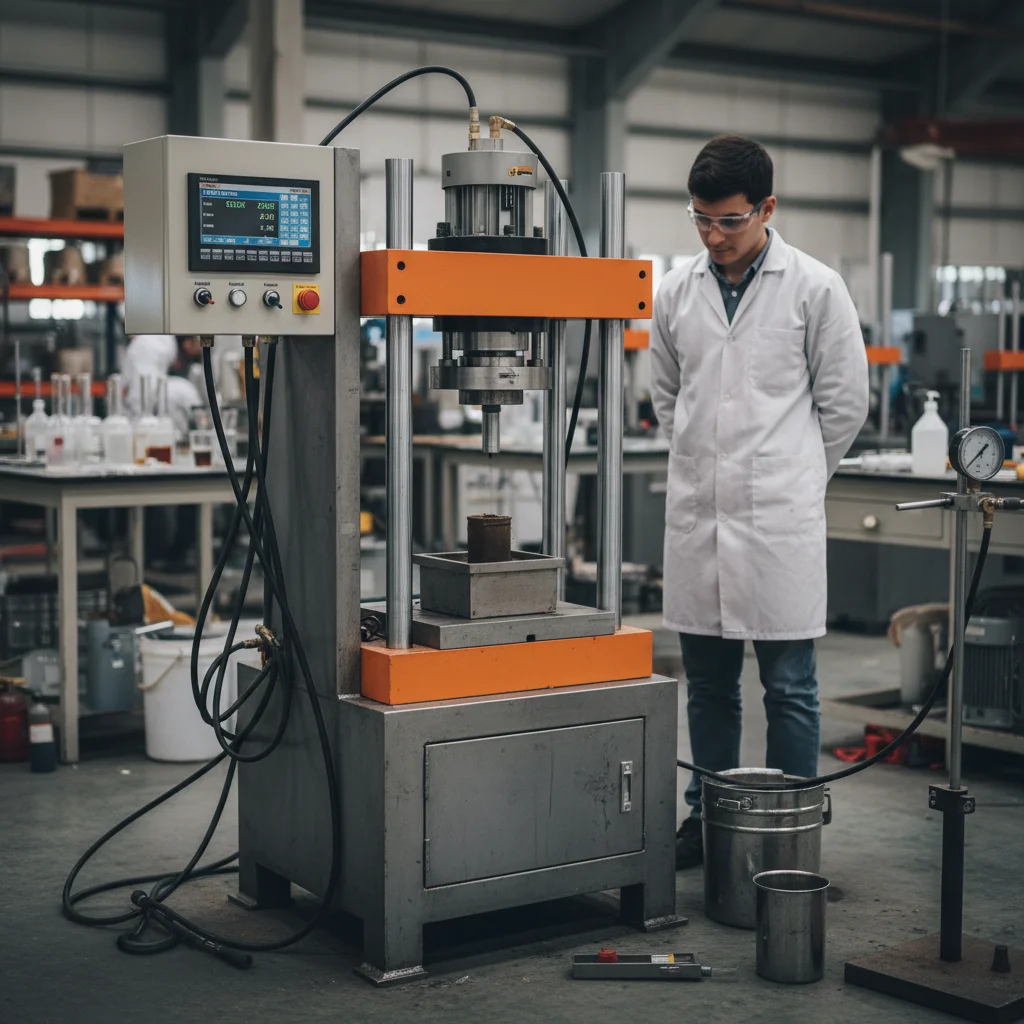
Ensuring the structural integrity of civil engineering projects begins with a precise understanding of soil mechanics and density. In the global construction landscape, the ability to standardize the density of earthworks is paramount to preventing future subsidence and structural failure. A high-quality Soil Compaction Apparatus allows engineers to determine the optimal moisture content and maximum dry density of various soil types, ensuring that roads, bridges, and dams are built on a stable foundation.
From an industrial perspective, the precision of testing equipment directly correlates with the safety and longevity of infrastructure. International standards, such as those set by ISO and ASTM, emphasize the necessity of rigorous laboratory testing before field implementation. Without the data provided by a reliable Soil Compaction Apparatus, the risk of uneven settling increases, which can lead to catastrophic failures in high-pressure environments like hydropower projects or national highway networks.
Modern construction requires a synergy between high-grade materials and precise measurement. Whether utilizing specialized plastic moulds for concrete or dedicated tools for earthworks, the goal is consistent quality. For professionals seeking reliable results in geotechnical analysis, utilizing a certified Soil Compaction Apparatus is the gold standard for achieving the necessary soil stability and load-bearing capacity.

Global Relevance of Soil Compaction Apparatus
The global demand for sustainable infrastructure has pushed the geotechnical industry toward higher precision. In rapidly developing urban centers across Asia and Africa, the Soil Compaction Apparatus is essential for ensuring that new developments can withstand environmental stresses and heavy load-bearing requirements. By simulating field conditions in a controlled lab setting, engineers can predict how soil will behave under the weight of skyscrapers or heavy-duty industrial machinery.
Furthermore, the economic impact of improper soil preparation is staggering. World Bank reports on infrastructure resilience suggest that a significant percentage of road failures are attributed to poor initial compaction. The integration of a standardized Soil Compaction Apparatus into the quality control workflow reduces maintenance costs and extends the operational life of public works, making it a critical tool for economic stability in construction.
Defining the Soil Compaction Apparatus
A Soil Compaction Apparatus is a specialized laboratory instrument designed to determine the relationship between the moisture content and the dry unit weight of a soil sample. By applying a specific amount of energy—usually through a falling hammer—the device compacts the soil into a predetermined volume, allowing technicians to find the "Optimum Moisture Content" (OMC) where the soil reaches its maximum density.
In the context of modern industry, this apparatus bridges the gap between theoretical geology and practical engineering. It transforms raw earth into a predictable construction material. This is especially vital in humanitarian projects, such as building disaster-resilient shelters or emergency roads in remote regions, where the local soil quality varies wildly and must be verified before construction begins.
Essentially, the apparatus serves as a quality gateway. By utilizing a Soil Compaction Apparatus, laboratories can issue certifications that guarantee a site is ready for the next phase of development, whether that involves pouring concrete foundations or laying asphalt for highways, thereby ensuring the safety of thousands of end-users.
Core Components and Technical Factors
Durability is the cornerstone of any high-performance Soil Compaction Apparatus. Because these machines are subjected to repeated mechanical impacts, the materials used in the hammer and the mold must resist wear and deformation. High-grade steel and reinforced engineering plastics are often employed to ensure that the dimensions of the sample remain precise throughout thousands of test cycles.
Precision and Calibration are equally critical. A Soil Compaction Apparatus must deliver a consistent blow weight and drop height to ensure the energy applied to the soil is uniform. Any deviation in the mechanical action can lead to skewed data, potentially causing an engineer to underestimate the amount of compaction needed in the field, which could lead to structural instability.
Scalability and Versatility allow laboratories to handle different soil types, from silts and clays to sandy loams. A versatile Soil Compaction Apparatus is often compatible with various mold sizes, ensuring that the testing protocol can be adapted to meet different international standards (such as Proctor or Modified Proctor tests) without requiring entirely new sets of equipment.
Global Applications and Industrial Use Cases
The application of the Soil Compaction Apparatus spans multiple critical sectors. In the transportation industry, it is used extensively for the construction of airport runways and high-speed rail beds, where even a millimeter of settlement can cause significant safety risks at high velocities. In these cases, the apparatus helps define the exact compaction energy required for the sub-base layers.
Beyond transport, the energy sector relies on this technology for the stability of hydropower dams and wind turbine foundations. In remote industrial zones, where soil composition may be unstable or chemically aggressive, the Soil Compaction Apparatus provides the necessary data to determine if soil stabilization additives are required to achieve the desired density.
Efficiency Rating of Different Soil Compaction Apparatus Methods
Long-Term Value and Reliability Advantages
Investing in a high-quality Soil Compaction Apparatus provides immense long-term value by mitigating the financial risks associated with construction failure. When soil is compacted to its maximum density, the permeability is reduced, and the shear strength is increased. This prevents water ingress and frost heave, which are the primary causes of pavement cracking and foundation shifting over time.
From an emotional and professional standpoint, the use of precision equipment builds trust between the contractor and the client. Providing documented evidence from a calibrated Soil Compaction Apparatus demonstrates a commitment to safety and excellence. This reliability is the bedrock of professional reputation in the construction industry, ensuring that projects are delivered with a legacy of stability and innovation.
Future Trends in Compaction Technology
The future of the Soil Compaction Apparatus is leaning heavily toward automation and digitalization. We are seeing a shift from manual hammer systems to automated pneumatic compactors that remove human error from the equation. These new systems can precisely control the number of blows and the impact force, providing a higher degree of repeatability and data accuracy.
Integration with IoT and cloud-based data management is also on the horizon. Future iterations of the Soil Compaction Apparatus will likely include sensors that record the compaction curve in real-time, automatically uploading the results to a centralized project management system. This allows lead engineers to monitor soil test results from anywhere in the world, accelerating the decision-making process on site.
Sustainability is another driving force. There is a growing movement toward "green compaction," where the Soil Compaction Apparatus is used to test the efficacy of recycled aggregates and bio-binders. By optimizing the use of sustainable materials through precise testing, the construction industry can reduce its carbon footprint without compromising the structural integrity of the built environment.
Challenges and Expert Solutions in Soil Testing
One of the primary challenges in soil testing is the inherent variability of natural soil. A Soil Compaction Apparatus may yield different results for two samples taken just a few meters apart. To overcome this, experts recommend "composite sampling" and increasing the number of test trials to establish a statistically significant average, ensuring that the field application is based on a representative data set.
Another limitation is the time required for traditional moisture-density tests. To solve this, many laboratories are integrating the Soil Compaction Apparatus with rapid-dry ovens or microwave moisture analyzers. This hybrid approach allows for faster iterations of the compaction curve, significantly reducing the lead time for project approvals while maintaining high accuracy.
Finally, the maintenance of equipment in harsh laboratory environments can lead to calibration drift. The professional solution is the implementation of a strict quarterly calibration schedule and the use of wear-resistant alloys for impact surfaces. By treating the Soil Compaction Apparatus as a precision instrument rather than a blunt tool, laboratories can ensure lifelong accuracy and reliability.
Analysis of Soil Compaction Apparatus Performance Across Soil Types
| Soil Type |
Compaction Effort |
Optimal Moisture Range |
Stability Score (1-10) |
| Well-Graded Gravel |
High |
8% - 12% |
9.5 |
| Lean Clay |
Medium |
15% - 22% |
7.0 |
| Silty Sand |
Medium |
10% - 14% |
8.2 |
| Organic Peat |
Low |
25% - 40% |
4.5 |
| Expansive Clay |
High |
18% - 25% |
6.0 |
| Sandy Loam |
Medium |
12% - 16% |
8.8 |
FAQS
The primary purpose is to determine the maximum dry density and the optimum moisture content of a soil sample. By applying a controlled amount of energy, the apparatus helps engineers understand how much water needs to be added to the soil in the field to achieve the highest possible density, which is critical for the stability of any structure built upon it.
For high-precision laboratory work, we recommend a full calibration every quarter or after every 500 test cycles. Calibration ensures that the hammer weight and the drop height remain within the specified tolerances of ASTM or ISO standards, preventing data drift that could lead to incorrect field specifications.
Yes, a professional-grade Soil Compaction Apparatus is designed for versatility. However, different soil types may require different mold sizes or compaction energies (Standard vs. Modified Proctor). As long as the apparatus is compatible with the required mold and hammer specifications, it can be used for everything from gravel to clay.
The Modified Proctor test applies significantly more energy to the soil sample than the Standard test, simulating the heavier compaction equipment used in modern highway construction. The Soil Compaction Apparatus for a Modified test typically uses a heavier hammer or a higher drop height to achieve a higher maximum dry density.
By accurately identifying the optimum moisture content, contractors avoid the costly mistake of "over-wetting" or "under-wetting" the soil. Proper compaction reduces the need for expensive soil replacement or stabilization chemicals and prevents premature structural failure, which saves millions in long-term maintenance and repair costs.
Automatic systems are generally superior for high-volume laboratories because they eliminate human fatigue and variability. They provide consistent energy application and often include digital logging, which increases the reliability of the results and speeds up the testing process, although they require a higher initial investment.
Conclusion
The Soil Compaction Apparatus remains an indispensable tool in the geotechnical engineering toolkit, serving as the definitive bridge between raw environmental data and structural safety. By providing precise measurements of soil density and moisture, it enables the creation of foundations that can withstand the test of time and nature. From the durability of its mechanical components to the accuracy of its resulting data, the apparatus ensures that every layer of a project is built on a foundation of scientific certainty.
As the construction industry evolves toward smarter, more sustainable practices, the role of precision testing will only grow. We encourage engineers and laboratory managers to invest in high-quality, calibrated equipment to ensure the longevity of their infrastructure. For those seeking world-class testing solutions, we invite you to explore our professional range of instruments. Visit our website: www.czlabinstrument.com