
The Soil Bearing Ratio Test (SBRT) is a cornerstone of geotechnical engineering, crucial for assessing the stability and load-bearing capacity of soil. Globally, safe and reliable infrastructure development – from bridges and skyscrapers to residential buildings – fundamentally relies on accurate soil analysis. The SBRT provides a standardized method to determine the strength of a soil, enabling engineers to design foundations that can withstand anticipated loads without excessive settlement or failure. This is especially vital in a world facing rapid urbanization and increasing demands on construction resources.
Understanding the Soil Bearing Ratio Test is paramount for minimizing construction risks and ensuring long-term structural integrity. The economic implications of foundation failure are significant, involving costly repairs, potential demolition, and even loss of life. Accurate SBRT results contribute to optimized construction designs, leading to efficient material usage and reduced project timelines. Furthermore, the test’s data informs land-use planning and helps mitigate environmental impacts by minimizing the need for extensive ground modification.
Beyond construction, the Soil Bearing Ratio Test plays a key role in disaster preparedness and response. Assessing soil conditions before and after seismic events or landslides is critical for determining the suitability of land for temporary shelters, emergency infrastructure, and reconstruction efforts. A thorough understanding of soil behavior, as revealed by the SBRT, is therefore an indispensable part of sustainable and resilient infrastructure development worldwide.

Introduction to Soil Bearing Ratio Test
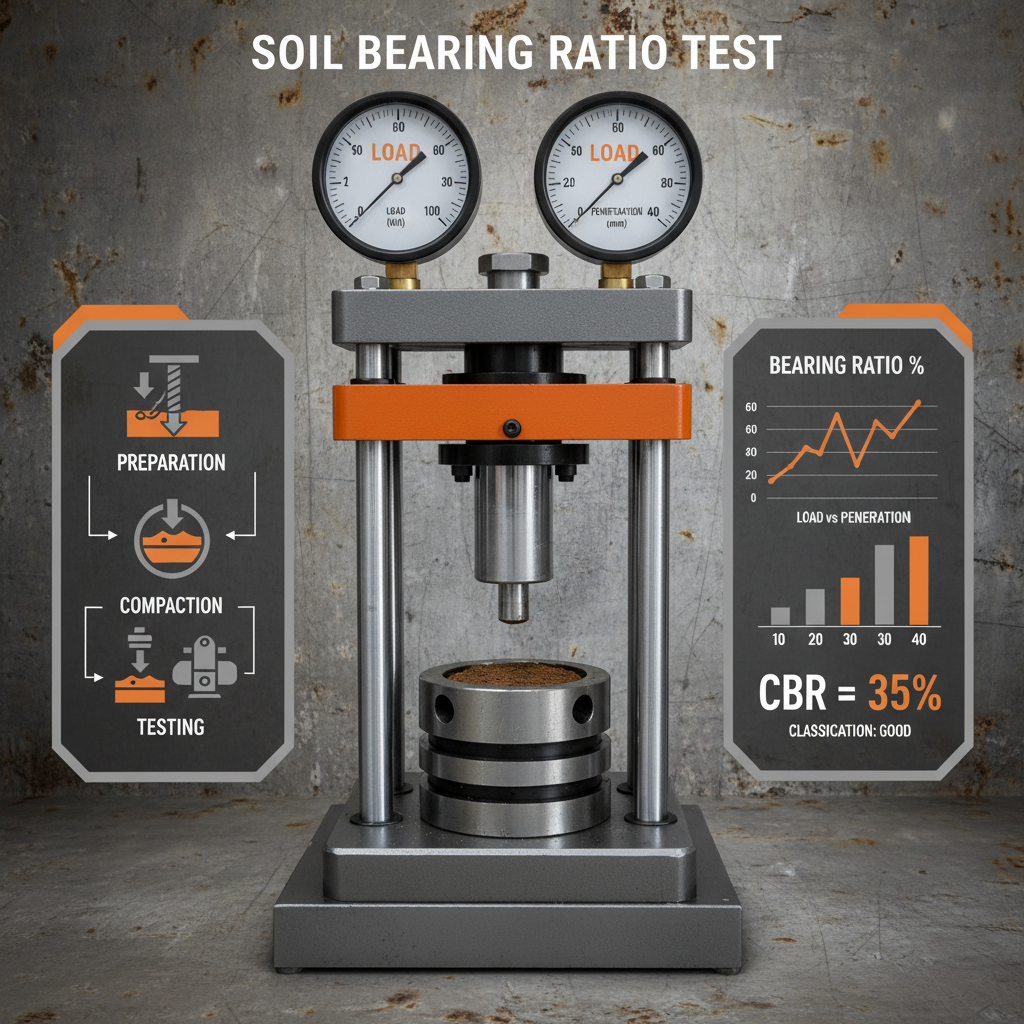
The Soil Bearing Ratio Test isn’t merely a laboratory procedure; it’s a fundamental assessment of a site’s ability to support structures. It provides a quantifiable measure of the soil's strength, expressed as a ratio of the applied load to the ultimate bearing capacity. This ratio is crucial for ensuring the safety and longevity of any building or infrastructure project. Without accurate SBRT data, engineers risk designing foundations that are inadequate, leading to potential structural failures and significant economic losses.
The test’s significance extends beyond new construction. Regular SBRT assessments are also vital for monitoring the performance of existing foundations, particularly in areas prone to soil settlement, erosion, or seismic activity. Proactive monitoring allows for timely interventions to prevent catastrophic failures and maintain the integrity of vital infrastructure. Therefore, incorporating routine Soil Bearing Ratio Tests into infrastructure management plans is a best practice for responsible and sustainable development.
FAQS
While both SPT and SBRT assess soil strength, they do so differently. SPT measures resistance to penetration, providing an ‘N-value’ correlated to soil properties. SBRT directly determines the bearing capacity by applying a load and measuring settlement. SBRT offers a more direct measure of load-bearing capacity, crucial for foundation design, whereas SPT is useful for preliminary soil profiling and correlation to other properties. Often, both tests are used in conjunction for a comprehensive site assessment.
The frequency of SBRT on existing structures depends on several factors, including the structure’s age, the soil conditions, and its exposure to dynamic loads or environmental factors. A baseline SBRT is recommended during initial construction. Subsequently, periodic inspections (every 5-10 years) and SBRT assessments are advisable, particularly if settlement, cracking, or other signs of distress are observed. Areas prone to seismic activity or groundwater fluctuations may require more frequent testing.
Inaccurate results can stem from several sources, including improper sample collection and handling (disturbed samples), inadequate testing procedures, equipment calibration errors, or misinterpretation of data. Groundwater fluctuations during testing can also significantly affect results. Employing qualified geotechnical engineers and adhering to standardized testing protocols (ASTM, ISO) are crucial for ensuring reliable data. Proper site investigation and accounting for soil heterogeneity also help mitigate errors.
Yes, SBRT can be performed on most soil types, but the specific method and equipment used may vary. For cohesive soils (clays), plate load tests or laboratory tests on undisturbed samples are common. For granular soils (sands and gravels), standard penetration tests or cone penetration tests are often employed. Selecting the appropriate testing method depends on the soil’s characteristics and the specific project requirements. Modifications to the test procedure may be necessary for challenging soil conditions like organic soils or highly sensitive clays.
Groundwater significantly influences SBRT results. Saturated soils have reduced bearing capacity compared to dry soils due to decreased effective stress. The groundwater table level must be accurately measured and accounted for during testing and analysis. Testing procedures may need to be adjusted to maintain consistent saturation levels or to account for pore water pressure. Dewatering techniques may be employed to temporarily lower the groundwater table during testing, but this must be carefully controlled to avoid altering the soil's natural conditions.
The SBRT provides critical data for foundation design. The allowable bearing capacity determined from the test dictates the maximum load that the soil can safely support. This value is used to calculate the required size and depth of foundations, ensuring they can adequately distribute the structural loads without causing excessive settlement or failure. SBRT results inform the selection of the appropriate foundation type – shallow or deep – and help engineers optimize the design for cost-effectiveness and long-term stability.
Conclusion
The Soil Bearing Ratio Test is a cornerstone of responsible infrastructure development, providing the essential data needed to ensure the safety, stability, and longevity of structures worldwide. From supporting towering skyscrapers to enabling rapid disaster relief efforts, the SBRT’s applications are vast and vital. Understanding its principles, methodologies, and evolving technologies is paramount for engineers, construction professionals, and policymakers alike. The test continues to evolve with technological advancements, improving accuracy and efficiency in soil analysis.
Looking ahead, continued investment in research and innovation within SBRT techniques, coupled with the integration of digital technologies, will further enhance our ability to assess and manage soil risks. Prioritizing routine SBRT assessments, adhering to standardized protocols, and leveraging the expertise of qualified geotechnical engineers will be crucial for building a more resilient and sustainable future. Visit our website at www.czlabinstrument.com to learn more about our advanced soil testing solutions.
Related Posts
-
High Precision Asphalt Centrifuge Extraction Tester for Road Quality
-

Advancements in Automatic Proctor CBR Compactors for Soil Testing and Infrastructure Development
-

Comprehensive Guide to Soil Proctor Compaction Test Apparatus and Applications
-

Comprehensive Guide to Bitumen Stability Tester and Asphalt Quality Control