In the realm of high-precision civil engineering and material science, the accuracy of compressive strength testing is paramount for ensuring the structural integrity of infrastructure. While various tools like Asphalt Centrifuge Extractors are used for composition analysis, the physical validation of load-bearing capacity requires robust machinery like the SYE-2000A electro-hydraulic pressure testing machine. This equipment serves as the gold standard for determining the breaking point of concrete, bricks, and cement, providing critical data that prevents catastrophic structural failures.
Globally, the demand for rigorous material testing has surged as urban centers expand and the complexity of architectural designs increases. Adherence to international standards, such as GB/T2611 and GB/T3159, ensures that materials used in skyscrapers, bridges, and dams are consistent and safe. The transition from manual hydraulic systems to intelligent, digitally-controlled electro-hydraulic systems has drastically reduced human error and increased the reliability of test results across the manufacturing and construction sectors.
Understanding the synergy between different laboratory instruments—ranging from the precision of Asphalt Centrifuge Extractors in bitumen analysis to the brute force of 2000kN compression machines—allows engineers to maintain a comprehensive quality control loop. By integrating smart measurement and control systems, modern laboratories can now process vast amounts of data in real-time, ensuring that every batch of cement or concrete meets the exacting specifications required for modern safety standards.

Global Relevance of Precision Material Testing
The global construction industry relies heavily on the standardization of material strength. Whether it is the application of Asphalt Centrifuge Extractors for road quality or the use of high-capacity compression machines for concrete, the goal is the same: risk mitigation. ISO and national standards dictate that testing machines must operate within a strict accuracy level (typically Level 1) to ensure that the reported compressive strength reflects the true physical properties of the material.
In regions experiencing rapid urbanization, the pressure to accelerate build times often conflicts with the need for thorough testing. This creates a critical need for equipment like the SYE-2000A, which combines a massive 2000kN force capacity with an integrated oil source, allowing for rapid but precise testing of cement and concrete samples without sacrificing the integrity of the results.
Defining the Electro-Hydraulic Compression System
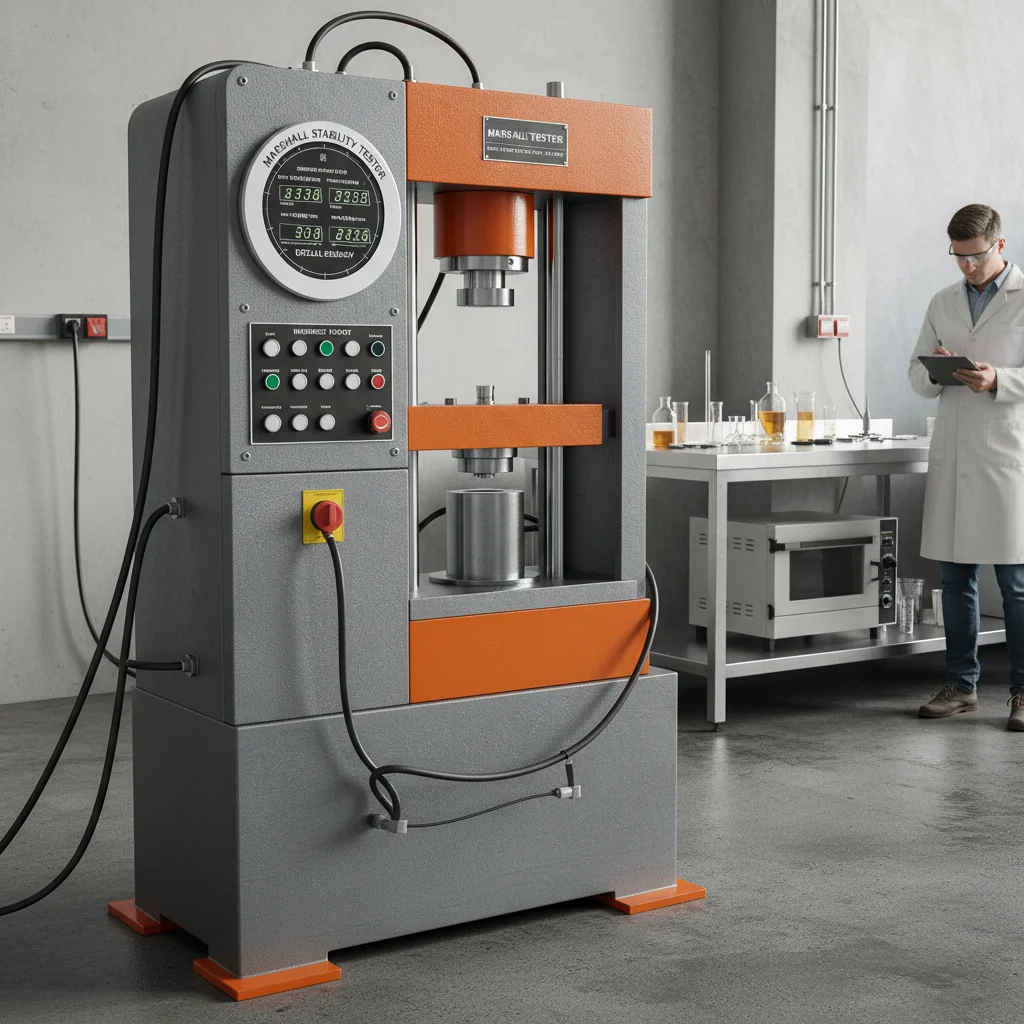
The SYE-2000A is a sophisticated electro-hydraulic pressure testing machine designed to evaluate the compressive strength of brick, concrete, and cement. Unlike traditional manual presses, this system utilizes a hydraulic power source coupled with an intelligent measurement and control instrument. This allows for the precise collection and processing of test data, ensuring that the loading force and speed are maintained according to strict national standards.
At its core, the system is an integrated structure consisting of a test host and a dedicated oil source cabinet. This integration reduces the footprint of the laboratory while increasing operational efficiency. While instruments like Asphalt Centrifuge Extractors handle the chemical and compositional separation of binders, the SYE-2000A focuses on the mechanical failure point of the hardened material, completing the quality assurance cycle.
Functionally, the machine is versatile; beyond simple compression, it can be adapted for split-pull tests of concrete when equipped with the appropriate fixtures. This flexibility makes it an essential piece of equipment for any laboratory specializing in cement concrete instrument equipment, providing a one-stop solution for multiple stress-test scenarios.
Core Components and Engineering Excellence
The engineering of the SYE-2000A focuses on rigidity and stability. The main body employs a four-column space structure, comprising a base, oil cylinder, force sensor, and pressure plate. This architecture ensures that the 2000kN of force is applied uniformly, preventing eccentric loading that could skew results—a level of precision that complements the accuracy found in Asphalt Centrifuge Extractors.
Central to the machine's operation is the integral oil source cabinet. It features an axial piston oil pump powered by a Siemens motor, which ensures stable torque and speed. To maintain a professional laboratory environment, the noise level is kept below 70dB, exceeding the national standard of 75dB, thereby ensuring operator comfort and focus.
Safety is further enhanced through a high-toughness protective net arranged above the platform. This physical barrier isolates the operator from the testing space during the high-pressure phase. Additionally, the chrome-plated and polished light bars provide a rust-proof finish, ensuring the machine's longevity in humid laboratory conditions often found alongside equipment like Asphalt Centrifuge Extractors.
Performance Metrics and Accuracy Levels
The SYE-2000A is engineered for Level 1 accuracy, meaning the relative error of the test force indication value remains within ±1%. This precision is critical because a small deviation in reported strength can lead to significant errors in structural load calculations. The machine features a compression space of 320mm and a piston stroke of 80mm, allowing it to accommodate a wide variety of sample sizes.
The integration of a micro thermal printer allows for immediate hard-copy results, while the ability to connect to a PC via specialized software enables the simultaneous display of force, displacement, and deformation. This digital transformation ensures that the data gathered is as transparent and verifiable as the results produced by Asphalt Centrifuge Extractors.
Comparative Efficiency of Material Testing Systems
Real-World Industrial Applications
In large-scale infrastructure projects, such as the construction of high-speed rail bridges, the SYE-2000A is used to validate the quality of pre-cast concrete beams. By applying a maximum force of 2000kN, engineers can simulate extreme load conditions to ensure the material exceeds safety margins. This process is often paired with the use of Asphalt Centrifuge Extractors to ensure the road surfaces atop these bridges have the correct bitumen-to-aggregate ratio.
Furthermore, in government-certified testing laboratories, the machine's adherence to GB/T2611 standards makes it a primary tool for certifying the strength of bricks and cement for commercial sale. The ability to adjust the compression space via a rotating screw allows technicians to switch between different sample types quickly, increasing the throughput of the lab without compromising on the rigorous requirements of the industry.
Long-Term Value and Safety Innovations
The long-term value of the SYE-2000A lies in its durability and the reduction of operational risk. The use of galvanized oil tanks and chrome-plated components prevents corrosion, extending the machine's life cycle significantly. When compared to the maintenance needs of other lab equipment like Asphalt Centrifuge Extractors, the SYE-2000A's integrated design simplifies the upkeep of the hydraulic system.
From a safety perspective, the machine incorporates multiple limit protection functions. These include force value overload protection and fault self-checks, which automatically alert the operator if the force sensor is disconnected or if the load exceeds the machine's capacity. This prevents mechanical failure and ensures the safety of the personnel.
Ultimately, investing in a Level 1 accuracy machine provides peace of mind. The logical consistency between the digital readout and the actual physical stress ensures that the data used for building safety certifications is beyond reproach, fostering trust between contractors, engineers, and the general public.
Future Trends in Testing Automation
The future of material testing is moving toward full digitalization and IoT integration. We are seeing a trend where machines like the SYE-2000A are no longer standalone units but part of a networked laboratory. This allows for the automatic syncing of results to cloud servers, where AI can analyze trends in material strength over time, mirroring the automation trends seen in Asphalt Centrifuge Extractors.
Sustainability is also becoming a key driver. Future iterations of electro-hydraulic systems will likely focus on energy-efficient motors and biodegradable hydraulic fluids to reduce the environmental impact of the lab. The integration of more sensitive force sensors will further push accuracy beyond Level 1, allowing for the detection of microscopic flaws in high-performance concrete.
As we move toward "smart cities," the requirement for real-time material validation will increase. The ability of the measurement and control system to connect directly to PC software is the first step toward a fully automated testing ecosystem where human intervention is minimized, and precision is maximized.
Technical Specification Analysis of the SYE-2000A System
| Specification Dimension |
Technical Value |
Standard Compliance |
Impact on Performance |
| Maximum Force |
2000kN |
GB/T2611 |
High-load capacity for concrete |
| Accuracy Level |
Level 1 (±1%) |
National Standard |
Minimal margin of error |
| Noise Level |
< 70dB |
Environmental Safety |
Improved operator environment |
| Compression Space |
320mm |
Industrial Standard |
Versatile sample sizing |
| Motor Type |
Siemens Axial Piston |
IEC Standards |
Stable torque and power |
| Total Weight |
~830kg |
Structural Rigidity |
Stable base for high force |
FAQS
The SYE-2000A utilizes an electro-hydraulic system with a Siemens motor and axial piston pump, providing consistent loading speeds and digital precision. Manual presses rely on human operation, which introduces variability. The SYE-2000A provides Level 1 accuracy (±1%), ensuring that test results are standardized and repeatable, unlike manual methods.
Yes, the machine is designed to meet national standard test requirements for bricks, cement, and other similar materials. Furthermore, with the addition of specific fixtures and measuring devices, it can also perform split-pull tests on concrete, making it a versatile tool for comprehensive material analysis.
The system uses intelligent instruments to collect and process data in real-time. It features a micro thermal printer for instant physical records and can be connected to a PC. When used with the appropriate software, it can simultaneously display force value, displacement, and deformation on a computer screen for detailed analysis.
The SYE-2000A includes a high-toughness protective net that isolates the operator from the compression space. Electronically, it features overload protection and fault self-checks that trigger if the force sensor is disconnected or overloaded, preventing accidental machine failure or sample explosions.
Not at all. The integrated oil source cabinet is designed with an axial piston pump that operates at a noise level below 70dB. This is significantly lower than the national standard of 75dB, ensuring that the laboratory remains a conducive environment for other precise work, such as using Asphalt Centrifuge Extractors.
The machine features a rotating screw mechanism that allows the operator to adjust the compression space quickly and conveniently. This ensures that the upper platen can be perfectly positioned regardless of the sample height, ensuring a secure fit and an accurate application of force.
Conclusion
The SYE-2000A electro-hydraulic pressure testing machine represents the pinnacle of material strength validation, combining massive force capacity with surgical precision. By adhering to Level 1 accuracy and integrating smart control systems, it eliminates the guesswork from structural safety. From its robust four-column frame to its low-noise Siemens-powered oil source, every detail is engineered to provide reliable, repeatable, and safe results.
As the industry moves toward greater automation and stricter safety mandates, the integration of such high-precision equipment becomes non-negotiable. Whether paired with the analytical capabilities of Asphalt Centrifuge Extractors or used as a standalone validation tool, the SYE-2000A ensures that the foundations of our modern world are built on verified strength. For those seeking to upgrade their laboratory capabilities, visiting our specialized catalog is the first step toward excellence. Visit our website: www.czlabinstrument.com