
Comprehensive Guide to Drying Heat Oven Technology and Applications
Understanding the Power of a Drying Heat Oven
In a diverse range of industries, from pharmaceuticals and food processing to materials science and chemical research, maintaining precise temperature control during drying processes is critical. A drying heat oven provides the controlled thermal environment necessary for removing moisture from substances without altering their composition or properties. This article will delve into the core functionalities, applications, key features, and benefits of using a high-quality drying heat oven, focusing on the offerings from CZ Lab Instrument. We’ll also discuss how to select the right oven for your specific needs.

What is a Drying Heat Oven and How Does It Work?
A drying heat oven, also known as a laboratory oven or convection oven, is a thermally insulated chamber used for heating materials to a specific temperature. The primary purpose is to evaporate volatile substances, typically water, from samples. Modern drying ovens utilize precise temperature controls and often incorporate forced convection (fans) to ensure uniform heat distribution. This prevents hotspots and ensures consistent drying throughout the chamber. The heat source is generally electric resistance heating, allowing for accurate and repeatable results. Understanding the heating mechanics is vital for maintaining sample integrity and achieving desired dryness levels.
Key Principle: Heat transfer through conduction, convection, and radiation facilitates the evaporation of volatile substances, leaving behind a dried sample.
Applications of Drying Heat Ovens Across Industries
Drying heat ovens are invaluable tools in a wide array of fields. In the pharmaceutical industry, they're used for drying drug intermediates and final products. Food processing utilizes them for moisture analysis and ingredient drying. Materials science relies on ovens for preparing samples for analysis and removing solvents. Chemical laboratories use drying ovens for drying glassware and reagents. Environmental testing employs them for determining solid content in water and soil samples. CZ Lab Instrument provides ovens tailored to meet the stringent demands of each application, ensuring reliable and reproducible results.
Common Applications:
• Pharmaceutical Drying
• Food Moisture Analysis
• Materials Science Sample Preparation
• Chemical Reagent Drying
Key Features to Consider When Choosing a Drying Heat Oven
Selecting the appropriate drying heat oven requires careful consideration of several key features. Temperature range and accuracy are paramount; ensure the oven can reach and maintain the desired temperature for your application. Uniformity of heat distribution is also crucial to avoid uneven drying. Chamber size and material (often stainless steel) impact capacity and corrosion resistance. Programmable controllers allow for automated drying cycles. Safety features like over-temperature protection are essential. CZ Lab Instrument's ovens prioritize these features for optimal performance and safety.
Benefits of Choosing CZ Lab Instrument Drying Heat Ovens
Investing in a drying heat oven from CZ Lab Instrument offers numerous advantages. You benefit from precise temperature control, ensuring consistent and reliable results. The robust construction and high-quality materials guarantee long-term durability. Our user-friendly interfaces and programmable features streamline your workflows. We also provide comprehensive support and service to ensure your satisfaction. CZ Lab Instrument is committed to delivering innovative and dependable laboratory equipment.
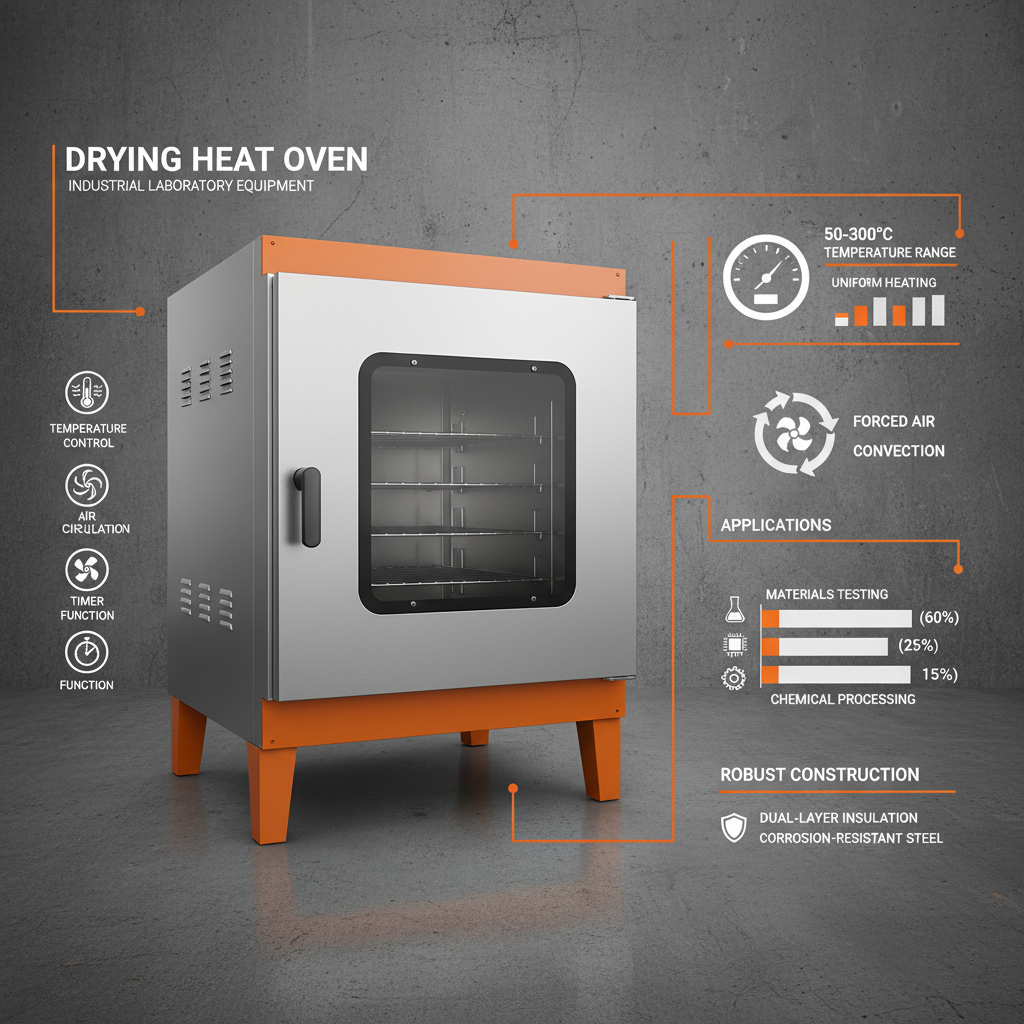
Product Specifications: CZ Lab Instrument Standard Drying Oven
Here's a snapshot of the specifications for our standard drying heat oven:
Conclusion: Precise Drying for Reliable Results
A drying heat oven is a vital piece of equipment for any laboratory or industrial setting requiring accurate and controlled drying processes. CZ Lab Instrument offers a range of high-quality ovens designed to meet diverse needs. By choosing the right oven and utilizing proper techniques, you can ensure consistent, reliable, and reproducible results.
Frequently Asked Questions (FAQs)
What factors influence the drying time in a heat oven?
Several factors affect drying time, including the initial moisture content of the sample, the drying temperature, air circulation within the oven, and the surface area exposed to the heat. Higher temperatures generally reduce drying time, but it’s crucial to avoid exceeding the sample's thermal stability. Proper air circulation, facilitated by forced convection, ensures uniform heating and accelerates evaporation. Smaller particle size or increased surface area also lead to faster drying. It is also important to ensure the correct oven load to avoid airflow restriction.
How often should I calibrate my drying heat oven?
Calibration frequency depends on usage and regulatory requirements. As a general guideline, drying heat ovens should be calibrated at least annually. If the oven is used for critical applications or is subjected to frequent temperature fluctuations, more frequent calibration may be necessary. Calibration ensures that the temperature readings are accurate and reliable, guaranteeing the validity of your experimental results.
Can I dry flammable materials in a standard drying oven?
No, drying flammable materials in a standard drying oven is extremely dangerous and should be avoided. Standard ovens are not designed to handle flammable vapors and could create a fire or explosion hazard. Specialized drying ovens designed for flammable materials, such as explosion-proof ovens with inert gas purging systems, are required in such cases. Always consult safety data sheets (SDS) and follow proper safety procedures.
What maintenance is required for a drying heat oven?
Regular maintenance is crucial for ensuring the longevity and performance of your drying heat oven. This includes cleaning the chamber regularly to remove any residue, checking the door seal for proper closure, and inspecting the temperature sensors for accuracy. Periodically verify the calibration of the oven and address any issues promptly. Following the manufacturer’s recommendations for maintenance will help prevent breakdowns and ensure reliable operation.


