
Comprehensive Guide to Laminar Clean Bench Applications and Selection
Laminar Clean Bench: Ensuring a Contamination-Controlled Environment
In numerous scientific and industrial applications, maintaining a sterile and particulate-free environment is paramount. A Laminar Clean Bench provides this crucial control, safeguarding experiments, products, and personnel. This article will delve into the benefits, types, applications, and essential considerations when choosing a laminar clean bench, specifically focusing on options available at CZ Lab Instrument. A properly selected and maintained laminar flow bench is a cornerstone of quality control and reliable results.
Understanding Laminar Flow and Clean Bench Functionality
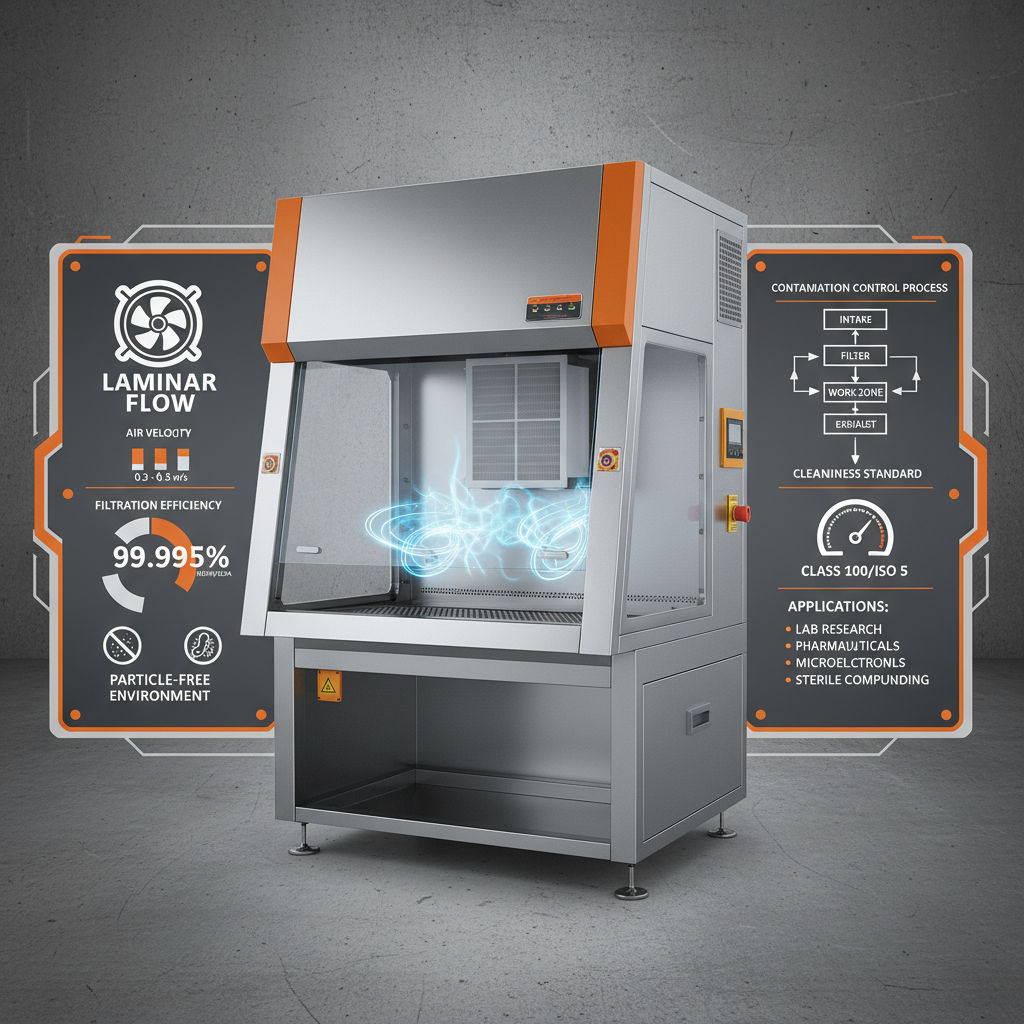
Laminar flow is the movement of air in a uniform, unidirectional velocity, minimizing turbulence and ensuring a consistent flow pattern. A laminar clean bench utilizes HEPA (High-Efficiency Particulate Air) filters to remove at least 99.97% of particles 0.3 microns in diameter, creating a purified air stream. This air stream is then blown across the work surface, sweeping away contaminants and preventing them from reaching the process being performed. The primary function is to protect the product or experiment from airborne contamination – it does not protect the operator. Proper workflow and technique are essential for maximizing effectiveness.
Types of Laminar Clean Benches: Horizontal vs. Vertical Flow
Laminar clean benches are primarily categorized by the direction of airflow. Horizontal flow benches, also known as laminar flow hoods, blow air across the work surface horizontally. Vertical flow benches, on the other hand, blow air down from the top, creating a downward flow of purified air. Each type has its advantages depending on the application. Horizontal flow benches are often preferred for applications where sterility is critical, but vertical flow benches provide better protection against spills and splashes. CZ Lab Instrument offers both types to meet diverse needs.
Key Differences: Horizontal flow minimizes upward contamination, while vertical flow offers better spill containment. Consider the specific needs of your application when selecting a type.
Applications of Laminar Clean Benches: A Diverse Range
The versatility of laminar clean benches allows for a wide range of applications across numerous industries. These include: microbiology and cell culture, pharmaceutical compounding, electronics assembly, food preparation, and medical device manufacturing. In research laboratories, they are vital for maintaining sterile conditions for sensitive experiments. In pharmaceutical settings, they are used to prepare sterile medications. The electronics industry utilizes them to prevent contamination during the assembly of delicate components. CZ Lab Instrument supplies benches suitable for each of these demanding applications.
Common Applications:
• Microbiology and Cell Culture
• Pharmaceutical Compounding
• Electronics Assembly
• Medical Device Manufacturing
Laminar Clean Bench Specifications and Features: CZ Lab Instrument's Offerings
CZ Lab Instrument offers a comprehensive selection of laminar clean benches with varying sizes, configurations, and features to meet diverse laboratory needs. Our benches are constructed from high-quality materials, ensuring durability and longevity. Key features include:
Maintaining Your Laminar Clean Bench: Best Practices
Regular maintenance is crucial for ensuring the optimal performance and longevity of your laminar clean bench. This includes regularly cleaning the work surface with appropriate disinfectants, replacing the HEPA filters according to the manufacturer's recommendations (typically every 6-12 months), and inspecting the airflow to ensure it remains consistent. Proper filter replacement is essential; ensure the new filter is correctly installed and sealed. CZ Lab Instrument provides comprehensive maintenance services and filter replacements.
Conclusion: Investing in a Sterile Environment
A Laminar Clean Bench from CZ Lab Instrument is a critical investment for any laboratory or industrial setting requiring a controlled, contamination-free environment. By understanding the different types, applications, and maintenance requirements, you can ensure optimal performance and reliable results. Prioritizing a sterile workspace translates to higher quality outcomes and reduced risk of errors.
Frequently Asked Questions (FAQs)
How often should I replace the HEPA filter in my laminar clean bench?
The HEPA filter should be replaced every 6-12 months, depending on usage and the environment. However, it's crucial to monitor filter performance regularly using a particle counter. If the particle count exceeds acceptable levels, the filter should be replaced immediately. Clogged filters compromise airflow and reduce the effectiveness of the clean bench. CZ Lab Instrument offers filter replacement services and can advise on the appropriate schedule for your specific application. Neglecting filter replacement can lead to compromised results and potential contamination.
What cleaning agents are safe to use on a laminar clean bench?
Use only cleaning agents specifically designed for cleanroom environments. Avoid harsh chemicals, abrasive cleaners, and solvents that can damage the surfaces or release contaminants. Isopropyl alcohol (70%) is a common and effective disinfectant for the work surface. Ensure the cleaning agent is non-residue leaving and does not compromise the integrity of the HEPA filter. Always follow the manufacturer's instructions for cleaning and disinfection. CZ Lab Instrument can recommend appropriate cleaning agents for our benches.
Is a laminar clean bench the same as a biosafety cabinet?
No, a laminar clean bench and a biosafety cabinet (BSC) are not the same. While both provide clean air, a biosafety cabinet provides personnel protection in addition to product protection. BSCs have a filtered exhaust system to prevent hazardous aerosols from escaping into the laboratory. Laminar clean benches only protect the product or experiment, not the operator. BSCs are required when working with infectious or hazardous materials. Choose the appropriate equipment based on the specific hazards involved in your work.


