
Comprehensive Guide to Vertical Laminar Flow Hood Selection and Applications
Understanding Vertical Laminar Flow Hoods for Your Lab
Maintaining a sterile working environment is crucial in many scientific and industrial applications. A vertical laminar flow hood provides a controlled space free from contaminants, protecting experiments and products. This article will explore the principles, applications, benefits, and important considerations when selecting a vertical laminar flow hood, with a focus on options available from CZ Lab Instrument. Ensuring a contaminant-free environment directly impacts research accuracy and product quality, making the right choice essential.
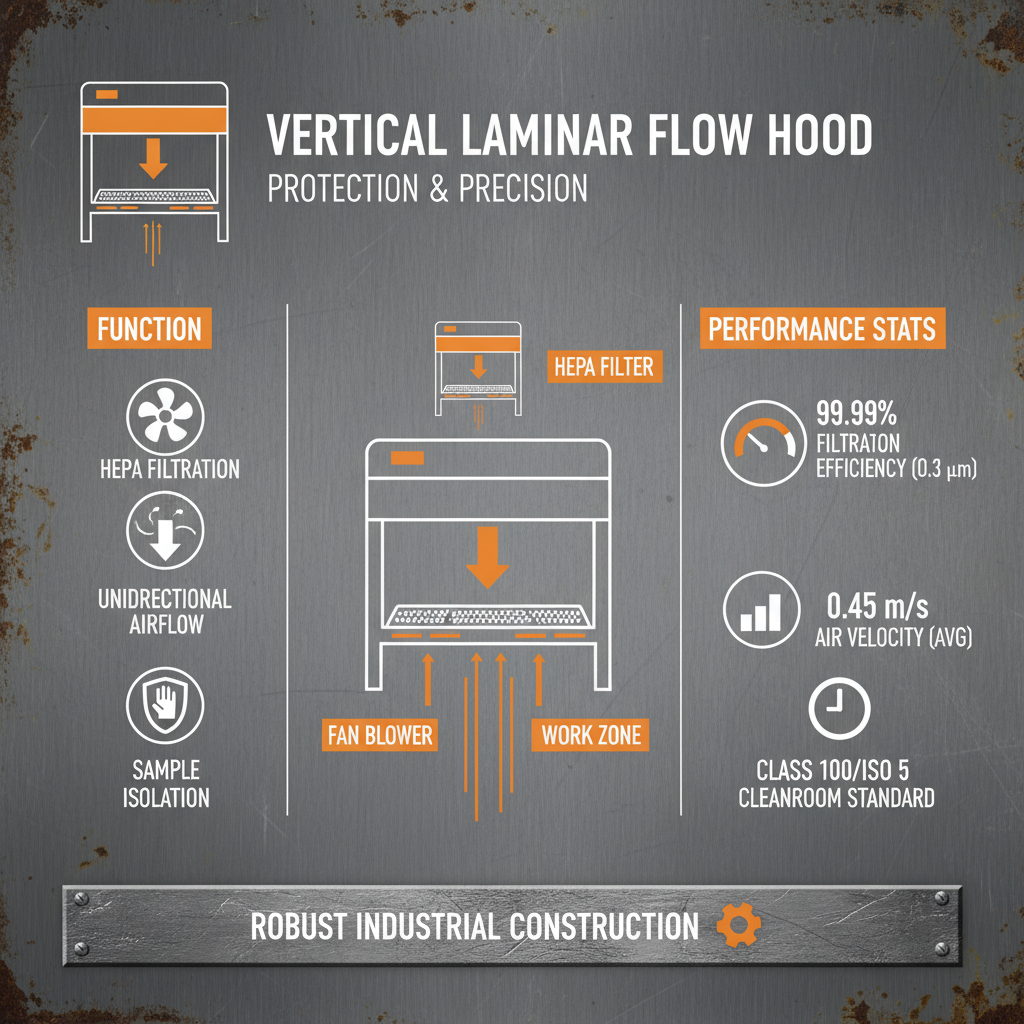
How Vertical Laminar Flow Hoods Work
Vertical laminar flow hoods operate on the principle of HEPA (High-Efficiency Particulate Air) filtration. Air is drawn into the hood, passes through a HEPA filter that removes at least 99.97% of particles 0.3 microns in diameter, and then flows vertically downwards over the work surface. This downward flow creates a continuous stream of clean air, preventing contaminants from entering the work area. Unlike biosafety cabinets, laminar flow hoods do not protect the user – they protect the product or experiment. Therefore, appropriate personal protective equipment (PPE) is still necessary. CZ Lab Instrument offers a range of hoods designed for optimal airflow and filtration efficiency.
Key Benefit: Provides a sterile work environment, protecting sensitive experiments and products from contamination.
Applications of Vertical Laminar Flow Hoods
Vertical laminar flow hoods are utilized across various fields, including: pharmaceutical compounding, ensuring the sterility of medications; microbiology, providing a clean environment for culturing and analyzing microorganisms; electronics manufacturing, protecting sensitive components from dust and debris; medical device assembly, maintaining sterility during production; and plant tissue culture, creating a controlled environment for plant growth. The versatility of these hoods makes them a valuable asset in numerous laboratories and manufacturing facilities. CZ Lab Instrument caters to these diverse needs with customizable hood options.
Common Industries Utilizing Vertical Laminar Flow Hoods:
• Pharmaceutical
• Biotechnology
• Medical Device Manufacturing
• Electronics
Vertical Laminar Flow Hood: Key Specifications & Considerations
Choosing the right vertical laminar flow hood involves considering several key specifications. The internal dimensions dictate the amount of usable work space. Airflow velocity (typically measured in feet per minute - fpm) is crucial for maintaining sterility; a range of 80-120 fpm is generally recommended. HEPA filter efficiency should be at least 99.97% for particles 0.3 microns and larger. Consider also the material of construction (stainless steel is common for ease of cleaning and durability), and whether features like UV sterilization or digital airflow monitoring are required. Below is a comparison of common sizes and their suitability.
Benefits of Choosing CZ Lab Instrument's Vertical Laminar Flow Hoods
CZ Lab Instrument provides high-quality vertical laminar flow hoods designed for reliability and performance. Our hoods feature: robust stainless steel construction for durability and easy cleaning; energy-efficient blowers for quiet operation and reduced energy consumption; user-friendly controls for precise airflow adjustment; and comprehensive warranties for peace of mind. We offer both standard and customized solutions to meet your specific laboratory requirements.
Maintaining Your Vertical Laminar Flow Hood
Proper maintenance is crucial for ensuring the continued effectiveness of your vertical laminar flow hood. This includes regularly cleaning the work surface with an appropriate disinfectant, monitoring airflow velocity with an anemometer, and replacing the HEPA filter according to the manufacturer’s recommendations (typically every 6-12 months). Recordkeeping of maintenance activities is also important for quality control purposes. CZ Lab Instrument offers maintenance services and filter replacements to support your ongoing needs.
Conclusion: Investing in a Sterile Environment
Investing in a vertical laminar flow hood from CZ Lab Instrument is a crucial step in ensuring the integrity of your research and production processes. By providing a clean and controlled work environment, these hoods minimize the risk of contamination and contribute to reliable results. With our commitment to quality, performance, and customer support, you can be confident in your investment.
Frequently Asked Questions (FAQs)
What is the difference between a laminar flow hood and a biosafety cabinet?
While both provide clean air, they serve different purposes. Laminar flow hoods protect the product/experiment from contamination, with airflow moving directly downwards. Biosafety cabinets (BSCs) protect the user, the product, and the environment. BSCs utilize HEPA filtration and have inward airflow to contain aerosols generated during experiments. BSCs are essential when working with infectious agents, while laminar flow hoods are suitable for applications where user protection isn't a primary concern.
How often should the HEPA filter be replaced?
The HEPA filter should typically be replaced every 6-12 months, depending on usage and environmental conditions. However, it's crucial to monitor filter performance using a particle counter. A filter should be replaced if it fails a leak test or shows a significant increase in upstream particle counts. CZ Lab Instrument offers filter replacement services and can advise on appropriate filter change schedules.
Can I use flammable materials inside a laminar flow hood?
No, generally it is not recommended to use flammable materials inside a standard laminar flow hood. The blower motor can create sparks, potentially igniting flammable vapors. If you need to work with flammable substances, a specially designed flammable-safe hood with explosion-proof motors and other safety features is required. Always consult with safety regulations and a qualified professional before working with flammable materials.
What cleaning agents are safe to use on a vertical laminar flow hood?
Use only cleaning agents specifically designed for laboratory use and compatible with stainless steel. Isopropyl alcohol (70%) is a common choice for disinfecting the work surface. Avoid abrasive cleaners, solvents, or harsh chemicals that could damage the hood's components. Always follow the manufacturer's recommendations for cleaning and disinfection procedures.


