In the realm of civil engineering and road construction, ensuring the precise composition of asphalt mixtures is critical for the longevity and safety of global infrastructure. The Asphalt Centrifuge Extraction Tester serves as a cornerstone in quality control, allowing engineers to determine the exact binder content within a compacted asphalt sample. By utilizing centrifugal force to separate the bitumen from the mineral aggregate, this instrument provides the empirical data necessary to validate that road surfaces can withstand heavy traffic loads and extreme weather conditions.
Globally, the demand for high-performance pavements has surged, leading to stricter adherence to international standards such as ASTM and AASHTO. The accuracy of an Asphalt Centrifuge Extraction Tester directly impacts the sustainability of transportation networks; an incorrect asphalt-to-aggregate ratio can lead to premature rutting, cracking, or stripping. Consequently, laboratories worldwide rely on high-precision centrifuge extraction to ensure that every kilometer of highway meets rigorous safety and durability specifications.
Understanding the operational nuances of the Asphalt Centrifuge Extraction Tester is not merely a technical requirement but a commitment to public safety and resource efficiency. By optimizing the extraction process, agencies can reduce material waste and lower the carbon footprint associated with road repairs. This guide explores the technical depth, application scenarios, and future innovations of centrifuge extraction technology in the modern materials testing landscape.
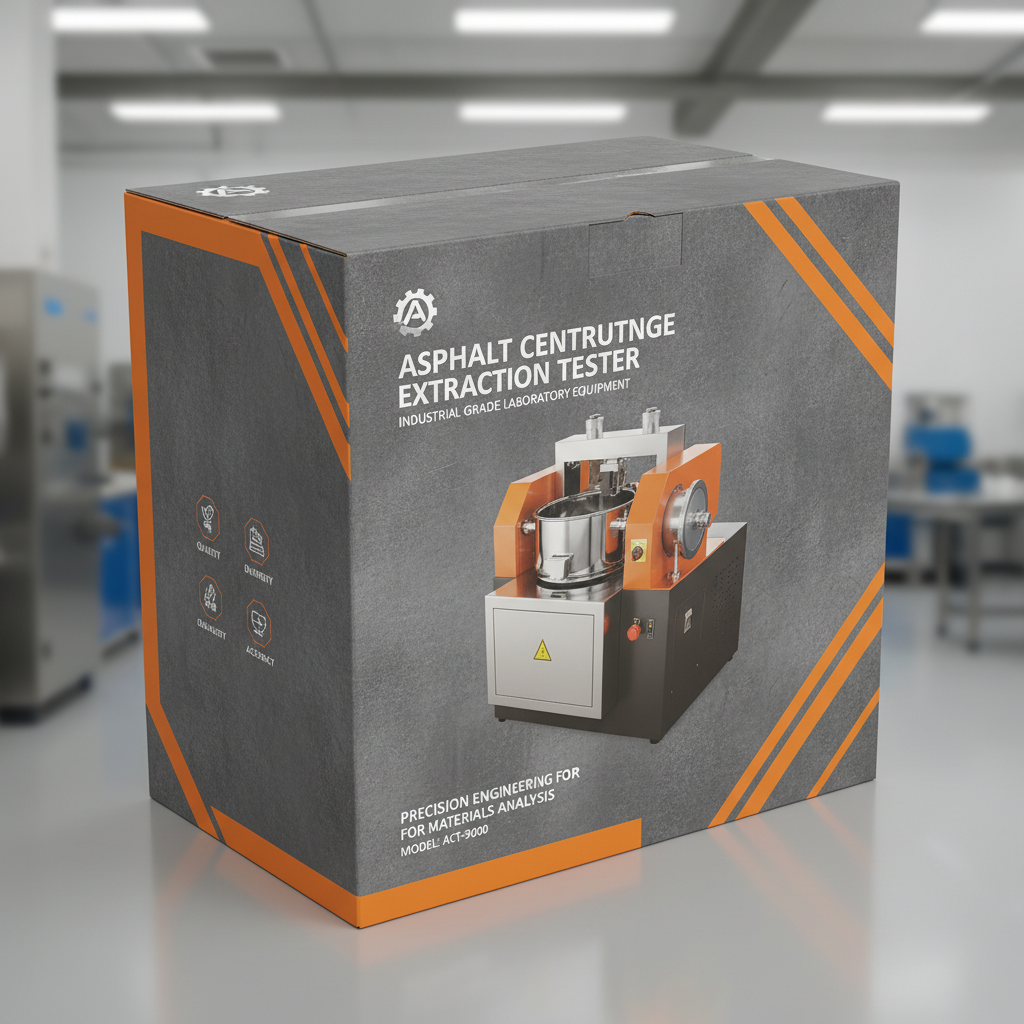
The Global Importance of Asphalt Centrifuge Extraction Tester
The global infrastructure landscape is currently undergoing a massive transition toward "smart" and sustainable roads. In this context, the Asphalt Centrifuge Extraction Tester is indispensable for verifying the quality of Hot Mix Asphalt (HMA) and Warm Mix Asphalt (WMA). By providing a reliable method to separate the bitumen binder from the aggregate, it allows engineers to ensure that the mixture design is perfectly balanced, preventing the structural failures that lead to costly emergency repairs.
Furthermore, the adoption of recycled asphalt pavement (RAP) has increased the complexity of binder analysis. Modern extraction testers must be capable of handling varying bitumen viscosities and additives. The ability to precisely quantify the binder content helps in determining the amount of rejuvenating agents needed, thereby promoting a circular economy in road construction and reducing the environmental impact of mining new aggregates.
Technical Definition and Operational Mechanism
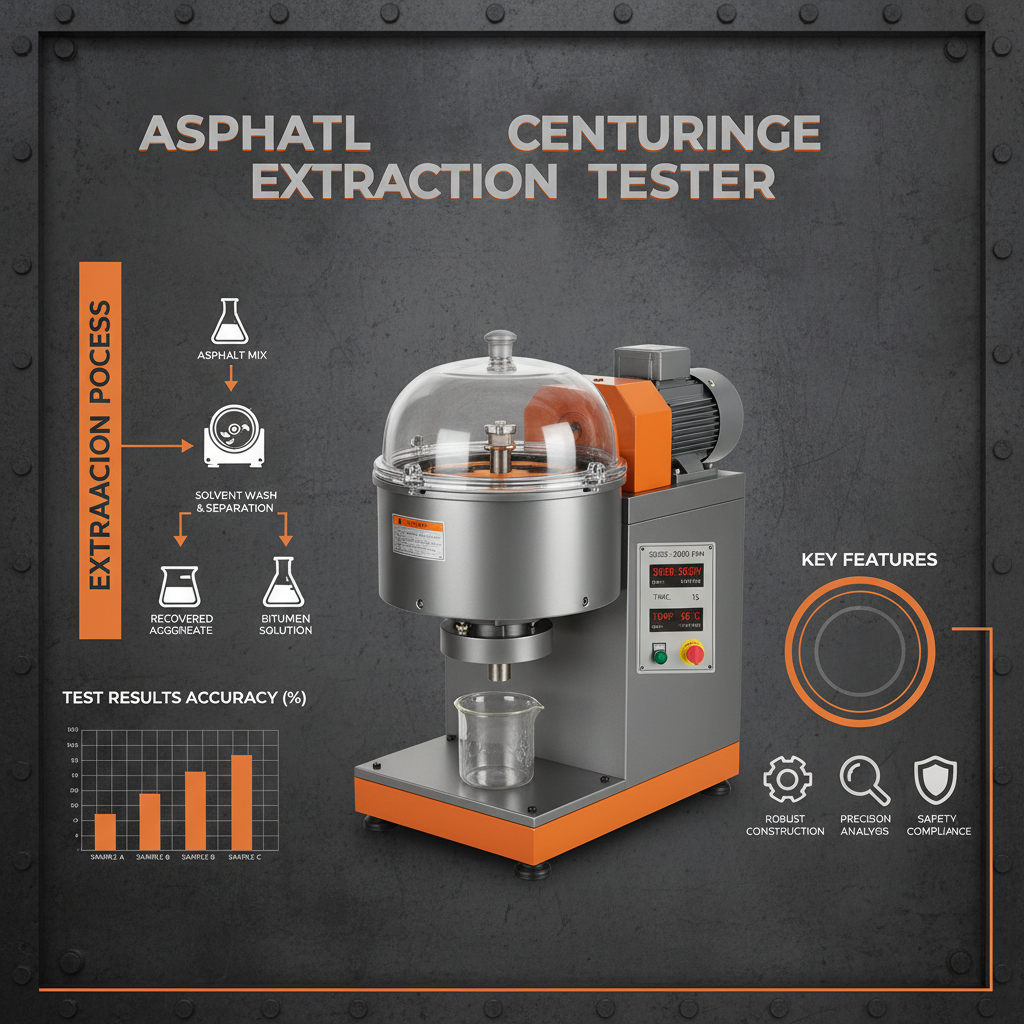
An Asphalt Centrifuge Extraction Tester is a specialized laboratory instrument designed to isolate the bituminous binder from asphalt concrete samples using high-speed rotation. The process typically involves the use of a centrifugal force to push a solvent through the asphalt sample, which dissolves the bitumen and carries it out of the filter paper, leaving the clean mineral aggregate behind. This method is preferred over traditional chemical soaking because it is significantly faster and often more efficient.
The mechanism relies on the principle of centrifugal sedimentation and solvent solubility. As the centrifuge rotates at a controlled speed, the solvent (usually a trichloroethylene or a more eco-friendly alternative) is forced through the porous medium of the sample. The high G-force ensures that the solvent penetrates every void in the aggregate, stripping away the binder completely. This ensures that the subsequent weighing of the aggregate is accurate, allowing for a precise calculation of the bitumen percentage.
In modern industry, these testers are integrated into broader Quality Assurance (QA) workflows. By connecting the centrifuge process with precise weighing scales and oven-drying cycles, labs can achieve a high degree of repeatability. This technical precision is what allows construction firms to meet the strict ISO and national standards required for government-funded highway projects, ensuring that the roads are safe for millions of commuters.
Core Components and Performance Factors
The efficiency of an Asphalt Centrifuge Extraction Tester is largely determined by its structural integrity and the precision of its motor. The centrifuge bowl, constructed from corrosion-resistant alloys, must withstand extreme rotational speeds without deformation. A high-quality motor with a variable speed controller allows the operator to adjust the centrifugal force based on the specific density and type of asphalt mixture being tested.
Durability and scalability are key performance factors. A robust Asphalt Centrifuge Extraction Tester is designed to handle continuous daily operation in harsh lab environments. Scalability refers to the machine's ability to accommodate different sample sizes—from small core samples to larger bulk samples—without compromising the uniformity of the extraction process or the safety of the operator.
Another critical component is the filtration system. The use of high-grade filter papers and precise cup fittings prevents the loss of fine aggregates during the extraction process. If fines are lost, the calculated binder content will be falsely inflated, leading to incorrect conclusions about the mix design. Therefore, the synergy between the mechanical rotation and the filtration medium is what defines the accuracy of the overall system.
Practical Applications Across Global Infrastructure
The application of the Asphalt Centrifuge Extraction Tester spans from urban city planning to the construction of remote industrial corridors. In highly developed regions, it is used for the rigorous auditing of highway contractors to ensure that the "pay-item" for bitumen is accurate. In developing nations, it is essential for establishing the first generation of standardized road networks, ensuring that infrastructure is built to last rather than requiring frequent, costly maintenance.
For instance, in post-disaster relief operations where temporary roads must be rapidly deployed and later paved, centrifuge extraction is used to verify that the rapid-set asphalt mixtures maintain the necessary binder levels for immediate heavy-load transport. Similarly, in remote mining zones, the equipment is used to test specialized high-modulus asphalt that can withstand the extreme weight of haul trucks.
Comparative Efficiency of Asphalt Extraction Methods
Long-Term Value and Economic Advantages
Investing in a high-precision Asphalt Centrifuge Extraction Tester yields significant long-term economic value. By reducing the margin of error in binder content analysis, construction firms can avoid the financial penalties associated with failing government quality audits. More importantly, the logical angle of safety—knowing that the road will not fail under stress—creates a level of trust between the contractor and the public, which is an invaluable intangible asset for any engineering firm.
From a sustainability perspective, the centrifuge method is more efficient than old-school solvent baths. It reduces the volume of chemical waste produced per sample and shortens the testing cycle from hours to minutes. This operational efficiency allows laboratories to process more samples per day, accelerating project timelines and reducing the overhead costs associated with labor and energy consumption.
Future Trends in Centrifuge Extraction Technology
The future of the Asphalt Centrifuge Extraction Tester is leaning heavily toward automation and digital transformation. We are seeing the emergence of "smart centrifuges" equipped with IoT sensors that can automatically monitor rotational speed, temperature, and solvent flow, logging all data directly to a cloud-based Laboratory Information Management System (LIMS). This eliminates human error in data entry and provides a transparent, tamper-proof audit trail.
Another significant trend is the shift toward "Green Chemistry." Industry leaders are developing new, non-toxic solvent recovery systems that integrate with the centrifuge, allowing the solvent to be distilled and reused indefinitely. This move aligns with global ESG (Environmental, Social, and Governance) goals, making the extraction process eco-friendly while maintaining the high precision required for bitumen analysis.
Additionally, we anticipate the integration of AI-driven predictive analysis. By analyzing historical extraction data from an Asphalt Centrifuge Extraction Tester, AI can predict potential mix failures before they happen on the road, allowing engineers to adjust the mix design in real-time at the asphalt plant. This transition from "reactive testing" to "predictive quality control" will redefine road construction.
Overcoming Common Challenges in Bitumen Extraction
One of the most common challenges in using an Asphalt Centrifuge Extraction Tester is the phenomenon of "incomplete extraction," where binder remains trapped in the aggregate pores. This is often caused by using an incorrect solvent or insufficient rotational speed. The solution lies in a standardized calibration process and the use of heated solvents, which lower the viscosity of the bitumen and allow it to flow more freely during centrifugation.
Another hurdle is the safety risk associated with high-speed rotating machinery and flammable solvents. To overcome this, modern testers are designed with reinforced safety interlocking lids and explosion-proof motors. Professional training and the strict implementation of laboratory safety protocols are essential to ensure that the efficiency of the machine does not come at the cost of personnel safety.
Lastly, the discrepancy between centrifuge results and ignition oven results often puzzles technicians. The centrifuge method is more accurate for assessing the actual binder content, whereas the ignition method may burn off other organic materials. Experts recommend using both methods in tandem for high-stakes projects to cross-verify results, ensuring the highest possible confidence in the material's properties.
Analysis of Centrifuge Extraction Performance Across Different Material Types
| Asphalt Mix Type |
Extraction Speed (RPM) |
Recovery Accuracy |
Recommended Solvent |
| Standard HMA |
2500 - 3000 |
9.8/10 |
TCE / Methylene Chloride |
| Warm Mix (WMA) |
2000 - 2500 |
9.5/10 |
Eco-Friendly Solvent A |
| RAP (Recycled) |
3000 - 3500 |
8.7/10 |
High-Strength Solvent B |
| Polymer Modified |
3500+ |
8.2/10 |
Specialized Aromatics |
| Porous Asphalt |
2200 - 2800 |
9.2/10 |
Standard TCE |
| Stone Mastic (SMA) |
3000 - 3200 |
9.0/10 |
Mixed Solvent Blend |
FAQS
The primary advantage of the Asphalt Centrifuge Extraction Tester is that it preserves the bitumen in a liquid state, allowing for subsequent testing of the binder's properties (such as viscosity and penetration). The ignition method burns the binder away completely, meaning you can find the percentage of bitumen but cannot analyze the quality of the binder itself.
To maintain E-E-A-T standards in your lab, the equipment should be calibrated at least once a year or after any major repair. Calibration focuses on verifying the RPM accuracy and checking the balance of the rotor. Using a balanced rotor is critical to prevent vibration, which can lead to sample loss or mechanical failure.
Yes, it is highly effective for RAP. However, because recycled binders are often more aged and viscous, you may need to increase the rotational speed or use a heated solvent to ensure complete extraction. This is vital for determining how much new binder must be added to the recycled mix.
While Trichloroethylene was the industry standard, many labs are shifting toward less toxic, eco-friendly solvent blends. It is important to check the compatibility of the solvent with the seals and gaskets of your specific Asphalt Centrifuge Extraction Tester to avoid corrosion.
Imbalance can cause severe vibrations, which can damage the motor bearings and potentially lead to catastrophic failure of the centrifuge bowl. Modern testers include vibration sensors that automatically shut down the machine if an imbalance is detected, protecting both the operator and the investment.
Consistency is key. Using a sample size that is too large can saturate the filter paper and slow down the extraction, while a sample too small may not be representative of the entire batch. Following ASTM or AASHTO guidelines for sample weight ensures that the centrifuge force is applied uniformly across the material.
Conclusion
The Asphalt Centrifuge Extraction Tester remains an irreplaceable tool in the arsenal of civil engineering. From ensuring the structural integrity of high-traffic highways to enabling the sustainable use of recycled materials, its ability to precisely separate bitumen from aggregate provides the empirical foundation for quality road construction. By balancing mechanical power with chemical precision, the centrifuge method ensures that infrastructure is not only built quickly but built to last.
Looking forward, the integration of automation and green solvents will only enhance the value of this technology. For laboratories and construction firms aiming to remain competitive and compliant with global standards, investing in high-performance extraction equipment is a strategic necessity. We encourage you to prioritize precision and safety in your material testing workflows to build a more resilient future. Visit our website for more information: www.czlabinstrument.com