Look, I’ve spent years on paving projects, seen a lot of equipment come and go. The 4" Marshall Stability Test Set? It’s not flashy, but it’s critical. It’s the backbone of ensuring we’re building roads that last, and frankly, it’s a game changer for quality control. We’re talking about preventing premature failures, saving taxpayer dollars, and keeping drivers safe. It’s a piece of kit you simply can’t afford to skimp on. It’s more than just testing; it’s about accountability.
For too long, a lot of labs have been relying on outdated methods or, worse, cutting corners. This 4” Marshall set brings a level of precision and repeatability that’s vital in today’s infrastructure environment. I’ve seen too many projects delayed because of mix design issues caught after paving began. This set helps us address those problems upfront. I've been in the field when test results from something less reliable caused a whole day's worth of work to be ripped up. Not fun.
And it’s not just for highways. Whether it’s airport runways, parking lots, or even private driveways, the principles are the same. Good compaction, proper mix design - it all comes down to getting the Marshall Stability right. It’s the cornerstone of a durable, long-lasting pavement. You’re not just building roads; you’re building the foundation for communities and economies. This set helps us do that reliably.

The 4" Marshall Stability Test Set is fundamental to ensuring the structural integrity and longevity of asphalt pavements. Globally, the demand for durable and reliable infrastructure is skyrocketing, driven by population growth and increased economic activity. The United Nations Sustainable Development Goals specifically highlight the need for resilient infrastructure (SDG 9), and a key component of that is robust materials testing. A poorly designed or constructed road can cost millions in repairs and disrupt communities for extended periods.
This isn’t some abstract lab exercise. This test directly addresses the challenge of pavement failure – cracking, rutting, and potholes – which cost billions annually in maintenance. Having a reliable 4” Marshall set isn’t just about meeting specifications; it’s about preventing those failures and maximizing the return on investment in our infrastructure. I’ve seen firsthand how a seemingly small deviation in mix design, identified by this test, can prevent a catastrophic road failure.
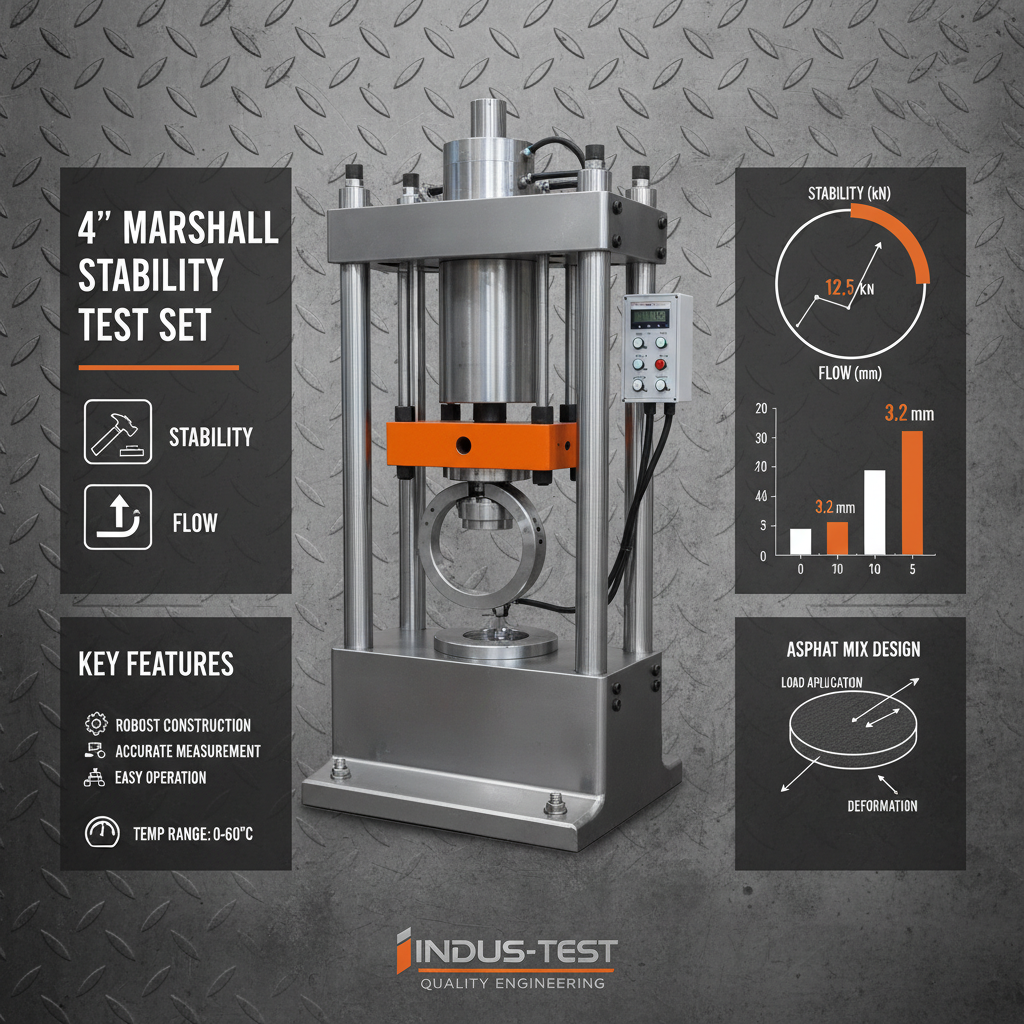
Simply put, the 4" Marshall Stability Test Set is used to determine the resistance of a compacted asphalt mixture to deformation under load. We’re essentially simulating the forces that traffic will exert on a road surface. The "4 inch" refers to the diameter of the specimen tested. It measures the maximum load the specimen can carry before it fails. The test provides valuable data on the mix’s strength, stability, and flow characteristics – all critical parameters for pavement design.
It’s directly connected to modern infrastructure because it ensures we're building pavements that can withstand the increasing weight and volume of traffic. We’re seeing heavier trucks, more cars, and more extreme weather conditions. A pavement built to outdated standards simply won’t hold up. This test helps engineers design mixes that can handle these demands.
This isn't new science, it’s been around for decades. But the refinements in equipment, standardization through organizations like ASTM International, and a deeper understanding of asphalt chemistry have made it an even more powerful tool today. It’s the essential benchmark for evaluating asphalt mix performance.
A reliable 4” Marshall Stability Test Set isn't just one piece of equipment; it's a system. First, you've got the compaction mold, that’s where you create the standardized specimen. Next, the loading frame applies the force, and the breaking head delivers the impact. Then, you need the proving ring to accurately measure that force. And, crucial, the dial gauge to measure deformation. Without all those components working in harmony, you get unreliable data.
Durability is key. This equipment takes a beating. The molds need to be precisely machined and maintained, the frame has to be rigid and stable, and the gauges need to be calibrated regularly. I've seen too many labs with equipment that’s worn out, bent, or simply not properly maintained. That’s a recipe for disaster, and inaccurate test results. A good set should be built to withstand years of heavy use in a demanding lab environment.
Scalability comes into play when you’re dealing with large projects. Having multiple sets allows for faster turnaround times and reduces bottlenecks. Cost-efficiency isn't just about the initial purchase price; it's about minimizing downtime and ensuring accurate results that prevent costly rework. A robust set, built with quality materials, will pay for itself many times over.
In the field, we use this test set to verify that the asphalt mix delivered by the plant meets the project specifications. Before any paving begins, we run multiple tests to confirm that the mix is performing as expected. We also use it to troubleshoot any issues that arise during production. For instance, if we’re seeing low stability values, we might adjust the asphalt content or aggregate gradation.
This isn't limited to new construction. We also utilize it for quality control on maintenance projects like overlays and patching. Ensuring the new material bonds properly with the existing pavement is just as important. It’s also crucial for evaluating the performance of recycled asphalt pavement (RAP) mixes, which are becoming increasingly common.
You’ll find this test set in labs across the globe – from the US and Europe to Asia and South America. It’s a standardized test, meaning the procedures and equipment are consistent worldwide. This is vital for international projects and ensuring quality control across borders. The American Society for Testing and Materials (ASTM) standards are widely adopted.
In post-disaster relief operations, where rapid road reconstruction is critical, the 4” Marshall test becomes even more important. It allows engineers to quickly assess the quality of available materials and ensure that repairs are durable enough to withstand the immediate demands. Even in remote industrial zones, where access to sophisticated labs is limited, a portable 4” Marshall set can provide essential quality control data.
The tangible benefits are clear: reduced maintenance costs, extended pavement life, and improved safety. But there are also less obvious advantages. Using a reliable test set fosters trust between contractors, engineers, and the public. It demonstrates a commitment to quality and accountability.
A robust pavement network boosts economic activity by facilitating the efficient movement of goods and people. It improves access to essential services like healthcare and education. And, let’s face it, a smooth, well-maintained road just makes life a little easier for everyone. It’s about building infrastructure that supports communities and enhances quality of life.
From a sustainability perspective, extending pavement life reduces the need for frequent reconstruction, which in turn lowers material consumption and carbon emissions. It’s a win-win.
While the core principles of the Marshall test remain the same, we’re seeing advancements in automation and data analysis. Digital proving rings and computer-controlled loading frames are becoming more common, providing greater precision and efficiency. The integration of AI and machine learning could allow us to predict pavement performance based on Marshall test data and other factors.
There’s also growing interest in developing more sustainable asphalt mixes, incorporating recycled materials and bio-binders. The 4” Marshall test will play a critical role in evaluating the performance of these new materials and ensuring they meet the required standards.
The move towards connected infrastructure and real-time monitoring also presents opportunities. Imagine a network of sensors embedded in the pavement that continuously monitor its condition and transmit data back to a central system. This data, combined with Marshall test results, could allow for proactive maintenance and prevent premature failures.
| Test Parameter | Typical Value Range | Impact on Pavement Performance | Influence of 4\" Marshall Stability Test Set |
|---|---|---|---|
| Stability (lbs) | 1000 – 2500 | Resistance to rutting and permanent deformation. | Directly measures the load-carrying capacity of the mix. |
| Flow (0.1 inch increments) | 8 – 16 | Indicates the mix’s ability to deform plastically. | Determines the mix's ductility. |
| Air Voids (%) | 3 – 7 | Affects permeability and durability. | Indirectly assessed through specimen density. |
| Bulk Specific Gravity | 2.30 – 2.40 | Used to calculate air voids and density. | Essential for accurate Marshall test calculations. |
| Percent Voids in Mineral Aggregate (VMA) | 14 – 18 | Indicates the amount of voids available for binder. | Critical for mix design and durability. |
| Percent Voids Filled with Asphalt (VFA) | 65 – 75 | Indicates the effectiveness of the binder coating the aggregate. | Determines optimal binder content for durability. |
While tests like Superpave offer a more comprehensive evaluation of asphalt mixtures, the Marshall Stability test provides a focused assessment of resistance to plastic deformation under load. It's a simpler, more cost-effective test that’s still incredibly valuable for routine quality control. It’s a great initial check before moving to more complex testing. It provides a quick and reliable indicator of mix performance.
Calibration frequency depends on the usage and environment, but generally, you should calibrate annually, or more frequently if the equipment is used heavily or exposed to extreme temperatures. The proving ring and load frame are the most critical components to calibrate. Keeping accurate records of calibration is vital for maintaining data integrity and ensuring reliable test results. Don't skimp on this!
A “good” value depends on the specific mix design and project specifications. However, a typical range is between 1200 and 2500 lbs. Higher stability values generally indicate a stronger, more durable mix. But it’s important to consider the flow value as well – a mix that’s too stiff can also be prone to cracking. It’s about finding the right balance.
Absolutely. In fact, the Marshall Stability test is a crucial tool for evaluating the performance of RAP mixes. You may need to adjust the mix design to account for the properties of the RAP, such as binder content and aggregate gradation. The test helps you ensure that the RAP mix meets the required specifications for stability and durability.
Proper specimen compaction is critical. Ensuring the specimen is correctly formed and reaches the required density is vital for accurate results. Also, avoid shock loading during the test, and make sure all equipment is clean and properly maintained. Operator training is also essential to minimize errors and ensure consistent testing procedures.
The Superpave system is the main alternative, offering a more comprehensive analysis including rutting, fatigue cracking, and low-temperature performance. Other tests include the Hamburg Wheel-Tracking Test for rutting resistance. However, the Marshall test remains valuable due to its simplicity and cost-effectiveness for initial mix design and quality control. Often, they are used in tandem.
In conclusion, the 4” Marshall Stability Test Set is more than just a piece of lab equipment; it’s a cornerstone of quality control in asphalt pavement construction. It provides critical data for designing durable, safe, and cost-effective roads, and it’s essential for meeting the growing demands of modern infrastructure. From preventing premature failures to optimizing material usage, the benefits are far-reaching.
Investing in a reliable 4” Marshall set, along with proper training and maintenance, is an investment in the future of our infrastructure. As we continue to push the boundaries of materials science and sustainable construction practices, the fundamental principles of the Marshall test will remain relevant for years to come. For reliable testing solutions and expert support, visit our website: www.czlabinstrument.com.
Ethan is the Marketing Director at Cangzhou Jiujiang, focusing on expanding the brand's presence in North America. With over a decade of experience in outdoor apparel marketing, Ethan leverages his knowledge to promote the company’s PU rainwear, emphasizing its BSCI and GRS certifications.
If you are interested in our products, you can choose to leave your information here, and we will be in touch with you shortly.