0%

Table of Contents

The California Bearing Ratio (CBR) Test is a crucial geotechnical engineering investigation used to evaluate the bearing strength of soil and its suitability for supporting pavements and structures. Globally, the reliable assessment of soil bearing capacity is paramount for infrastructure development, impacting everything from road construction to foundation design for buildings. A properly conducted California Bearing Ratio Test ensures the longevity and safety of these critical projects, minimizing risks of failure and costly repairs.

The demand for robust and accurate soil testing methodologies is ever-increasing, driven by population growth, urbanization, and the need for sustainable infrastructure. With the rise of extreme weather events and climate change, the importance of understanding soil behavior under varying conditions is more critical than ever. CBR testing provides a standardized approach to characterizing soil strength, contributing significantly to resilient infrastructure development and public safety.

Furthermore, advancements in construction materials and techniques require precise soil property data for optimized design. The California Bearing Ratio Test serves as a cornerstone in this process, informing engineers and planners to make informed decisions, ensuring the stability and performance of infrastructure projects worldwide.
California Bearing Ratio Test

Introduction to the California Bearing Ratio Test
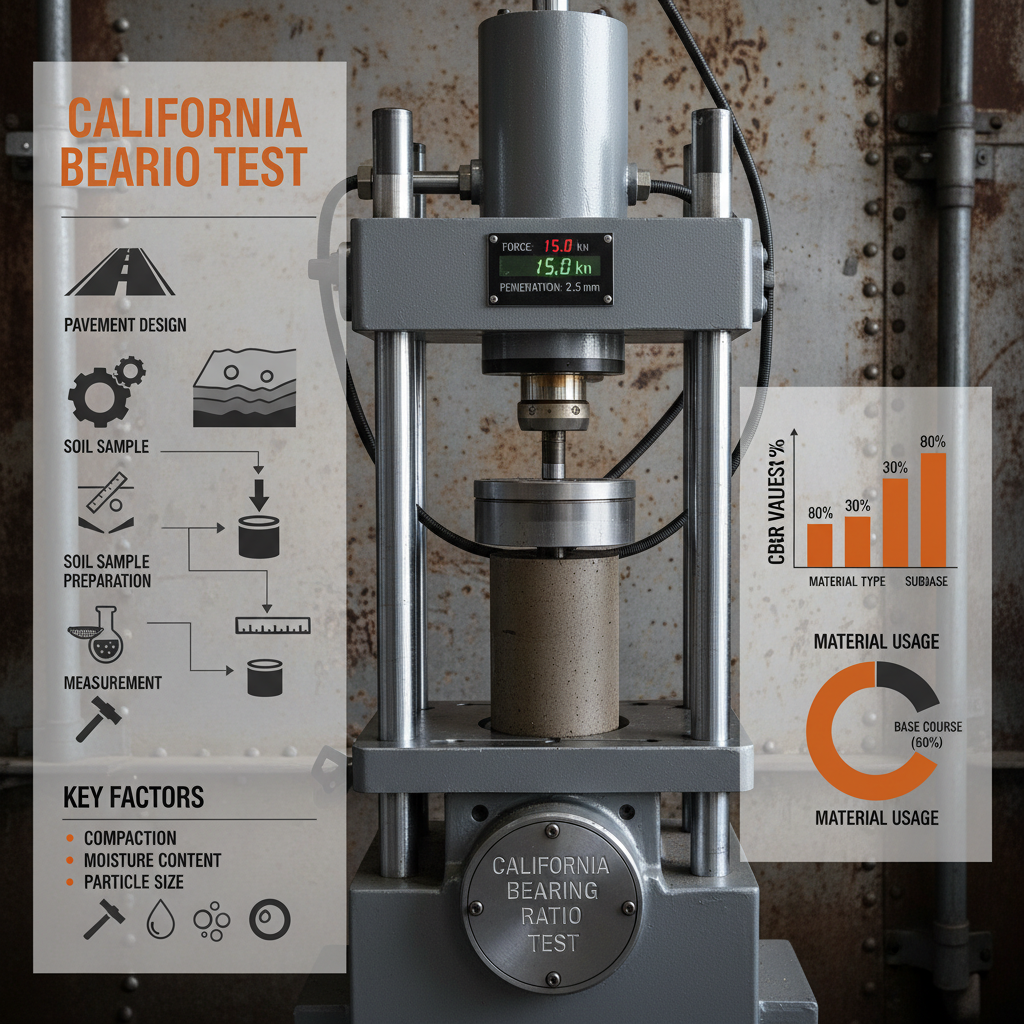
California Bearing Ratio Test

The California Bearing Ratio Test, often simply referred to as the CBR test, is a penetration test used to determine the relative strength of cohesive materials. It originated in California in the late 1920s as a method for evaluating the suitability of subgrade materials for flexible pavement construction. Its simplicity, cost-effectiveness, and correlation with pavement performance have made it a widely adopted standard globally.

The test fundamentally assesses the resistance of a soil sample to penetration by a cylindrical plunger under controlled conditions. The resulting CBR value is expressed as a percentage, representing the ratio of the test load required to achieve a specified penetration to the load required to achieve the same penetration in a standard crushed stone material. This allows for a standardized comparison of soil strengths across different locations and projects.

Defining the California Bearing Ratio Test

In its simplest form, the California Bearing Ratio Test measures the load-carrying capacity of a soil, providing a crucial parameter for pavement design. It directly informs engineers about the soil’s ability to withstand the stresses imposed by vehicular traffic. The test can be conducted either in the laboratory on undisturbed soil samples or in-situ, directly in the field. Laboratory CBR tests provide more controlled conditions, while in-situ tests offer a direct assessment of the soil as it exists in its natural environment.

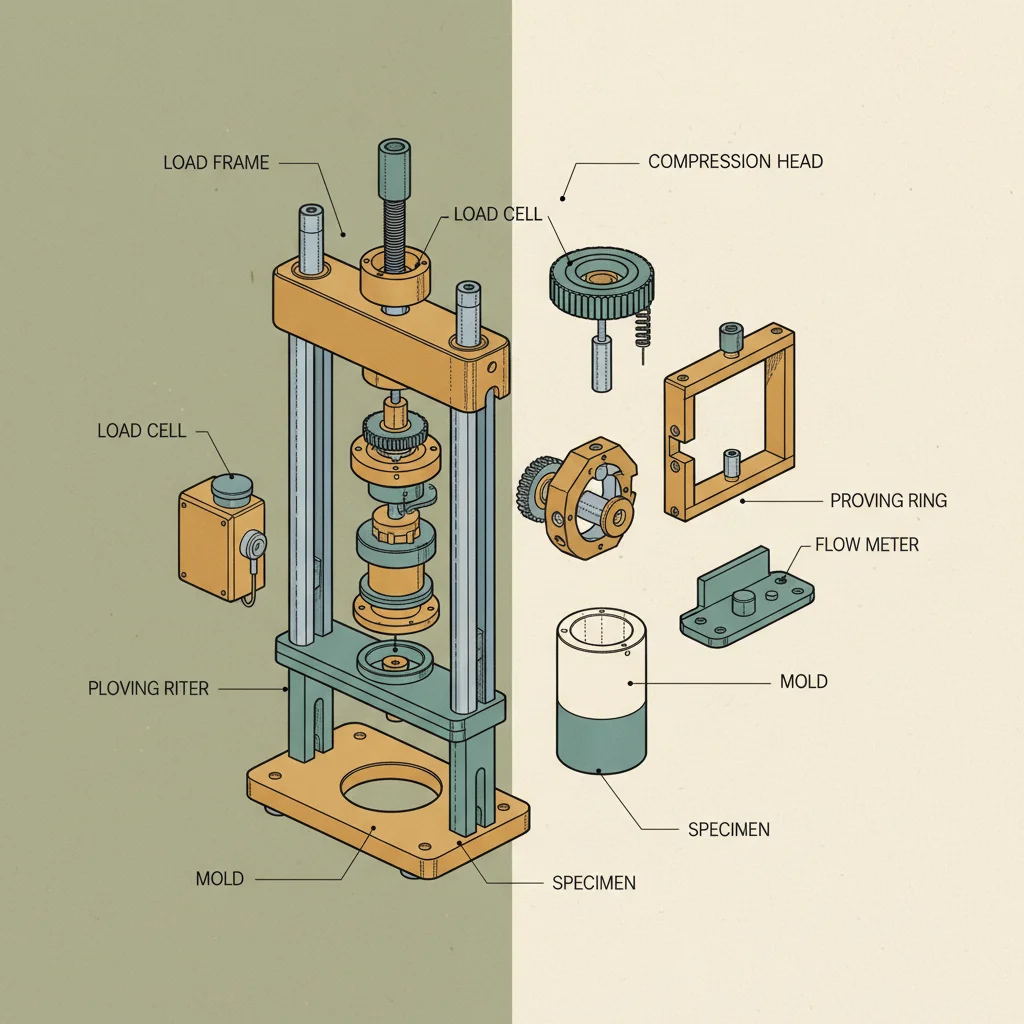
The process involves incrementally applying a load to a cylindrical plunger, typically with a diameter of 3 inches (76.2 mm), at a consistent rate. Penetration depth is measured at specific load intervals, and the CBR value is calculated based on the relationship between load and penetration. The higher the CBR value, the stronger the soil and the greater its load-bearing capacity.

The significance of the California Bearing Ratio Test extends beyond pavement design. It is also applied in evaluating soil stability for foundations, embankments, and other earthwork structures, demonstrating its broad applicability in civil engineering projects.

Core Components Influencing CBR Results

Several factors significantly influence the accuracy and reliability of CBR test results. Soil type plays a fundamental role; cohesive soils (clays) generally exhibit lower CBR values than granular soils (sands and gravels). Moisture content is also critically important, as water affects soil density and strength. A saturated soil, for example, will typically have a lower CBR value compared to a well-drained soil.

Density and compaction are equally crucial. Higher density achieved through proper compaction increases soil strength and subsequently, the CBR value. The degree of compaction, which is often controlled during construction, directly impacts the long-term performance of pavement and foundations. In-situ CBR testing, therefore, frequently includes density checks to correlate the results with compaction efforts.

Furthermore, the presence of organic matter or other deleterious materials can reduce soil strength and lower CBR values. Proper soil sampling and preparation are essential to minimize the influence of these factors. The standardization of testing procedures, as defined by organizations like ASTM and AASHTO, is also critical to ensure consistent and comparable results across different laboratories and projects.

Global Applications of the California Bearing Ratio Test

The California Bearing Ratio Test is utilized extensively in road construction projects globally, from major highway networks to local rural roads. In developing countries, where infrastructure investment is often limited, the CBR test’s cost-effectiveness makes it an invaluable tool for evaluating soil suitability before embarking on road building initiatives. The test is also critical for airport runway construction, ensuring the pavement can withstand the heavy loads imposed by aircraft.

Beyond transportation infrastructure, the CBR test is routinely employed in the design of foundations for buildings, bridges, and other structures. Understanding the soil bearing capacity is paramount for ensuring structural stability and preventing settlement issues. In geotechnical investigations for dam construction, the CBR test helps assess the suitability of embankment materials and the stability of the dam foundation.

CBR Test Application Across Various California Bearing Ratio Test Methods

Advantages and Long-Term Value of CBR Testing

The primary advantage of the California Bearing Ratio Test lies in its simplicity and cost-effectiveness. Compared to more complex geotechnical investigations, CBR testing can be performed relatively quickly and with minimal equipment, making it accessible even in resource-constrained environments. This allows for efficient preliminary assessments of soil suitability, optimizing project budgets and timelines.

Furthermore, the CBR value provides a direct correlation to pavement performance, enabling engineers to design more durable and long-lasting roads. By accurately predicting soil behavior under load, the CBR test minimizes the risk of premature pavement failures, reducing maintenance costs and extending the service life of infrastructure. This contributes to long-term sustainability and economic benefits.

Future Trends and Innovations in CBR Technology

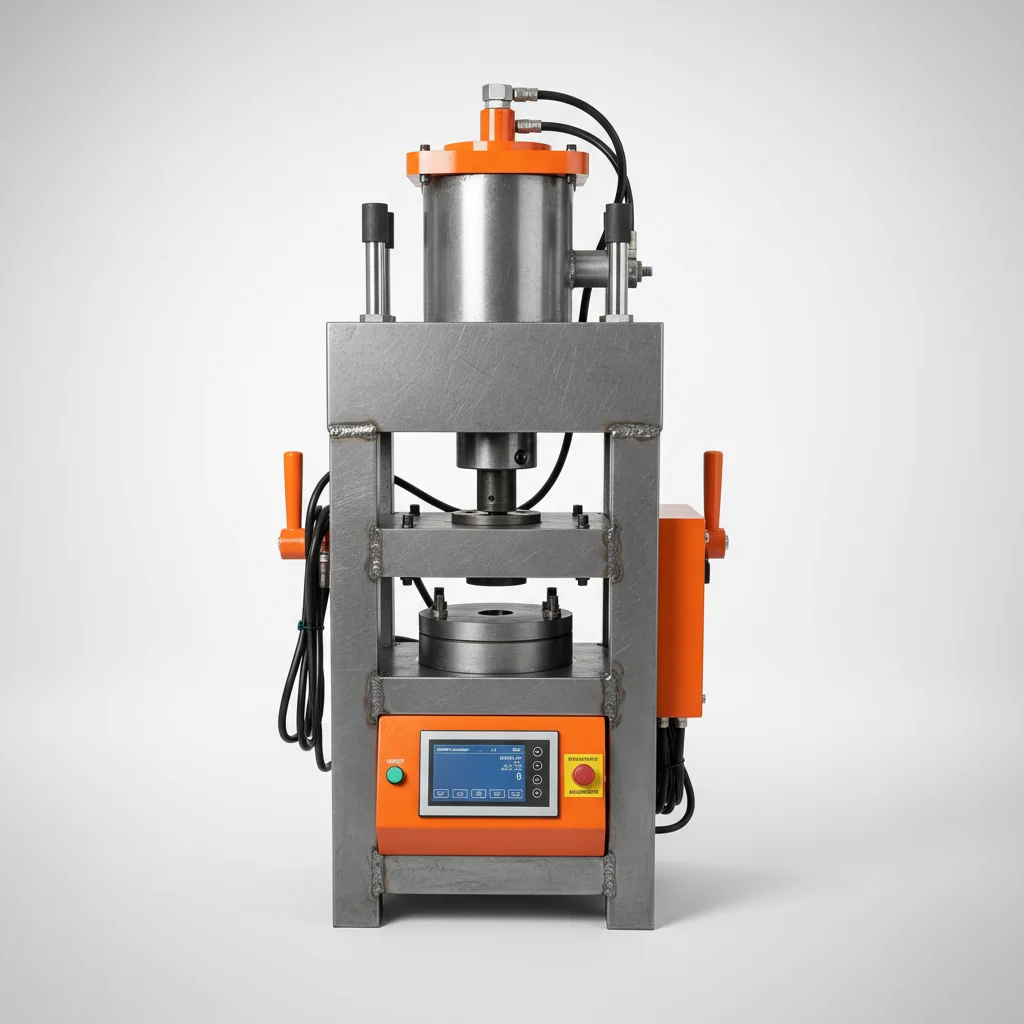
Emerging technologies are poised to enhance the accuracy and efficiency of California Bearing Ratio Test procedures. Automated CBR testing systems, incorporating computer-controlled loading and data acquisition, are gaining traction, reducing human error and improving repeatability. The integration of sensors and real-time data analysis provides immediate insights into soil behavior, allowing for dynamic adjustments during testing.

Geospatial technologies, such as Ground Penetrating Radar (GPR) and Cone Penetration Testing (CPT), are being increasingly used in conjunction with CBR testing to create comprehensive subsurface profiles. This allows for a more holistic understanding of soil conditions and provides valuable data for optimizing pavement design and construction practices.

The development of advanced soil stabilization techniques, coupled with improved CBR testing methods, will play a critical role in constructing more resilient and sustainable infrastructure in the face of climate change and increasing environmental demands.

Challenges and Solutions in CBR Testing

Despite its widespread use, the California Bearing Ratio Test is not without its limitations. In-situ CBR testing can be influenced by localized soil disturbances, requiring careful execution and interpretation. Laboratory CBR testing relies on obtaining representative soil samples, which can be challenging in heterogeneous soil conditions.

To address these challenges, advancements in sampling techniques and laboratory procedures are being implemented. Improved in-situ testing methods, such as the Dynamic Cone Penetrometer (DCP), offer a more rapid and reliable assessment of soil strength. Furthermore, data analysis techniques, incorporating statistical modeling and machine learning, can help to account for variations in soil properties and improve the accuracy of CBR predictions.

Ongoing research focuses on developing more sophisticated testing protocols and standardized procedures to minimize uncertainties and enhance the reliability of the California Bearing Ratio Test.

Summary of Challenges and Solutions in CBR Testing

Challenge Impact on CBR Value Proposed Solution Implementation Cost (1-10)
Soil Disturbance during In-Situ Testing Reduced CBR, inaccurate representation of soil strength Utilize Dynamic Cone Penetrometer (DCP) 4
Non-Representative Soil Sampling Variable CBR, inaccurate design parameters Employ stratified random sampling techniques 5
Moisture Content Variations Fluctuating CBR, difficulty in comparison Conduct testing under controlled moisture conditions 3
Operator Variability Inconsistent CBR, reduced reliability Implement standardized training programs 6
Influence of Organic Matter Lower CBR, reduced bearing capacity Remove organic material prior to testing 2
Data Interpretation Errors Incorrect design decisions, potential failures Utilize advanced data analysis software 7

FAQS

What is the main purpose of conducting a California Bearing Ratio test?

The primary purpose of the California Bearing Ratio (CBR) test is to determine the bearing strength of subgrade soils and their suitability for supporting pavements. It provides a numerical value that correlates to the soil's resistance to penetration, which is crucial for designing stable and durable road structures. This test helps engineers assess how well the soil will withstand the loads imposed by traffic and prevent premature pavement failure, ensuring a safe and long-lasting road surface.

What differentiates laboratory CBR tests from in-situ CBR tests, and when should each be used?

Laboratory CBR tests are conducted on undisturbed soil samples in a controlled environment, offering precise conditions and minimizing external variables. In-situ CBR tests, conversely, are performed directly in the field, providing a real-world assessment of the soil’s bearing capacity. Laboratory tests are ideal for detailed soil characterization and quality control, while in-situ tests are better suited for quick assessments of large areas and representative soil conditions. The choice depends on project requirements, available resources, and the desired level of accuracy.

How does moisture content affect the CBR value of a soil sample?

Moisture content has a significant impact on the CBR value. Generally, increasing moisture content reduces the soil's strength and consequently lowers the CBR value, particularly in cohesive soils like clay. Water weakens the bonds between soil particles, reducing its resistance to penetration. Conversely, well-drained and compacted soils with lower moisture content typically exhibit higher CBR values. Accurate moisture content measurement and control are crucial for obtaining reliable CBR test results.

What is considered a "good" CBR value for road construction, and what factors influence this benchmark?

A "good" CBR value for road construction generally ranges from 10 to 30 or higher, but this is heavily dependent on the type of pavement and traffic loading. For light traffic roads, a CBR of 10 might be sufficient, while highways and roads with heavy traffic require CBR values of 30 or more. Factors influencing this benchmark include the subgrade soil type, the thickness of the pavement layers, and the expected traffic volume. Engineers use CBR values in conjunction with other geotechnical parameters to determine the optimal pavement design.

How can the results of a California Bearing Ratio test be used to optimize pavement design?

CBR results are directly integrated into pavement design methodologies. The CBR value is used to calculate the required thickness of the pavement layers – the base course, subbase course, and surface course – to ensure the pavement can withstand anticipated traffic loads without excessive deformation or failure. Higher CBR values allow for thinner pavement layers, reducing construction costs, while lower CBR values necessitate thicker layers to provide adequate support and longevity.

Are there any limitations to relying solely on the California Bearing Ratio test for evaluating soil strength?

While the CBR test is a valuable tool, relying solely on it can be limiting. It primarily assesses soil strength under static loads and may not fully capture dynamic effects caused by traffic or seismic activity. It also doesn't directly measure other critical soil properties like shear strength or compressibility. Therefore, it’s often used in conjunction with other geotechnical investigations, such as triaxial tests and consolidation tests, to obtain a comprehensive understanding of soil behavior and ensure a robust and reliable pavement or foundation design.

Conclusion

In summary, the California Bearing Ratio Test remains a cornerstone of geotechnical engineering, providing a simple, cost-effective, and reliable method for evaluating soil bearing capacity. Its widespread application in road construction, foundation design, and infrastructure development globally underscores its importance in ensuring the safety, durability, and sustainability of built environments. Understanding the nuances of CBR testing and its influencing factors is critical for informed decision-making in civil engineering projects.

Looking ahead, continued advancements in testing technologies, data analysis, and standardization will further enhance the accuracy and efficiency of the California Bearing Ratio Test. Embracing these innovations will be essential for meeting the evolving demands of infrastructure development in a changing world, fostering resilient and sustainable solutions for future generations. Visit our website to learn more about our CBR testing equipment and services.

Robert Chen

Robert Chen

Robert Chen serves as the Sales Director for Cangzhou Blue Beauty Instrument Co., Ltd., overseeing the company’s domestic and international sales efforts. Robert has a strong track record of building relationships with universities, research institutions, and industrial clients across Europe, Asia, and beyond. He's dedicated to providing comprehensive support, including laboratory setup assistance and customized solutions. Robert emphasizes a customer-centric approach, ensuring seamless product integration and addressing specific technical challenges. He is proficient in multiple languages and plays a key role in expanding the company's footprint into new markets. He has been with Cangzhou Blue Beauty for 12 years and consistently exceeds sales targets.
Previous Advancements in Road Infrastructure with Automatic CBR Test Machine Technology
Next Comprehensive Guide to the California Bearing Ratio Test Apparatus and Its Applications
Leave Your Message

If you are interested in our products, you can choose to leave your information here, and we will be in touch with you shortly.